Wrench set mechanic
1344×768 · AVIF · CC BY 4.0
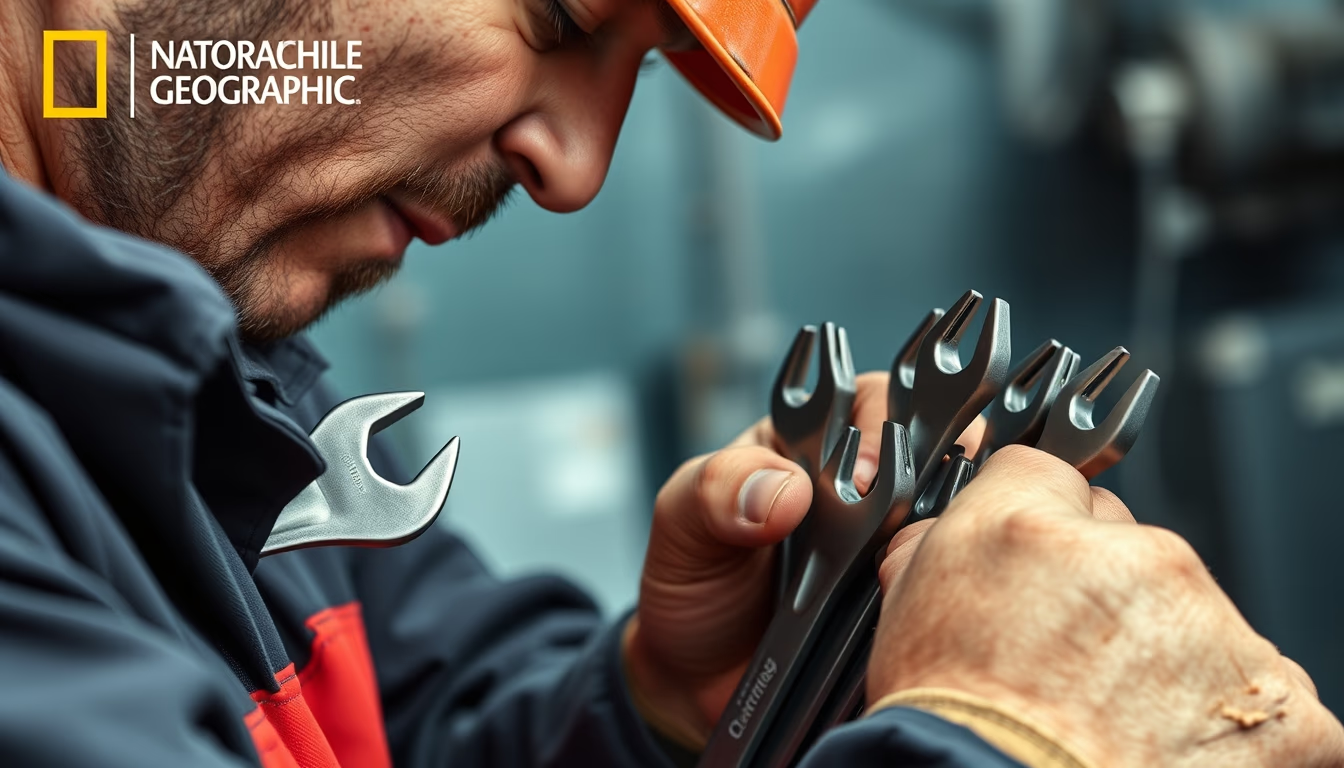
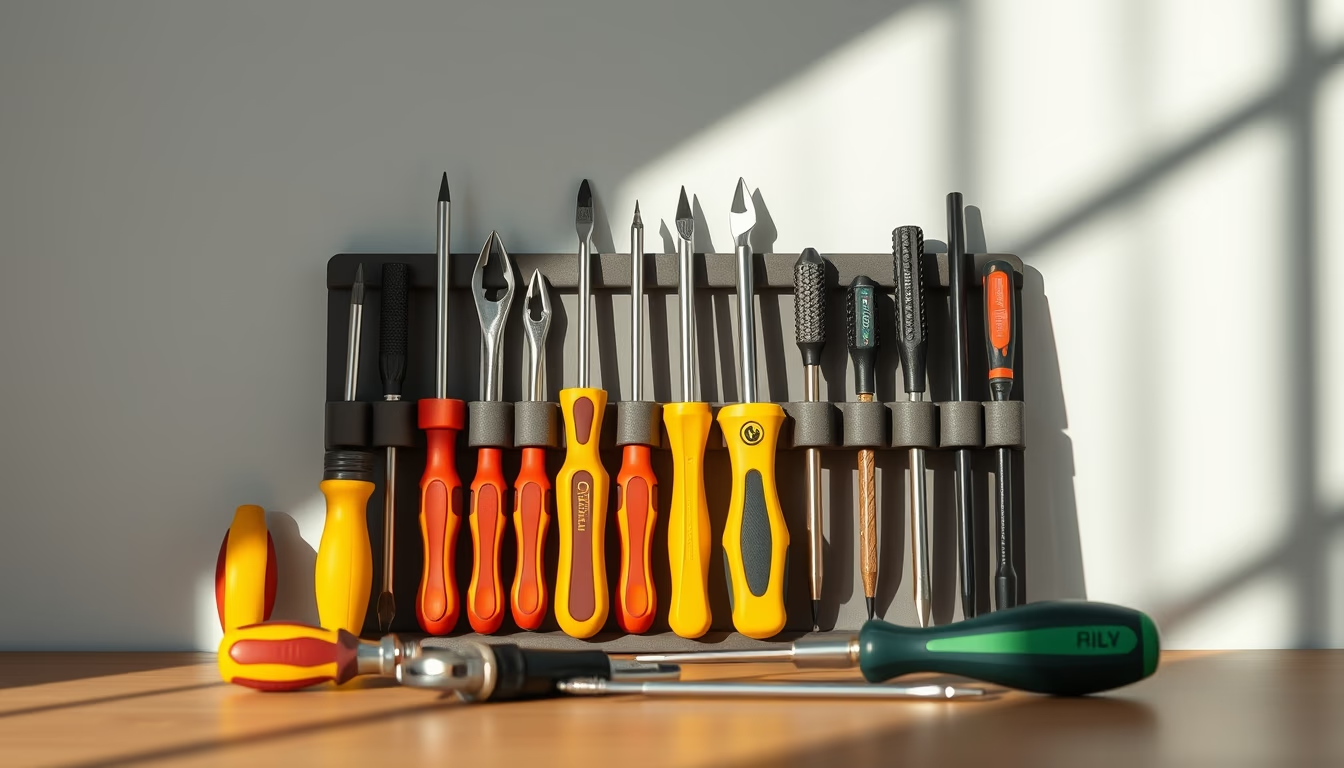
A set of combination wrenches and ratchets is essential for professional and amateur mechanics, combining versatility and precision in tightening and loosening bolts and nuts.
About this subject
Combination wrenches and ratchets are indispensable tools in any mechanical workshop. They allow efficient torque application to bolts and nuts, with designs ranging from combination wrenches (open-end and box-end on the same handle) to socket sets with reversible ratchets. The origins of these tools date back to the 19th century, when the Industrial Revolution demanded faster assembly methods, leading to the development of adjustable wrenches and standardized sockets.
Modern sets typically include metric sizes (6 to 32 mm) and inch sizes (1/4 to 1 inch), made from chrome-vanadium steel for corrosion resistance and durability. The ratchet, patented in 1913 by J.J. Richardson, revolutionized mechanical work by allowing continuous tightening without repositioning the tool. Box-end wrenches offer better grip on hexagonal nuts, reducing the risk of rounding.
In the Brazilian context, the automotive and maintenance industry relies on these sets for everything from simple bicycle repairs to heavy truck maintenance. National brands like Tramontina and Gedore produce affordable kits, while professionals prefer lines like Snap-on or Stahlwille for higher precision. Proper use of torque wrenches, which measure the applied force, is crucial to avoid damage to sensitive components such as engine cylinder heads.
Interestingly, the term 'chave inglesa' in Brazil refers to the adjustable wrench, while in the US 'wrench' is generic. The wrench set is a symbol of mechanical autonomy, found in vehicle emergency kits and home toolboxes. Standardization by ISO and ANSI ensures global compatibility, though differences between metric and imperial fasteners still cause issues in imported vehicles.
Frequently Asked Questions
What is the difference between an open-end and a box-end wrench?
An open-end wrench has a U-shaped opening that fits two sides of a nut, ideal for tight spaces. A box-end wrench completely surrounds the nut with a hexagonal or 12-point profile, providing more torque and less risk of rounding. Many combination wrenches have an open-end on one side and box-end on the other.
How do I choose the correct wrench size?
The wrench size must match the diameter of the bolt head or nut, usually measured in millimeters or inches. Use a caliper to measure the distance across opposite flats. For metric systems, common sizes in automotive kits are 10, 13, 14, 17, and 19 mm.
Is it necessary to use a torque wrench?
Yes, for critical applications like engine assembly, wheels, or suspension components. A torque wrench ensures that tightening is within manufacturer specifications, preventing damage from over-tightening or loosening from under-tightening. Always consult the vehicle manual for correct values.
Direct URL
https://pub-c7d6a6ea828543ac903a74a341ccb2e1.r2.dev/imagens/wrench-set-mechanic-national-geographic-style-p3.avifHow to credit
Include a visible link back to UtilizAí. Copy one of the snippets below:
<a href="https://xn--utiliza-eza.com/en/midia/imagens/wrench-set-mechanic-national-geographic-style-p3">Wrench set mechanic</a> by <a href="https://xn--utiliza-eza.com">UtilizAí</a>, licensed under <a href="https://creativecommons.org/licenses/by/4.0/">CC BY 4.0</a>.
[Wrench set mechanic](https://xn--utiliza-eza.com/en/midia/imagens/wrench-set-mechanic-national-geographic-style-p3) by [UtilizAí](https://xn--utiliza-eza.com), CC BY 4.0
License: CC-BY-4.0