Wrench set mechanic
1344×768 · AVIF · CC BY 4.0

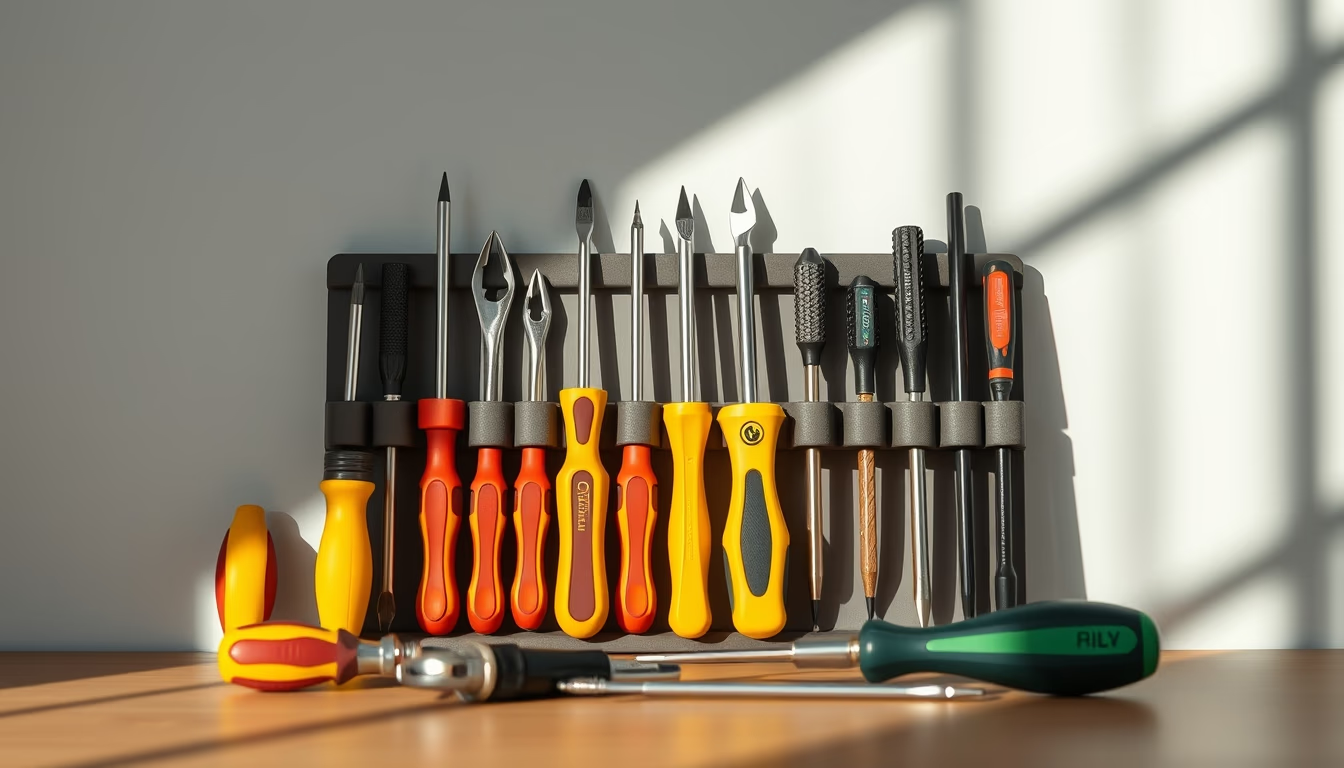
Wrench sets are indispensable tools for mechanics, enabling precise tightening and loosening of bolts and nuts.
About this subject
Wrench sets, commonly known as combination wrenches, consist of pieces in various sizes, typically ranging from 6 mm to 32 mm in the metric system or 1/4 to 1 1/4 inches in the imperial system. Each wrench has two ends: an open end for quick use in open spaces and a box end that provides greater torque and prevents slipping. These tools are made from chrome-vanadium steel, a corrosion- and wear-resistant alloy, and undergo heat treatment to ensure durability under high loads.
Historically, open-end wrenches emerged in the 19th century with the standardization of threads during the Industrial Revolution. Adjustable models, such as the monkey wrench, were patented by Johan Petter Johansson in 1892, but fixed sets remain preferred by professional mechanics for precision and reduced damage to fasteners. In automotive workshops, combination wrenches are the most common, followed by socket wrenches and torque wrenches that apply controlled tightening.
A notable curiosity: the difference between metric and imperial standards requires mechanics to own two complete sets, especially for imported vehicles. Additionally, ratcheting wrenches incorporate a gear mechanism that allows tightening without removing the tool from the bolt, speeding up work. To maintain a wrench set, it is recommended to clean after use, apply protective oil to joints, and store in specific organizers to avoid drops that can deform the ends.
In Brazil, the popularization of wrenches followed the automotive industry established in the ABC region of São Paulo from the 1950s onwards. Today, national brands like Tramontina and Gedore dominate the market, offering sets with lifetime warranties. For the amateur mechanic, a basic kit of 10 to 15 pieces is sufficient, while professionals may own over 50 wrenches, including variations for spark plugs and Allen keys.
Frequently Asked Questions
What is the most common wrench size for cars?
In most popular Brazilian vehicles, the most common sizes are 10 mm, 13 mm, and 15 mm in the metric system, used on parts like suspension and engine bolts.
What does chrome-vanadium steel mean in a wrench set?
Chrome-vanadium steel is an alloy that offers high mechanical strength and corrosion resistance, ideal for tools that undergo torsion and contact with oil and grease. It is the standard in professional sets.
How to identify a high-quality combination wrench?
Look for finish: polished surface, laser-engraved markings, burr-free ends, and a snug fit on the nut. Brands with lifetime warranties, such as Gedore and Tramontina, are benchmarks.
Direct URL
https://pub-c7d6a6ea828543ac903a74a341ccb2e1.r2.dev/imagens/wrench-set-mechanic-magazine-editorial-p0.avifHow to credit
Include a visible link back to UtilizAí. Copy one of the snippets below:
<a href="https://xn--utiliza-eza.com/en/midia/imagens/wrench-set-mechanic-magazine-editorial-p0">Wrench set mechanic</a> by <a href="https://xn--utiliza-eza.com">UtilizAí</a>, licensed under <a href="https://creativecommons.org/licenses/by/4.0/">CC BY 4.0</a>.
[Wrench set mechanic](https://xn--utiliza-eza.com/en/midia/imagens/wrench-set-mechanic-magazine-editorial-p0) by [UtilizAí](https://xn--utiliza-eza.com), CC BY 4.0
License: CC-BY-4.0