Wooden carving tools
1344×768 · AVIF · CC BY 4.0
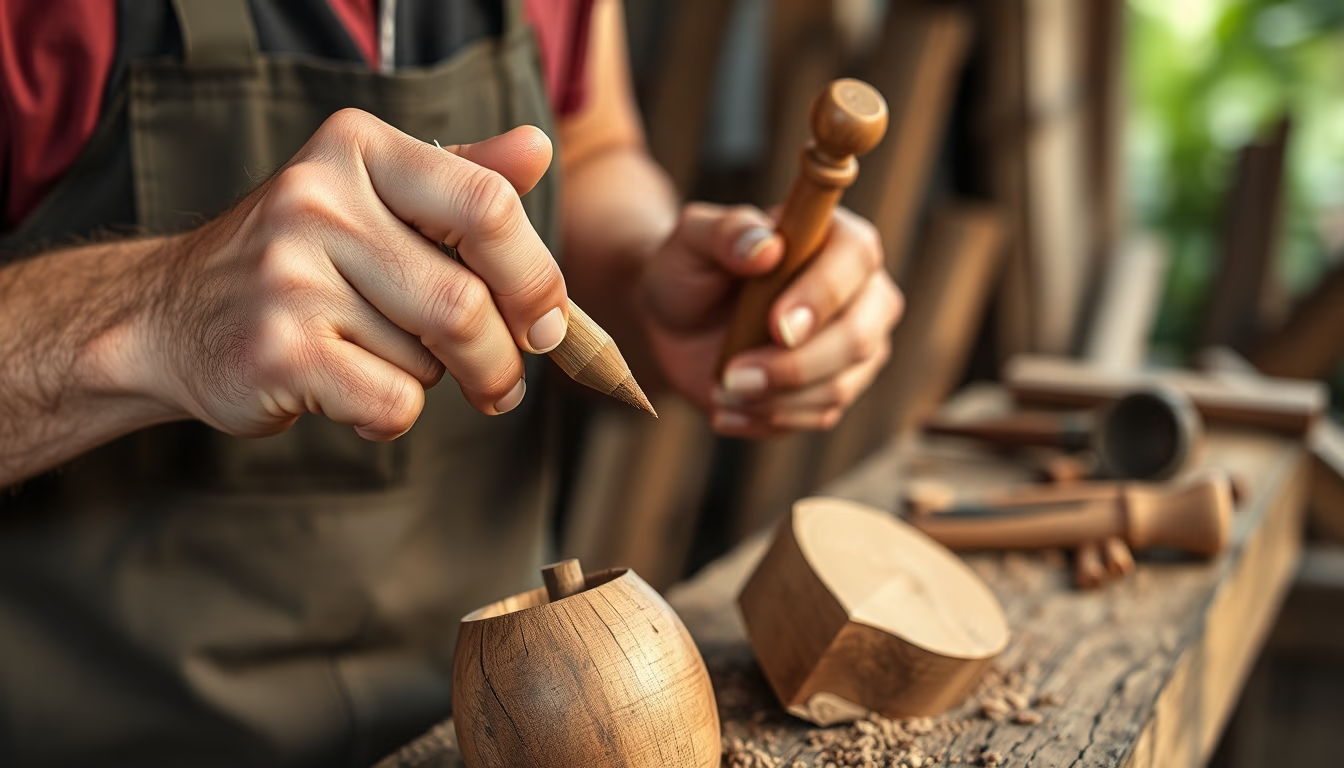
Wood carving tools: types, uses, and the craft tradition that shapes sculptural art.
About this subject
Wood carving is one of the oldest forms of artistic and functional expression, relying on a specific set of tools. Gouges are the most common, with curved profiles ranging from shallow to deep, enabling both rough stock removal and fine detailing. Chisels have straight blades and are used for clean cuts and edges. Skew chisels, with beveled tips, help remove large chips. The origins of these tools trace back to early civilizations, with bronze gouges found in ancient Egypt. In medieval Europe, the development of carpenter guilds standardized shapes, many of which remain unchanged today.
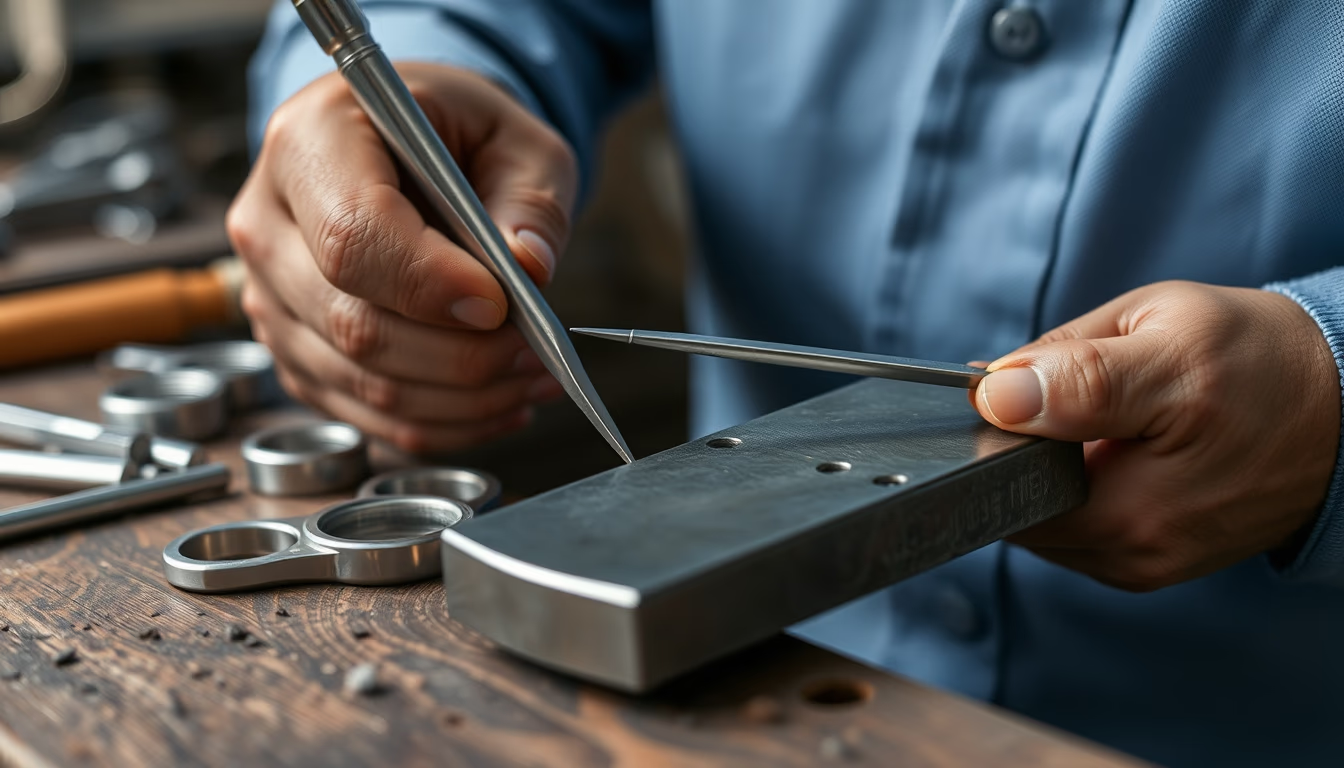
Tool materials have also evolved. Carbon steel was standard for centuries, but now high-speed steel (HSS) and tool steel are preferred for longer edge retention. Handles made of wood (such as beech or oak) or sturdy plastic provide grip and impact absorption. Sharpening is an essential part of the craft: water stones, diamond stones, and leather strops with abrasive compound maintain the perfect edge. In Brazil, carving tradition is strong in the Northeast, especially in Pernambuco and Ceará, where artisans produce religious pieces and figures from folk imagination.
Techniques vary by style: relief carving, carving in the round (three-dimensional sculpture), and linear incision carving. Each requires different combinations of gouges and chisels. A basic beginner set includes a V-gouge (for lines), a medium semicircular gouge, and a 1 cm straight chisel. Experienced sculptors may own dozens of tools, organized in boxes or canvas rolls. Preventive maintenance, such as cleaning after use and storing in a dry place, prevents rust and damage.
Beyond practical function, carving tools carry cultural symbolism. In Japan, chisels (nomi) are treated with reverence akin to swords, passed down through generations. In Switzerland, the production of carving knives (Schnitzmesser) is a recognized industry. Tool design reflects ergonomics and need for precise control; artisans often customize handles for better hand fit. The 2026 trend points to a resurgence of handcraft, driven by slow living movements and appreciation for handmade goods.
Frequently Asked Questions
What are the essential tools for starting wood carving?
A typical starter set includes a V-gouge (for lines), a medium semicircular gouge, a 1 cm straight chisel, and a wooden or rubber mallet. Also recommended is a sharpening stone for edge maintenance.
What is the difference between a gouge and a chisel in carving?
A gouge has a curved blade and is used for hollowing, shaping rounded surfaces, and adding curves. A chisel has a straight blade and is used for flat cuts, trimming edges, and making straight joints.
How to maintain wood carving tools in good condition?
Clean them after use with a dry cloth, removing wood residues. Sharpen regularly with water or diamond stones, finishing with a leather strop and abrasive compound. Store in a dry place and, if possible, in a case or canvas roll to avoid impacts.
Direct URL
https://pub-c7d6a6ea828543ac903a74a341ccb2e1.r2.dev/imagens/wooden-carving-tools-documentary-photography-p6.avifHow to credit
Include a visible link back to UtilizAí. Copy one of the snippets below:
<a href="https://xn--utiliza-eza.com/en/midia/imagens/wooden-carving-tools-documentary-photography-p6">Wooden carving tools</a> by <a href="https://xn--utiliza-eza.com">UtilizAí</a>, licensed under <a href="https://creativecommons.org/licenses/by/4.0/">CC BY 4.0</a>.
[Wooden carving tools](https://xn--utiliza-eza.com/en/midia/imagens/wooden-carving-tools-documentary-photography-p6) by [UtilizAí](https://xn--utiliza-eza.com), CC BY 4.0
License: CC-BY-4.0