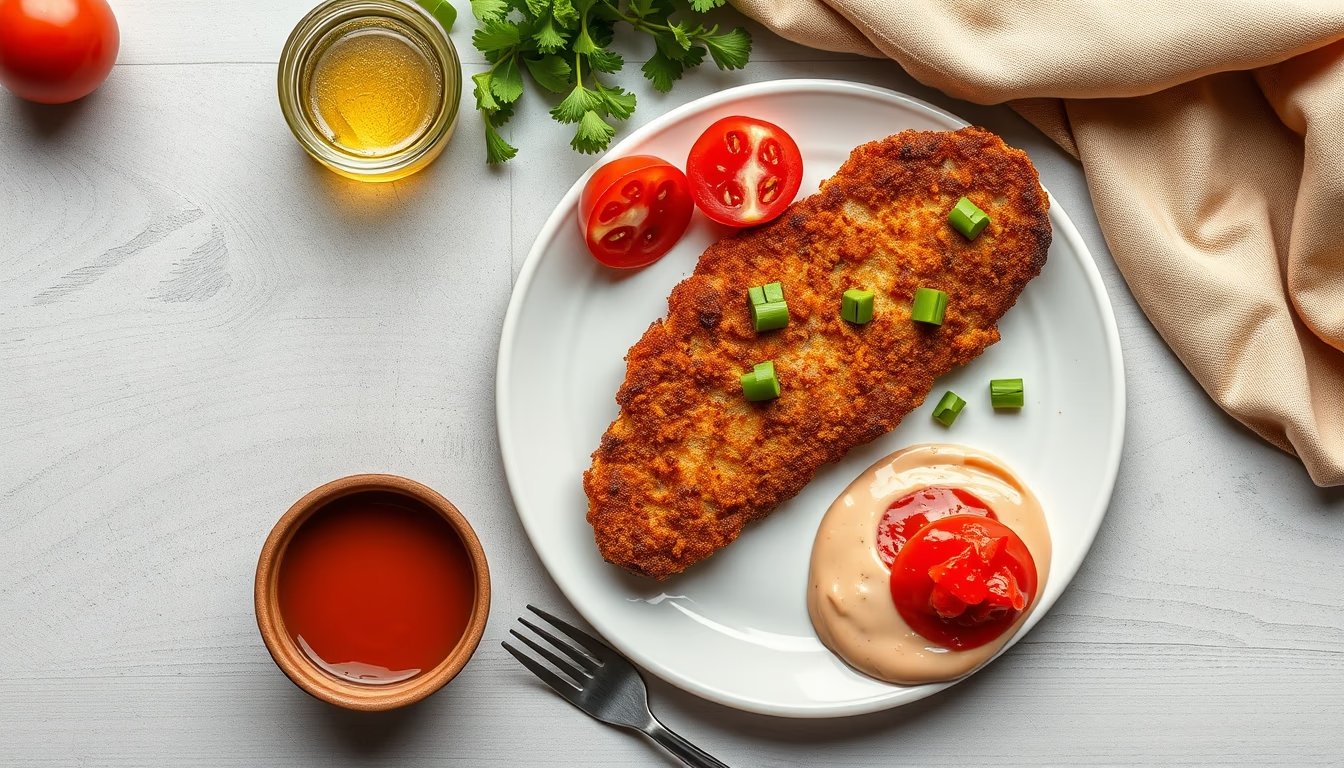
Wiener schnitzel plate
1344×768 · AVIF · CC BY 4.0
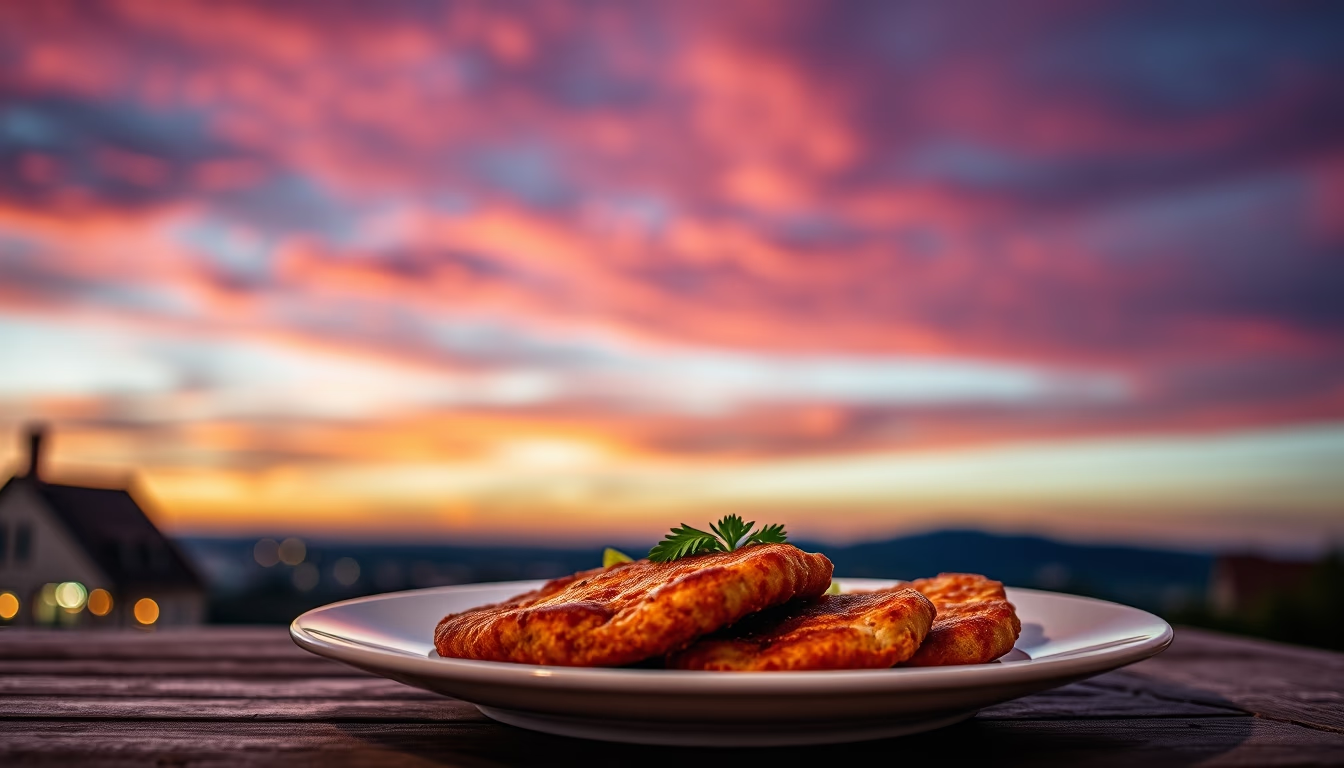
Wiener Schnitzel plate: a classic Austrian dish of breaded and fried veal cutlet, traditionally served with lemon and side dishes.
About this subject
Wiener Schnitzel is one of Austria's most iconic dishes, recognized worldwide as a symbol of Viennese cuisine. It consists of a thin veal cutlet, tenderized, breaded with flour, eggs, and breadcrumbs, and fried in fat or oil until golden brown. The original recipe, protected by Austrian law, requires veal exclusively; variations using pork or chicken are called Schnitzel Wiener Art or simply Schnitzel.
The dish's origins trace back to the 19th century, possibly influenced by the Italian cotoletta alla milanese. However, Austrians claim that Wiener Schnitzel emerged in Vienna around 1850. Traditionally served with lemon wedges, which the diner squeezes over the meat, it is accompanied by potato salad, cucumber salad (Gurkensalat), or parsley potatoes (Petersilkartoffeln). The crispy breading contrasts with the tender veal, and the lemon adds acidity to balance the frying.
Culturally, Wiener Schnitzel is a source of national pride. It is common in traditional Viennese restaurants called Beisl and at family gatherings. The Society of Friends of Wiener Schnitzel promotes its preservation. Despite being fried, it is consumed in moderation as part of a balanced meal. Interestingly, in Austrian German, the phrase "take the Schnitzel out of the fire" means to quickly solve a problem.
Technically, the key is oil temperature: it should be between 160°C and 170°C to prevent the breading from absorbing too much fat and to ensure crispiness. The ideal schnitzel should be no thicker than 3-4 mm after tenderizing. Typical sides include potato salad with onions and mustard. Nowadays, vegetarian versions using seitan or mushrooms are also gaining popularity.
Frequently Asked Questions
What is the difference between Wiener Schnitzel and regular schnitzel?
Wiener Schnitzel is made exclusively with veal, while regular schnitzel can be pork, chicken, or turkey. In Austria, the term 'Wiener Schnitzel' is legally protected, requiring veal.
What are traditional side dishes for Wiener Schnitzel?
Traditionally, it is served with lemon wedges, potato salad, cucumber salad (Gurkensalat), or parsley potatoes (Petersilkartoffeln). The potato salad often includes onions and mustard.
How to achieve a crispy breading on Wiener Schnitzel?
The key is maintaining oil temperature at 160-170°C. The meat should be thin (3-4 mm) and avoid pressing the breading during frying. Using fresh breadcrumbs helps texture.
Direct URL
https://pub-c7d6a6ea828543ac903a74a341ccb2e1.r2.dev/imagens/wiener-schnitzel-plate-long-exposure-fresh16.avifHow to credit
Include a visible link back to UtilizAí. Copy one of the snippets below:
<a href="https://xn--utiliza-eza.com/en/midia/imagens/wiener-schnitzel-plate-long-exposure-fresh16">Wiener schnitzel plate</a> by <a href="https://xn--utiliza-eza.com">UtilizAí</a>, licensed under <a href="https://creativecommons.org/licenses/by/4.0/">CC BY 4.0</a>.
[Wiener schnitzel plate](https://xn--utiliza-eza.com/en/midia/imagens/wiener-schnitzel-plate-long-exposure-fresh16) by [UtilizAí](https://xn--utiliza-eza.com), CC BY 4.0
License: CC-BY-4.0