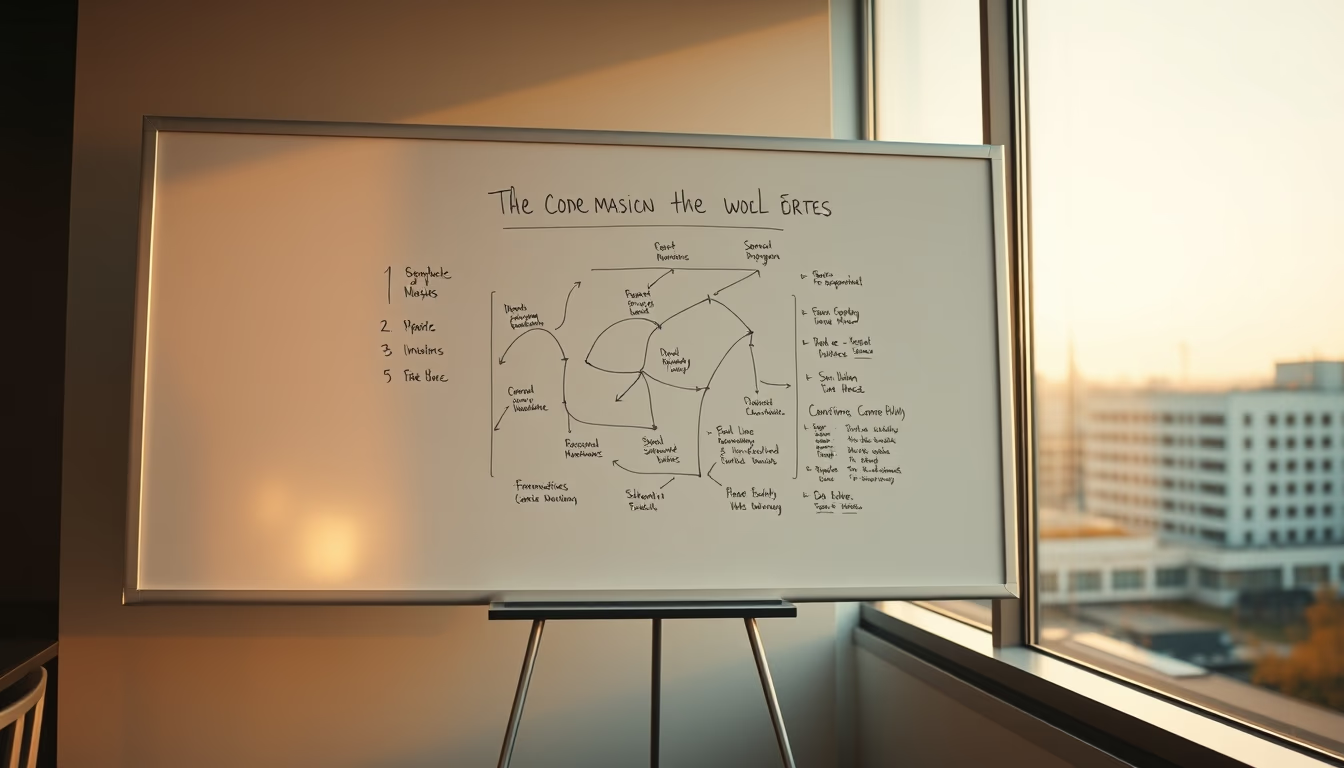
Whiteboard with diagram
1344×768 · AVIF · CC BY 4.0
Whiteboard with diagram is an essential tool in modern offices, facilitating brainstorming and visual project planning.
About this subject
The whiteboard, also known as a dry-erase board, has become an indispensable item in offices worldwide since its popularization in the 1990s. Unlike traditional chalkboards, which use chalk, whiteboards are made of non-porous laminated material, allowing the use of solvent- or alcohol-based markers that are easily erased with dry erasers. This feature reduced dust and allergies common in educational and corporate environments.
In workplaces, whiteboards are widely used for brainstorming sessions, process mapping, workflow diagramming, and project tracking. The ease of writing, erasing, and rewriting makes the whiteboard a dynamic tool for team collaboration. Many companies adopt agile methodologies such as Scrum and Kanban, which rely on physical boards to visualize tasks in columns like "To Do", "In Progress", and "Done".
Diagrams drawn on whiteboards often represent complex ideas in a simplified way. For example, flowcharts, mind maps, and product wireframes are common. Studies show that the act of drawing by hand on a board activates brain regions linked to creativity and memory, promoting better information retention. Additionally, using different colored markers helps categorize information and highlight priorities.
With technological advancements, interactive digital whiteboards have emerged, allowing digital saving of written content and integration with productivity software. However, the traditional whiteboard remains present in meeting rooms, startups, and even home offices due to its simplicity and low cost. The versatility of the whiteboard as a support for diagrams reflects the human need to think visually and collaborate tangibly.
Frequently Asked Questions
What are the main types of markers for whiteboards?
The most common markers are alcohol- or solvent-based, low-odor, and easy to erase. There are also liquid ink markers and eco-friendly water-based ones.
How to properly clean a whiteboard to avoid stains?
Use a dry eraser or soft cloth. For stubborn stains, use isopropyl alcohol or specific whiteboard cleaners. Avoid abrasive cleaners.
What are the differences between traditional and digital whiteboards?
Traditional whiteboards are physical, low-cost, and require no power. Digital whiteboards allow saving, sharing, and editing content online but depend on electricity and software.
Direct URL
https://pub-c7d6a6ea828543ac903a74a341ccb2e1.r2.dev/imagens/whiteboard-with-diagram-national-geographic-style-p0.avifHow to credit
Include a visible link back to UtilizAí. Copy one of the snippets below:
<a href="https://xn--utiliza-eza.com/en/midia/imagens/whiteboard-with-diagram-national-geographic-style-p0">Whiteboard with diagram</a> by <a href="https://xn--utiliza-eza.com">UtilizAí</a>, licensed under <a href="https://creativecommons.org/licenses/by/4.0/">CC BY 4.0</a>.
[Whiteboard with diagram](https://xn--utiliza-eza.com/en/midia/imagens/whiteboard-with-diagram-national-geographic-style-p0) by [UtilizAí](https://xn--utiliza-eza.com), CC BY 4.0
License: CC-BY-4.0