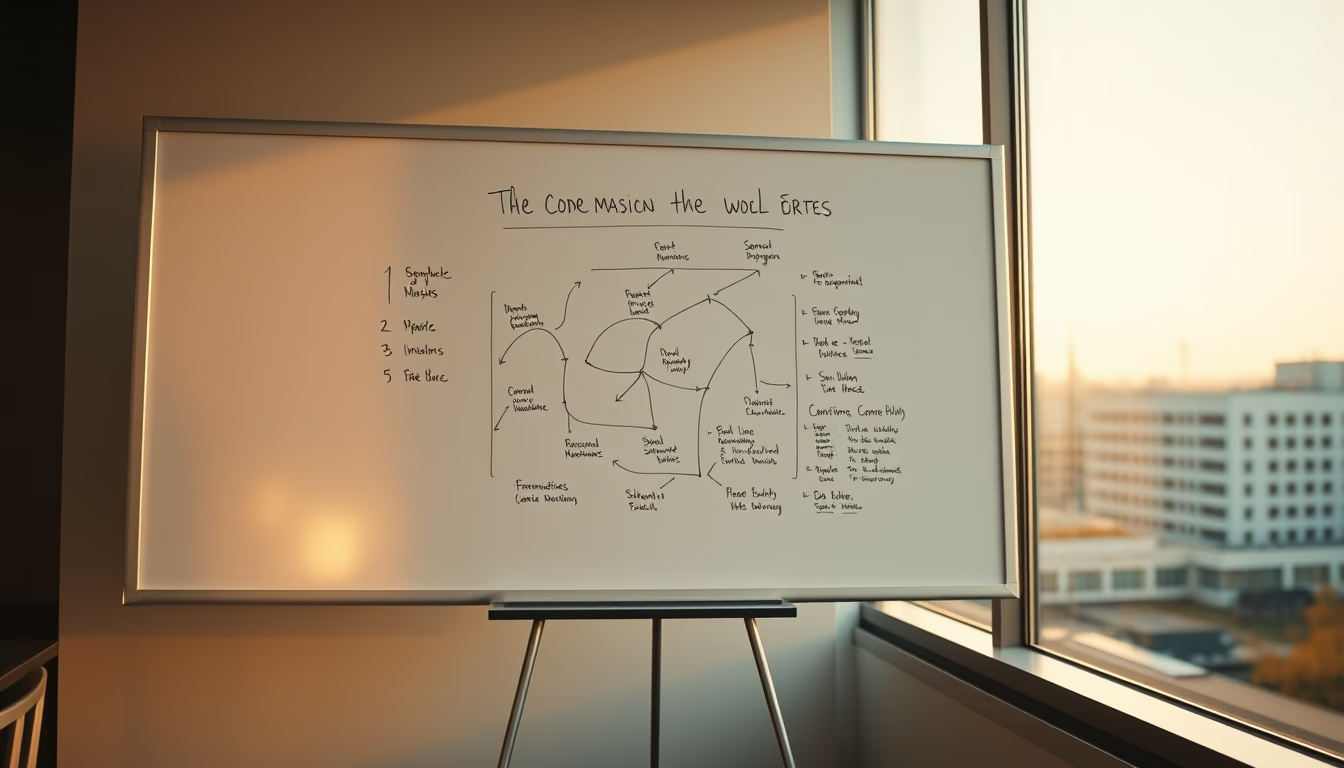
Whiteboard with diagram
1344×768 · AVIF · CC BY 4.0

Whiteboards with diagrams are essential tools for brainstorming, strategic planning, and visualizing ideas in modern offices.
About this subject
The use of whiteboards in corporate environments dates back to the late 1950s, when the American company Magiboards introduced the first enameled surfaces. Unlike chalkboards, whiteboards allow the use of colorful markers, facilitating the creation of complex diagrams. In offices, whiteboard diagrams are common in team meetings, design thinking sessions, and agile methodologies such as Scrum, where task boards (Kanban) are often drawn.
A typical whiteboard diagram may represent workflows, organizational charts, mind maps, or interface prototypes. These visual aids help communicate abstract ideas and align multidisciplinary teams. Management studies indicate that collaborative visualization on whiteboards increases information retention by up to 40% compared to verbal-only meetings.
Culturally, the whiteboard has become an icon of workplace creativity, often associated with startups and innovative companies. Firms like Google and Apple invest in rooms equipped with large whiteboards to stimulate collaboration. In Brazil, their use is widespread in tech offices, consultancies, and universities.
Technical curiosity: the best current whiteboards have porcelain or enameled steel surfaces that resist staining and allow erasing even permanent markers with specific solvents. Low-odor markers have made the environment more pleasant. Regular maintenance with appropriate cleaners extends the board's lifespan.
Frequently Asked Questions
What are the benefits of using a whiteboard for diagrams in the office?
Whiteboards enable real-time collaborative visualization, facilitating brainstorming and team alignment. Studies show up to 40% improvement in information retention when ideas are drawn out.
How to choose the best whiteboard for an office?
Prioritize porcelain or enameled steel surfaces, which are more stain-resistant. Size should match the space and number of participants. Low-odor markers are recommended for enclosed environments.
Are whiteboards still relevant with the rise of digital tools?
Yes, because they offer tactile and immediate interaction that digital tools sometimes lack. Many companies combine physical whiteboards with digital solutions, such as cameras that automatically digitize diagrams.
Direct URL
https://pub-c7d6a6ea828543ac903a74a341ccb2e1.r2.dev/imagens/whiteboard-with-diagram-documentary-photography-p5.avifHow to credit
Include a visible link back to UtilizAí. Copy one of the snippets below:
<a href="https://xn--utiliza-eza.com/en/midia/imagens/whiteboard-with-diagram-documentary-photography-p5">Whiteboard with diagram</a> by <a href="https://xn--utiliza-eza.com">UtilizAí</a>, licensed under <a href="https://creativecommons.org/licenses/by/4.0/">CC BY 4.0</a>.
[Whiteboard with diagram](https://xn--utiliza-eza.com/en/midia/imagens/whiteboard-with-diagram-documentary-photography-p5) by [UtilizAí](https://xn--utiliza-eza.com), CC BY 4.0
License: CC-BY-4.0