Whiteboard with diagram
1344×768 · AVIF · CC BY 4.0
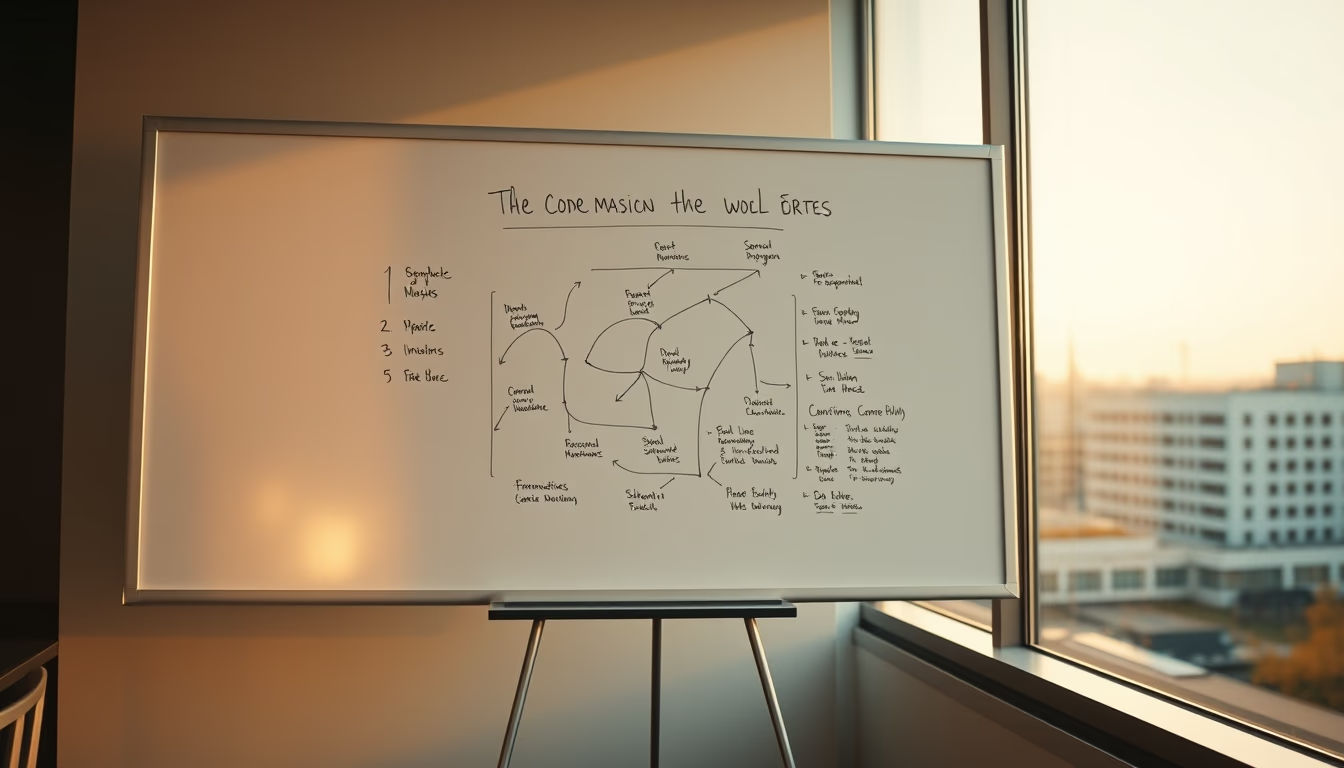
Whiteboard diagrams serve as a crucial tool in office settings for brainstorming, strategic planning, and collaborative visual thinking.
About this subject
The whiteboard, invented in the 1950s by Albert Stallion, transformed how teams share information. Unlike chalkboards, it eliminates dust and allows colorful markers, facilitating dynamic diagram creation. Common types include flowcharts for processes, mind maps for organizing ideas radially, and fishbone diagrams for root cause analysis.
In corporate environments, whiteboard diagrams are essential in agile methodologies like Scrum, where task boards monitor progress. Studies indicate that drawing by hand in a group improves information retention and encourages active participation, making meetings more efficient. Whiteboards are also prevalent in classrooms, especially in science and math, for step-by-step problem solving.
A notable fact is that the first commercial whiteboard was produced by Steelcase in 1962 but gained traction only in the 1980s with erasable markers. Today, digital versions like Microsoft Whiteboard and Miro replicate the experience for remote teams. However, physical whiteboards remain favored for their simplicity and tactile nature, fostering spontaneous interaction.
Frequently Asked Questions
What are common types of whiteboard diagrams?
Common types include flowcharts, mind maps, fishbone diagrams, Venn diagrams, and task boards (like in Scrum). Each serves specific purposes such as process analysis, idea organization, or agile planning.
How did the whiteboard become popular in corporate environments?
After its invention in the 1950s, the whiteboard gained popularity in the 1980s with the development of erasable markers. Adoption was driven by the need for clean, flexible visual tools for meetings and training sessions.
What are the benefits of using whiteboard diagrams in meetings?
Benefits include improved information retention, higher participant engagement, clear visualization of complex ideas, and easy revision. The collaborative nature of hand-drawn diagrams fosters more open and creative discussions.
Direct URL
https://pub-c7d6a6ea828543ac903a74a341ccb2e1.r2.dev/imagens/whiteboard-with-diagram-cinematic-wide-shot-p6.avifHow to credit
Include a visible link back to UtilizAí. Copy one of the snippets below:
<a href="https://xn--utiliza-eza.com/en/midia/imagens/whiteboard-with-diagram-cinematic-wide-shot-p6">Whiteboard with diagram</a> by <a href="https://xn--utiliza-eza.com">UtilizAí</a>, licensed under <a href="https://creativecommons.org/licenses/by/4.0/">CC BY 4.0</a>.
[Whiteboard with diagram](https://xn--utiliza-eza.com/en/midia/imagens/whiteboard-with-diagram-cinematic-wide-shot-p6) by [UtilizAí](https://xn--utiliza-eza.com), CC BY 4.0
License: CC-BY-4.0