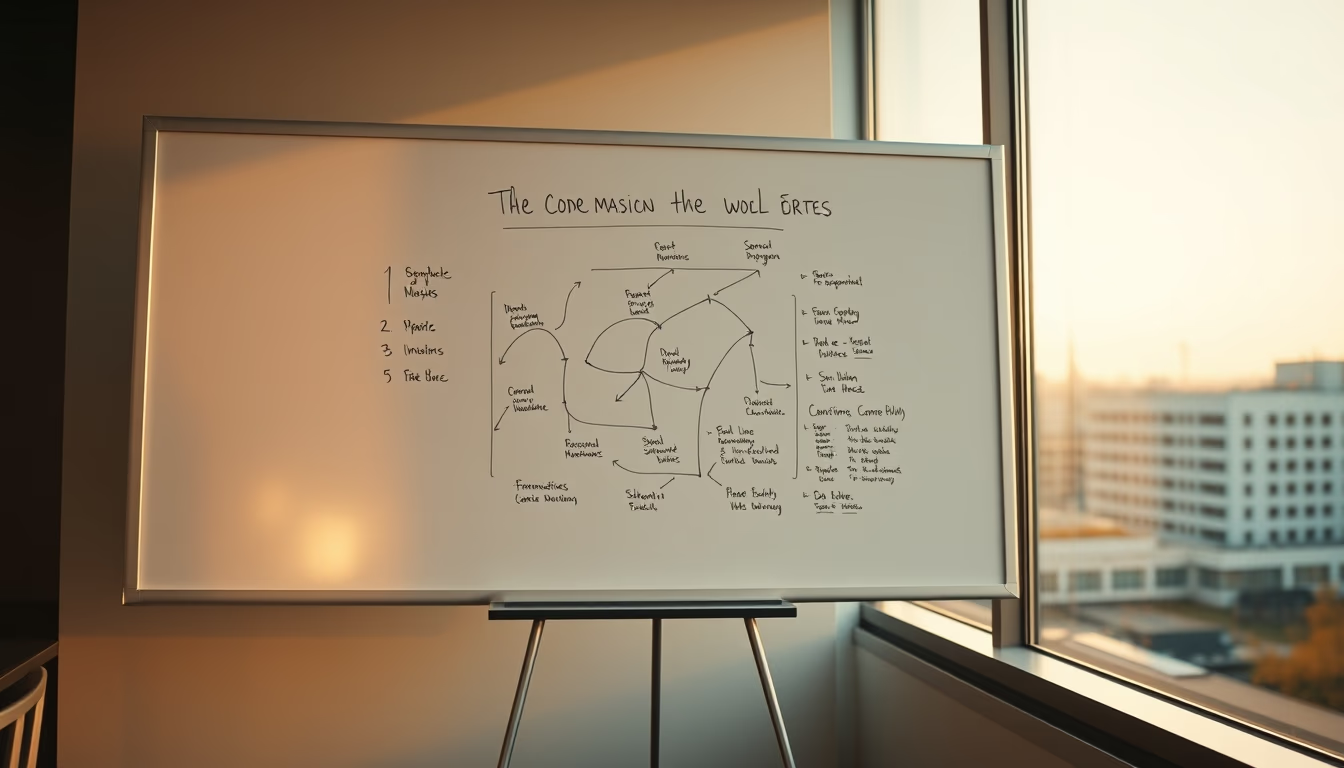
Whiteboard at home
1344×768 · AVIF · CC BY 4.0

The home whiteboard is a versatile tool for organization, study, and creativity at home, combining visual practicality with endless reuse.
About this subject
The whiteboard has become an essential household item, especially with the rise of remote work and online education. Unlike traditional chalkboards, whiteboards use dry-erase markers that write smoothly and erase cleanly. They are made from materials such as melamine, porcelain, or glass, each offering different levels of durability and stain resistance. Glass whiteboards, for instance, do not absorb ink and leave no ghosting, while melamine boards are more budget-friendly.
Sizes range from small portable boards of 30x40 cm to large wall-mounted panels of 120x240 cm. Many home whiteboards are magnetic, allowing users to attach papers, photos, or calendars with magnets. Some models feature ruled lines for handwriting practice or planning. The availability of accessories like magnetic rulers, marker trays, and integrated erasers has increased their functionality.
Proper maintenance extends the life of a whiteboard. Only use markers specifically designed for dry-erase boards; permanent markers can ruin the surface. Regular cleaning with a dry cloth or felt eraser removes most residue. For stubborn stains, isopropyl alcohol (at least 70%) applied with a cotton ball works well. Avoid abrasive cleaners or harsh solvents, as they can scratch or dull the surface.
Compared to digital tools like tablets or note-taking apps, whiteboards offer benefits such as no battery requirement, immediate visibility, and the tactile experience of handwriting. They enhance brainstorming, visual planning, and collaboration in home offices and study spaces without digital distractions. With their low cost and versatility, whiteboards remain a relevant and effective tool in modern homes.
Frequently Asked Questions
How do I clean a whiteboard with permanent marker stains?
Apply isopropyl alcohol (70% or higher) to a soft cloth or cotton ball and rub the stained area gently. Then, write over it with a dry-erase marker and erase immediately. This dissolves the permanent ink.
What is the difference between melamine, porcelain, and glass whiteboards?
Melamine boards are the most affordable but may stain over time. Porcelain is more scratch and stain resistant. Glass whiteboards are the most durable, do not absorb ink, have no ghosting, and offer a sleek, premium look.
Can I use any type of magnet on a magnetic whiteboard?
Yes, as long as the board is labeled as magnetic. Common fridge magnets or neodymium magnets work well. Avoid overly heavy magnets that might scratch the surface.
Direct URL
https://pub-c7d6a6ea828543ac903a74a341ccb2e1.r2.dev/imagens/whiteboard-at-home-minimalist-composition-p3.avifHow to credit
Include a visible link back to UtilizAí. Copy one of the snippets below:
<a href="https://xn--utiliza-eza.com/en/midia/imagens/whiteboard-at-home-minimalist-composition-p3">Whiteboard at home</a> by <a href="https://xn--utiliza-eza.com">UtilizAí</a>, licensed under <a href="https://creativecommons.org/licenses/by/4.0/">CC BY 4.0</a>.
[Whiteboard at home](https://xn--utiliza-eza.com/en/midia/imagens/whiteboard-at-home-minimalist-composition-p3) by [UtilizAí](https://xn--utiliza-eza.com), CC BY 4.0
License: CC-BY-4.0