Whale tail above ocean
1344×768 · AVIF · CC BY 4.0
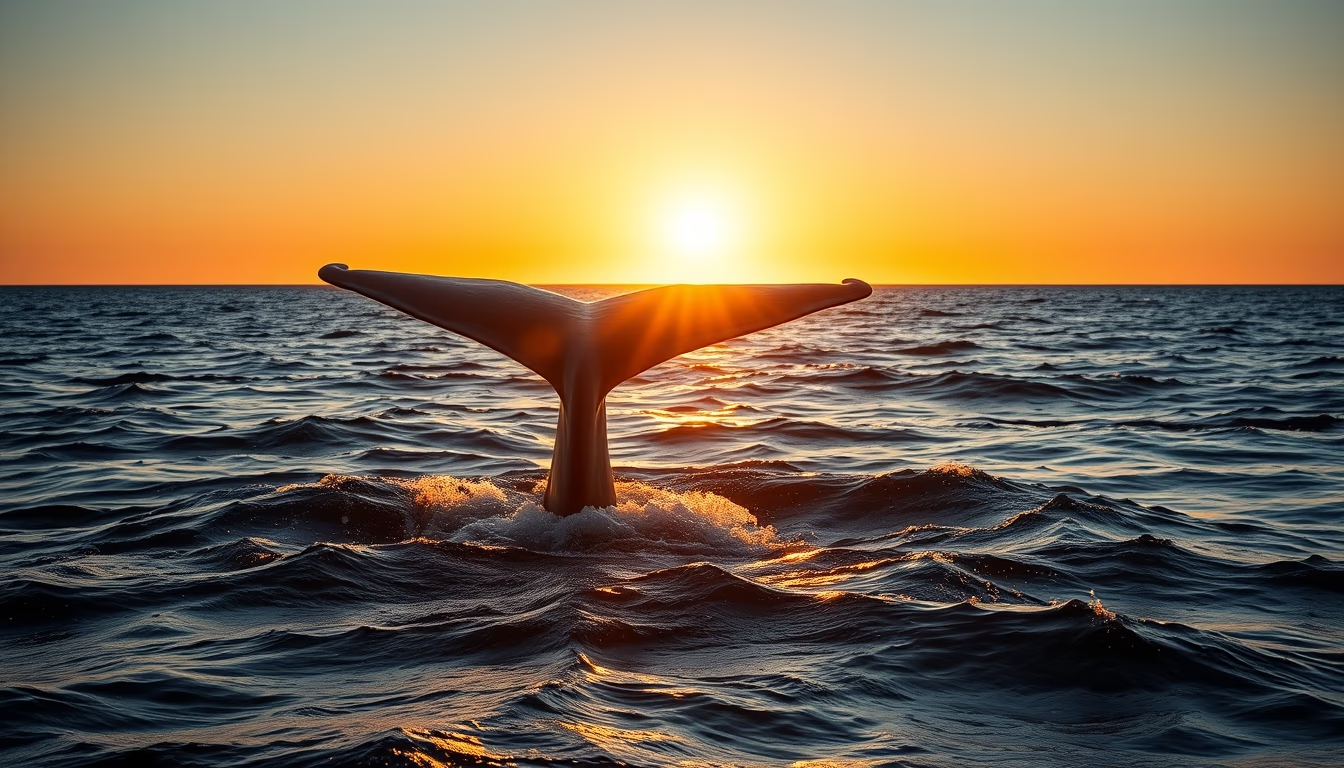
A whale tail emerges from the ocean, revealing unique patterns that allow individual identification, essential for migration and behavior studies.
About this subject
The tail of a whale, known as the fluke, is the primary propulsion structure for these marine mammals. Each whale has unique pigmentation patterns, scars, and edge notches on the fluke, akin to human fingerprints. Researchers use photo-identification to catalog individuals, especially in species like the humpback whale (Megaptera novaeangliae) and the southern right whale (Eubalaena australis). This method tracks migratory routes, estimates populations, and studies social behavior.
The act of raising the tail above water, called fluking, typically occurs when the whale begins a deep dive to feed. By lifting the fluke, the whale gains momentum to descend rapidly toward schools of fish or krill. The height and angle of the tail vary by species and dive depth. This behavior is common in humpbacks, sperm whales, and blue whales, often observed during feeding seasons in cold, nutrient-rich waters.
Regions such as the coast of Recife and Cabo Frio in Brazil, Hervey Bay in Australia, and Monterey Bay in California are famous for whale sightings with tails exposed. Whale-watching tourism generates billions of dollars annually and follows guidelines to minimize animal stress. Tail photographs directly contribute to citizen science, where tourists submit images to identification databases.
A curiosity: some whales, like the gray whale, may have barnacle colonies and whale lice attached to the tail. The fluke's width can reach up to one-third of the animal's total length. The vertical movement of the tail is powered by strong muscles, enabling speeds of up to 30 km/h over short distances.
Frequently Asked Questions
Why do whales lift their tails out of water?
They lift their tails to begin a deep dive for feeding, using the vertical momentum to descend quickly.
How do scientists identify whales by their tails?
They photograph the unique patterns of spots, scars, and notches on the fluke, comparing them to a catalog of known individuals.
Where is it common to see whales with their tails above water?
In feeding and migration areas such as the Brazilian coast (Recife, Cabo Frio), Hawaii, and Australia (Hervey Bay).
Direct URL
https://pub-c7d6a6ea828543ac903a74a341ccb2e1.r2.dev/imagens/whale-tail-above-ocean-travel-photography-p2.avifHow to credit
Include a visible link back to UtilizAí. Copy one of the snippets below:
<a href="https://xn--utiliza-eza.com/en/midia/imagens/whale-tail-above-ocean-travel-photography-p2">Whale tail above ocean</a> by <a href="https://xn--utiliza-eza.com">UtilizAí</a>, licensed under <a href="https://creativecommons.org/licenses/by/4.0/">CC BY 4.0</a>.
[Whale tail above ocean](https://xn--utiliza-eza.com/en/midia/imagens/whale-tail-above-ocean-travel-photography-p2) by [UtilizAí](https://xn--utiliza-eza.com), CC BY 4.0
License: CC-BY-4.0