Whale tail above ocean
1344×768 · AVIF · CC BY 4.0
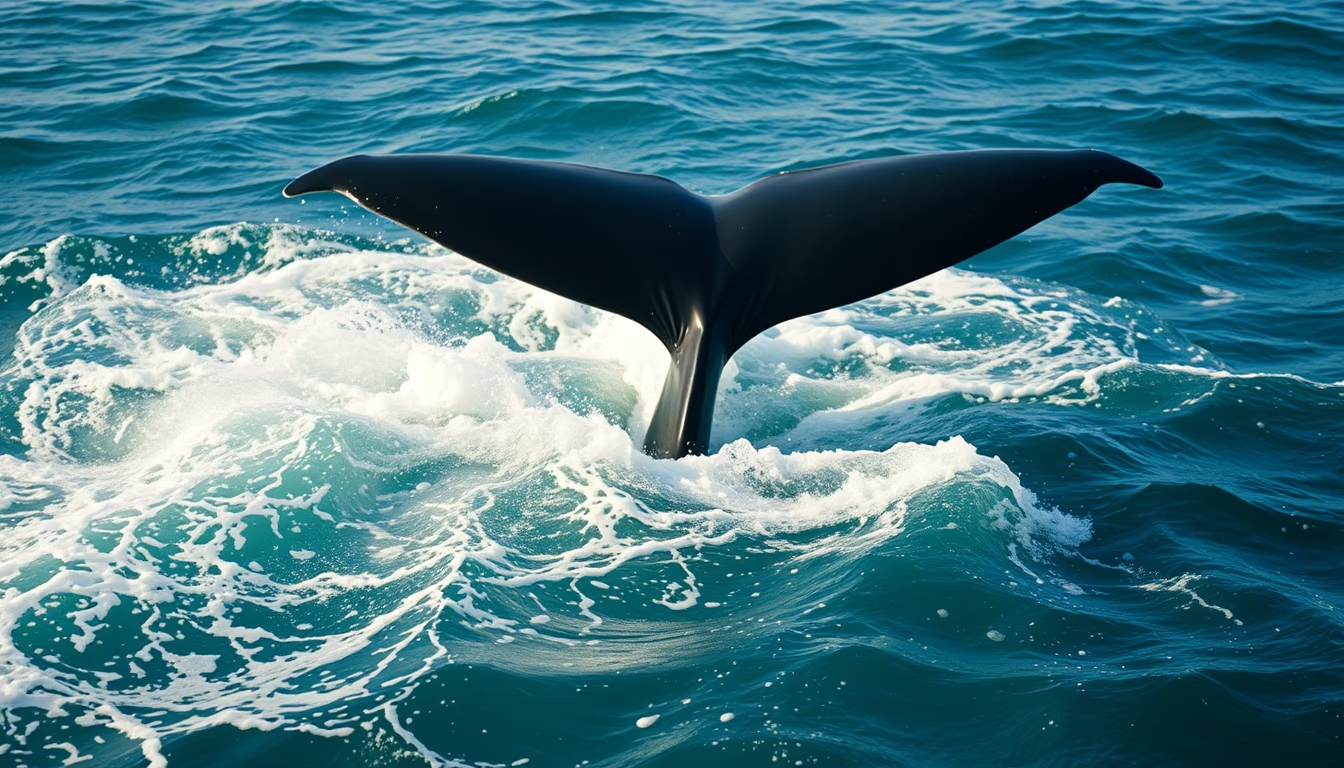
A whale tail emerges above the ocean, a spectacle that reveals the majesty and habits of these marine giants.
About this subject
The tail of a whale, also known as the caudal fin or fluke, consists of two lobes that can reach up to one-third of the animal's total length. In species like the humpback whale (Megaptera novaeangliae), the tail is often displayed during deep dives, when the whale lifts its tail vertically before submerging. This behavior, called "fluke up," allows researchers to identify individuals through unique patterns of white spots and scars on the underside of the tail.
Whales use their tails for propulsion, with vertical movements that drive them through the water. The speed and power of these movements vary by species and situation: a blue whale (Balaenoptera musculus) can generate up to 500 horsepower with its tail. Beyond locomotion, the tail serves for visual communication and even defense, as when humpback whales slap the surface to signal aggression or deter predators.
In the context of migration, species like the southern right whale (Eubalaena australis) travel thousands of kilometers between feeding grounds in cold waters and breeding grounds in tropical waters. The tail plays a crucial role in the energy efficiency of these journeys. Unfortunately, ship strikes and entanglement in fishing gear pose significant threats, often leaving visible scars on tails.
Whale watching has become a popular tourist activity in many countries, especially in Brazil, where spots like Praia do Forte (BA) and Ilhabela (SP) offer humpback sightings between June and November. Each tail is unique, acting like a fingerprint, helping scientists monitor populations and behaviors over the years.
Frequently Asked Questions
Why do whales raise their tails before diving?
This behavior, known as "fluke up," helps the whale dive vertically into deeper waters. It also allows researchers to identify each animal by the unique patterns on the underside of the tail.
How is the whale tail used for locomotion?
The tail moves vertically to propel the animal forward. The flukes generate thrust, and the power can be immense, such as in the blue whale, which achieves the equivalent of 500 horsepower.
Can a whale's tail be used for identification?
Yes, like human fingerprints, the markings and pigmentation on the underside of the tail are unique to each individual, allowing for long-term population monitoring.
Direct URL
https://pub-c7d6a6ea828543ac903a74a341ccb2e1.r2.dev/imagens/whale-tail-above-ocean-film-grain-authentic-p6.avifHow to credit
Include a visible link back to UtilizAí. Copy one of the snippets below:
<a href="https://xn--utiliza-eza.com/en/midia/imagens/whale-tail-above-ocean-film-grain-authentic-p6">Whale tail above ocean</a> by <a href="https://xn--utiliza-eza.com">UtilizAí</a>, licensed under <a href="https://creativecommons.org/licenses/by/4.0/">CC BY 4.0</a>.
[Whale tail above ocean](https://xn--utiliza-eza.com/en/midia/imagens/whale-tail-above-ocean-film-grain-authentic-p6) by [UtilizAí](https://xn--utiliza-eza.com), CC BY 4.0
License: CC-BY-4.0