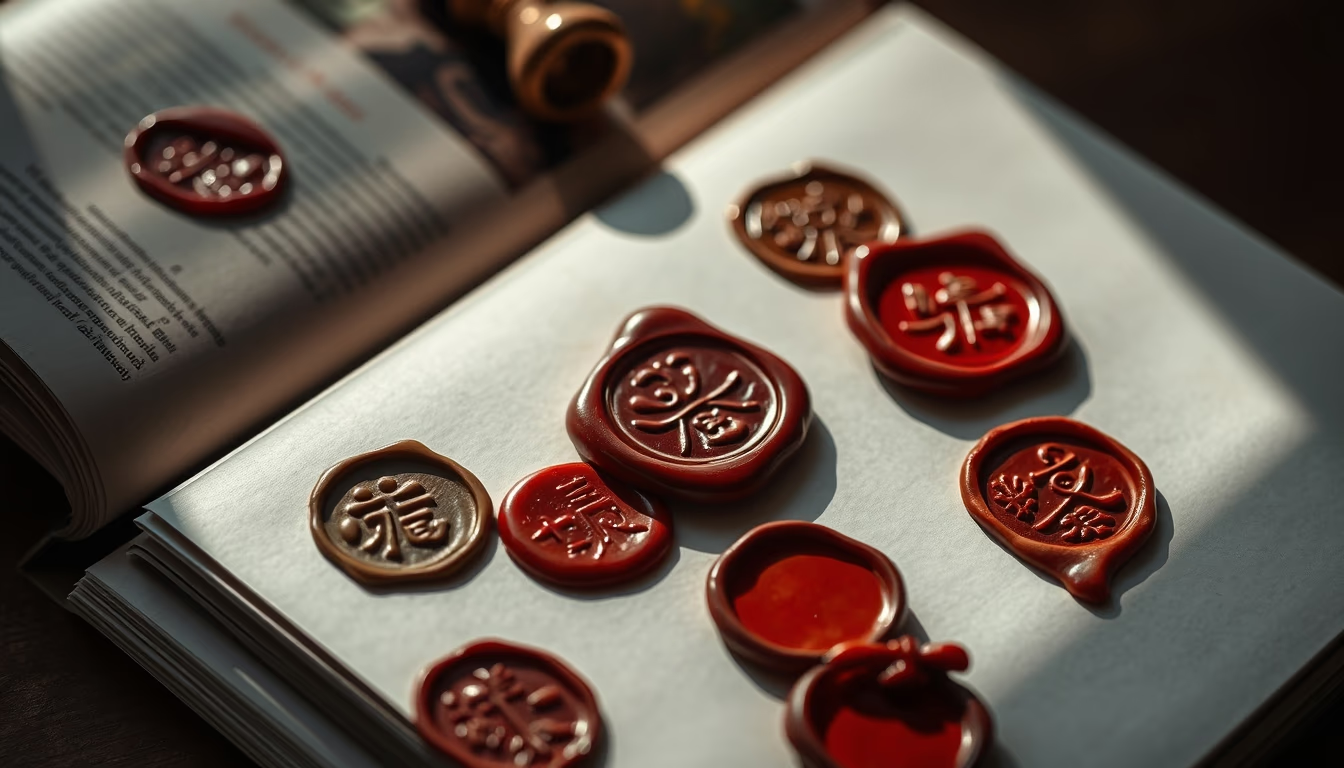
Wax seal collection
1344×768 · AVIF · CC BY 4.0
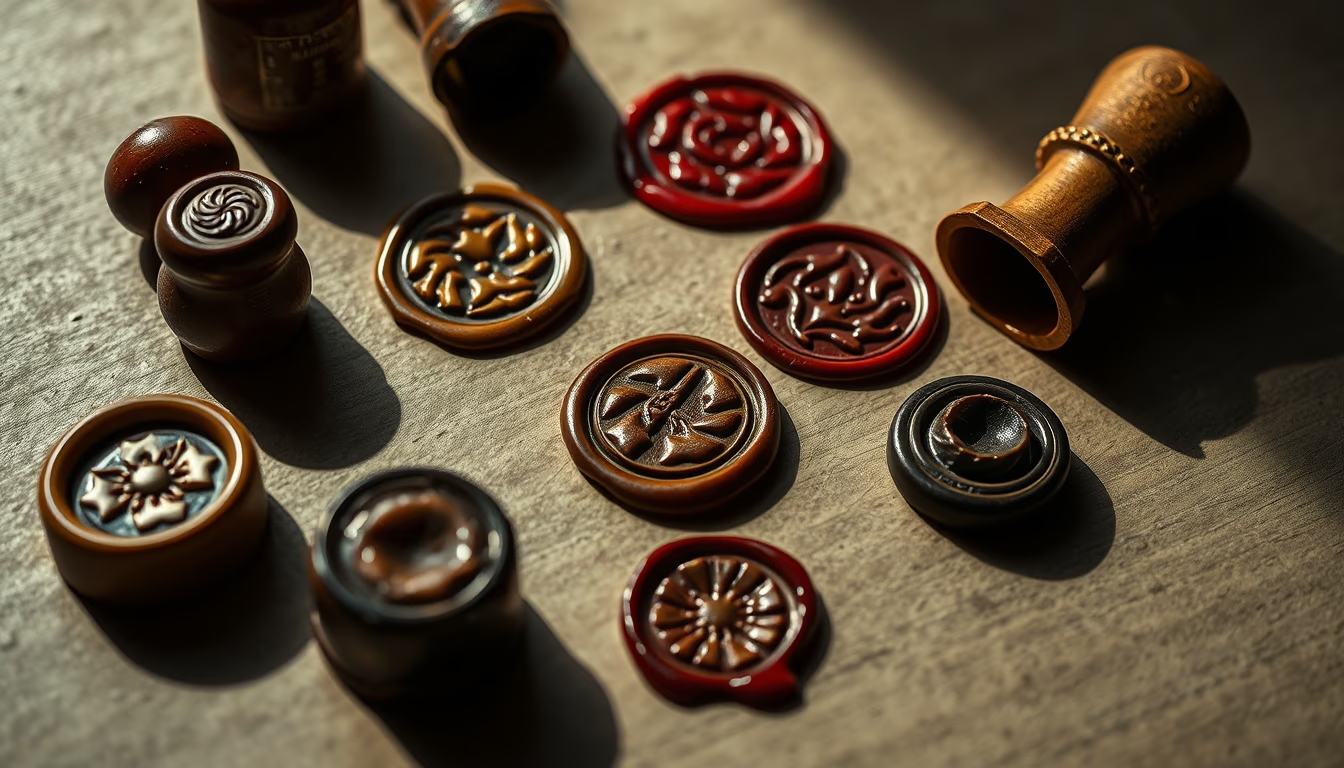
A collection of wax seals with varied designs, pieces that sealed correspondence and documents with personal identity.
About this subject
Wax seals are small tools that imprint a raised design onto melted wax to seal envelopes, documents, or packages. This practice dates back to ancient times: Egyptian, Greek, and Roman civilizations used seals to authenticate writings and guarantee tamper-proofing. In the Middle Ages, wax became indispensable for letters, decrees, and wills, often engraved with family crests or monograms. Each seal was unique, functioning as a visual signature.
In Brazil, the use of wax seals arrived with Portuguese colonization, especially in official documents and personal correspondence. During the Empire, wax seals bearing the imperial coat of arms were common on government papers. Today, although wax seals are no longer mandatory, the practice survives in wedding invitations, certificates, or handicraft projects. Collectors seek both antique and modern seals, valuing stylistic diversity: from heraldic crests to floral motifs, animals, or abstract symbols.
The application technique has also evolved. Historically, wax was melted over a flame and poured onto paper; then the seal was pressed. Today, there are wax spoons with spouts for smokeless heating, as well as stick versions for glue guns. The revival of wax sealing is linked to the lettering and calligraphy movement, emphasizing analog communication and vintage aesthetics.
Fun fact: seals were not only used for wax. Some were worn as signet rings, allowing the bearer to authenticate orders instantly. The word "seal" comes from Latin signetum, diminutive of signum (sign).
Frequently Asked Questions
How to choose a wax seal for a collection?
Look at the material (brass, steel or resin), the size of the design and the handle fitting. Prefer seals with sharp details for a clear impression.
Can I use any type of wax for sealing?
Yes, but traditional sealing wax (based on natural resin) adheres better and gives a glossy finish. Avoid paraffin, which may crack and lose detail.
Does wax sealing still have legal value in Brazil?
No. Today, digital signatures and notarization replace wax on official documents. However, wax seals are accepted as decorative or security elements on invitations and certificates.
Direct URL
https://pub-c7d6a6ea828543ac903a74a341ccb2e1.r2.dev/imagens/wax-seal-collection-rembrandt-lighting-dramatic-shadows-fresh10.avifHow to credit
Include a visible link back to UtilizAí. Copy one of the snippets below:
<a href="https://xn--utiliza-eza.com/en/midia/imagens/wax-seal-collection-rembrandt-lighting-dramatic-shadows-fresh10">Wax seal collection</a> by <a href="https://xn--utiliza-eza.com">UtilizAí</a>, licensed under <a href="https://creativecommons.org/licenses/by/4.0/">CC BY 4.0</a>.
[Wax seal collection](https://xn--utiliza-eza.com/en/midia/imagens/wax-seal-collection-rembrandt-lighting-dramatic-shadows-fresh10) by [UtilizAí](https://xn--utiliza-eza.com), CC BY 4.0
License: CC-BY-4.0