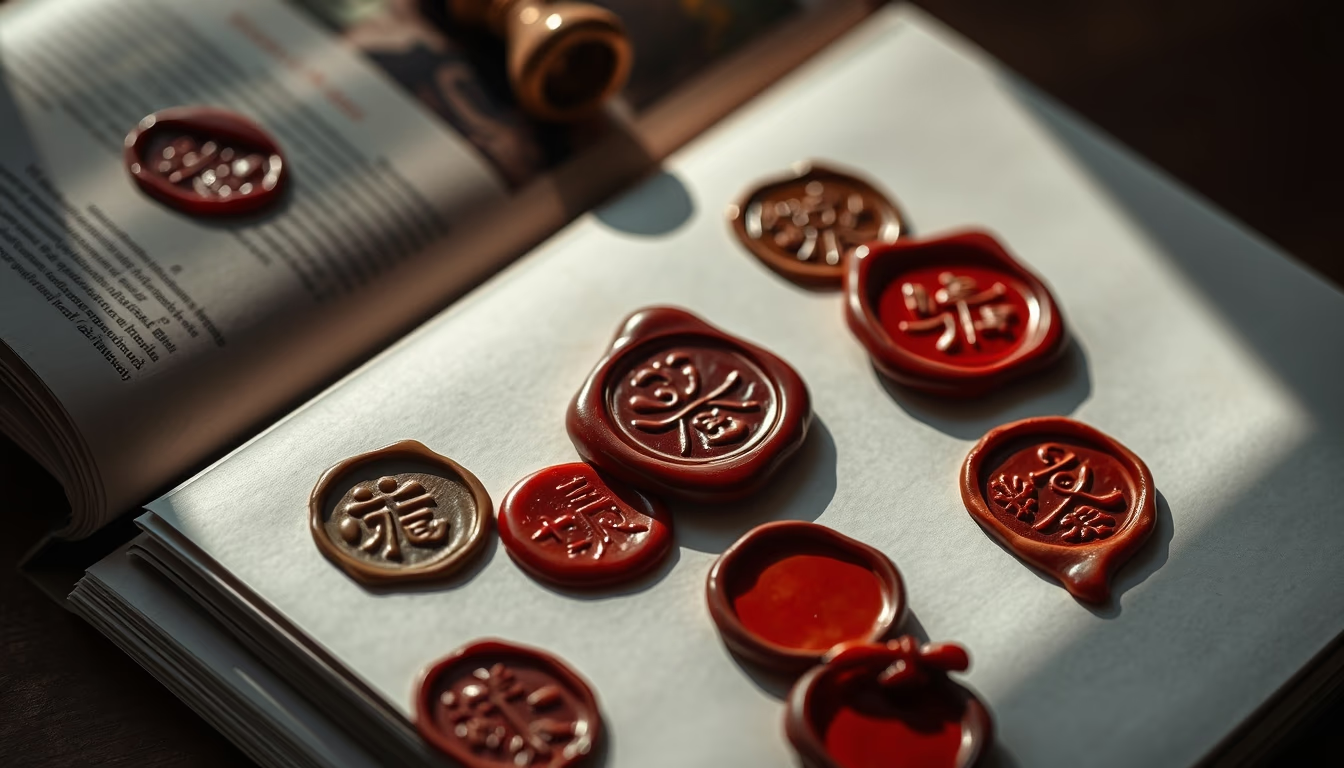
Wax seal collection
1344×768 · AVIF · CC BY 4.0
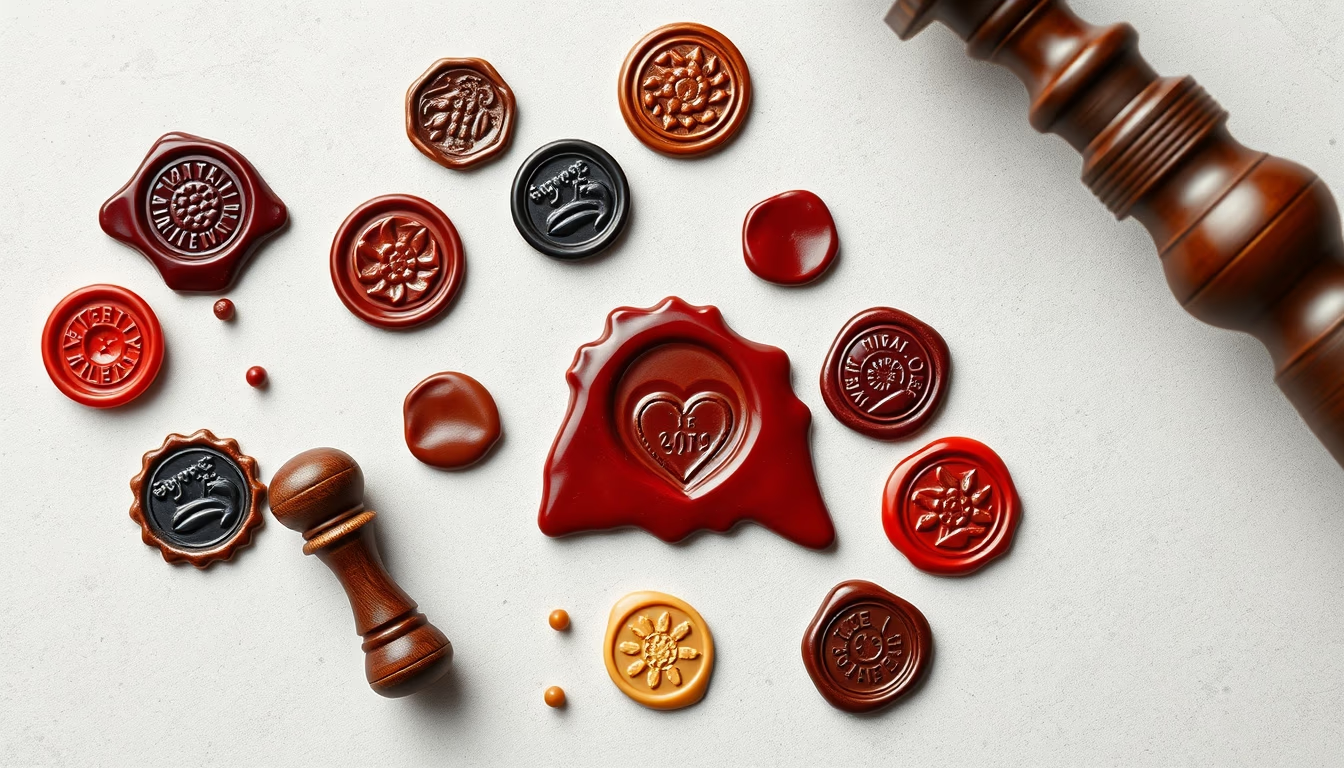
Wax seals, used since antiquity to authenticate documents, are collectible items revealing centuries of written communication.
About this subject
Wax seals originated in Mesopotamia and Ancient Egypt, where cylindrical seals engraved symbols on clay. During the Middle Ages, melted wax began sealing letters and decrees, ensuring privacy and authenticity. The signet ring, used by nobles and institutions, imprinted coats of arms and monograms on the seal. Wax color had meaning: red was common for official documents, black for mourning, and gold for special ceremonies. With the popularization of correspondence in the 19th century, wax seals became decorative items, and today collectors seek rare pieces with historical designs, including seals from rulers, universities, and guilds. The application technique involves heating wax to its melting point, pouring it onto paper, and pressing a metal stamp before it hardens. Modern waxes can be resin-based, offering greater durability. Collections are often organized by historical period, geographic region, or type of coat of arms. Some ancient seals reach high market value, especially those belonging to historical figures. In Brazil, wax seals were used by the Portuguese Crown and later by the Empire. Documents from the colonial period with preserved seals are rare and coveted by historians and collectors. Beyond historical value, wax seals are appreciated by artisans for use in invitations and customized crafts. Collecting wax seals allows tracing the evolution of communication and authentication systems over centuries.
Frequently Asked Questions
What is the historical origin of wax seals?
Wax seals date back to antiquity, used in Mesopotamia and Egypt, but became popular in medieval Europe to seal documents and letters.
How are wax seals made and used?
Wax is heated until melted, poured onto paper, and a metal stamp is pressed before it hardens. They served to authenticate and ensure privacy.
What types of wax are used?
Originally beeswax and resin. Today synthetic versions are available, more flexible and durable, in various colors.
Direct URL
https://pub-c7d6a6ea828543ac903a74a341ccb2e1.r2.dev/imagens/wax-seal-collection-isometric-flat-lay-fresh7.avifHow to credit
Include a visible link back to UtilizAí. Copy one of the snippets below:
<a href="https://xn--utiliza-eza.com/en/midia/imagens/wax-seal-collection-isometric-flat-lay-fresh7">Wax seal collection</a> by <a href="https://xn--utiliza-eza.com">UtilizAí</a>, licensed under <a href="https://creativecommons.org/licenses/by/4.0/">CC BY 4.0</a>.
[Wax seal collection](https://xn--utiliza-eza.com/en/midia/imagens/wax-seal-collection-isometric-flat-lay-fresh7) by [UtilizAí](https://xn--utiliza-eza.com), CC BY 4.0
License: CC-BY-4.0