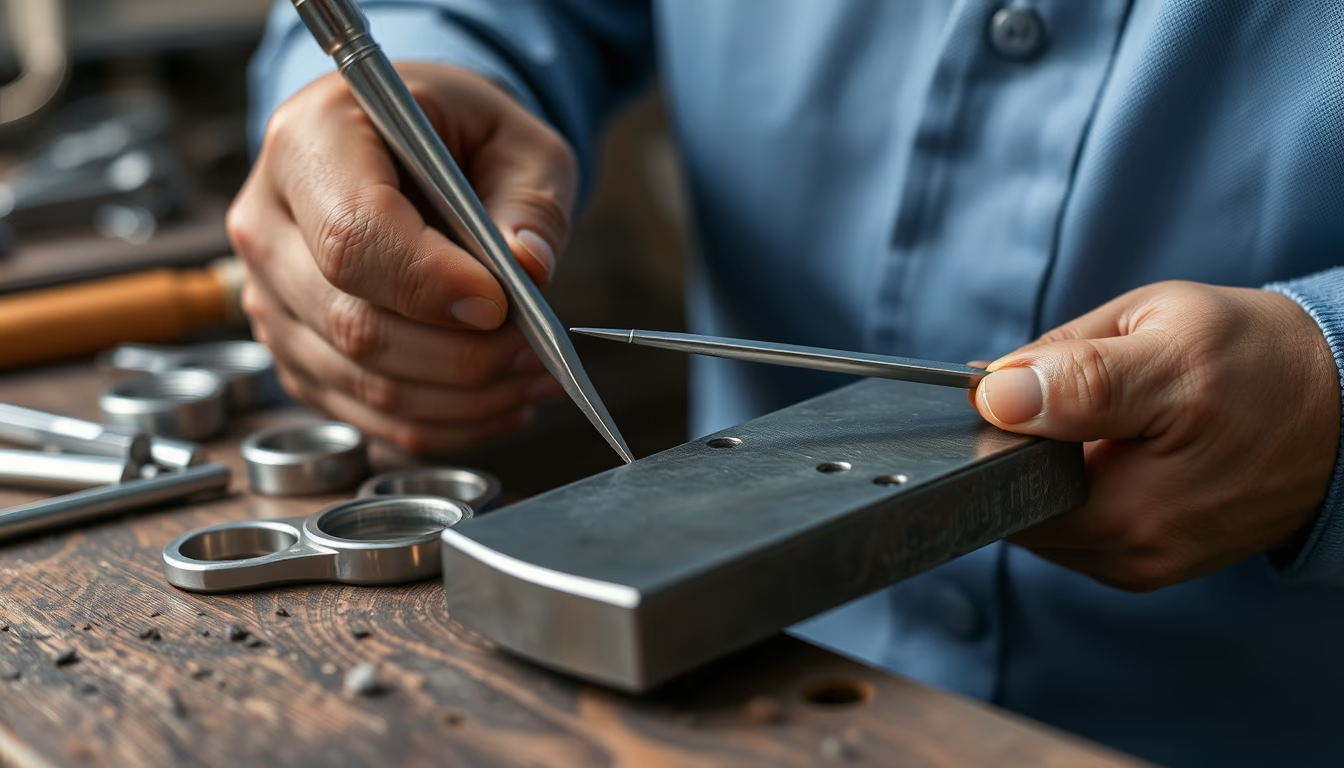
Watercolor wet pigment
1344×768 · AVIF · CC BY 4.0
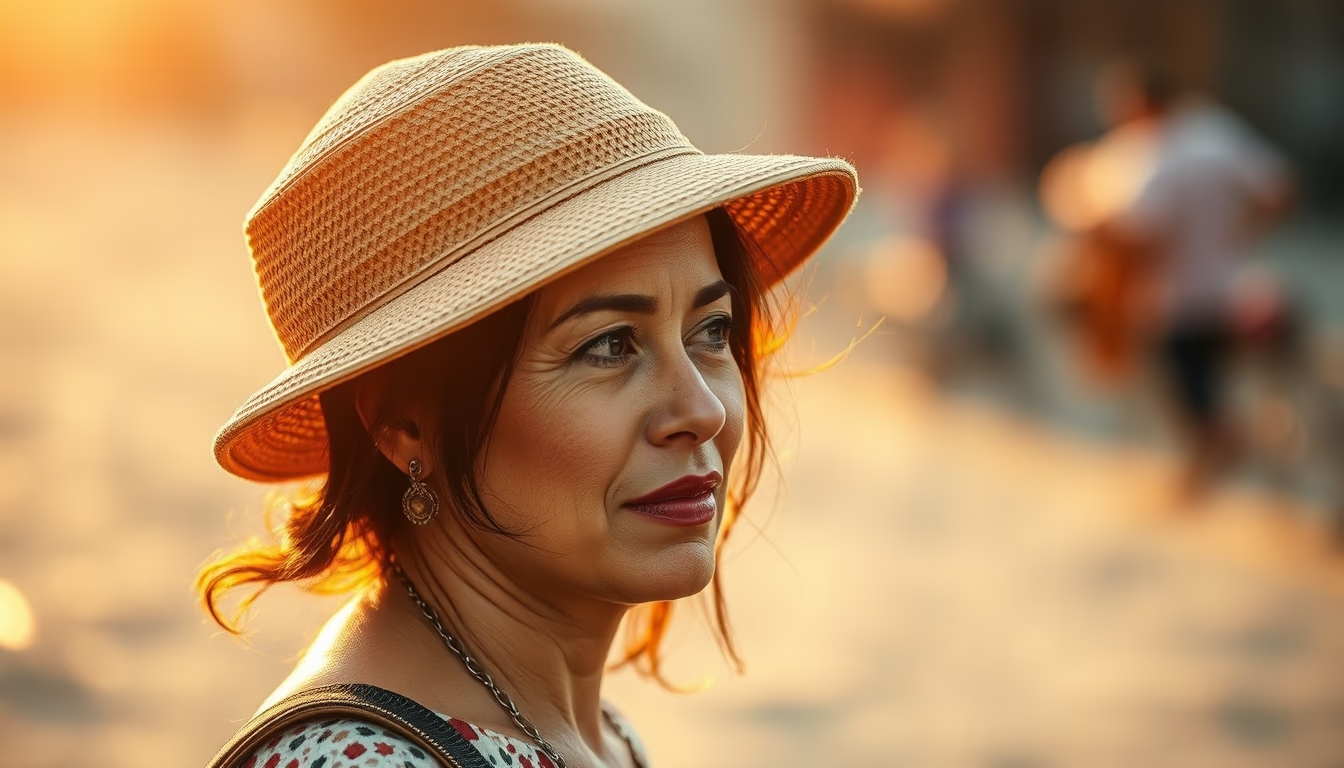
Watercolor is a painting technique that uses pigments dissolved in water, known for its transparency and fluidity.
About this subject
Watercolor, also known as watercolour, is a painting technique that relies on dissolving pigments in water. The mixture is applied to paper, usually cotton or cellulose, which absorbs the liquid and fixes the pigments onto the fibers. Unlike gouache, watercolor is transparent, allowing the white paper to illuminate the colors.
Watercolor history dates back to ancient Egypt and China, but its modern development occurred in Europe during the Renaissance. Artists like Albrecht Dürer used the technique for botanical studies and landscapes. In the 18th century, the British Watercolour Society promoted the genre, and names like J.M.W. Turner expanded its boundaries with ethereal washes. In Brazil, watercolor was spread by traveling artists such as Jean-Baptiste Debret, who recorded scenes from the imperial period.
The most characteristic technique in watercolor is wet-on-wet, where the paper is moistened before applying paint, creating soft edges and organic blends. Controlling water quantity and choosing brushes, such as sable or synthetic, are crucial. Pigments can be mineral, organic, or synthetic, each with specific transparency and permanence properties.
For beginners, it is recommended to start with medium-weight paper (300g/m²) and student-grade paints. As skills advance, one can explore cold-pressed or hot-pressed papers, which offer different textures. Watercolor is prized for its spontaneity and lightness, used in illustration, design, architecture, and fine arts.
Frequently Asked Questions
What is the difference between watercolor and gouache?
Watercolor is transparent and relies on the paper's whiteness for light tones, while gouache is opaque with pigment and gum arabic, allowing strong coverage and layering.
How to start with watercolor?
Begin with 300g/m² cotton paper, basic pan or tube paints, and medium round brushes. Practice washes and gradients, controlling paint dilution.
What are the best papers for watercolor?
100% cotton paper with 300g/m² weight is recommended. Cold-pressed (medium texture) and hot-pressed (smooth) suit different styles. Brands like Arches and Fabriano are standards.
Direct URL
https://pub-c7d6a6ea828543ac903a74a341ccb2e1.r2.dev/imagens/watercolor-wet-pigment-travel-photography-p4.avifHow to credit
Include a visible link back to UtilizAí. Copy one of the snippets below:
<a href="https://xn--utiliza-eza.com/en/midia/imagens/watercolor-wet-pigment-travel-photography-p4">Watercolor wet pigment</a> by <a href="https://xn--utiliza-eza.com">UtilizAí</a>, licensed under <a href="https://creativecommons.org/licenses/by/4.0/">CC BY 4.0</a>.
[Watercolor wet pigment](https://xn--utiliza-eza.com/en/midia/imagens/watercolor-wet-pigment-travel-photography-p4) by [UtilizAí](https://xn--utiliza-eza.com), CC BY 4.0
License: CC-BY-4.0