Watercolor wet pigment
1344×768 · AVIF · CC BY 4.0
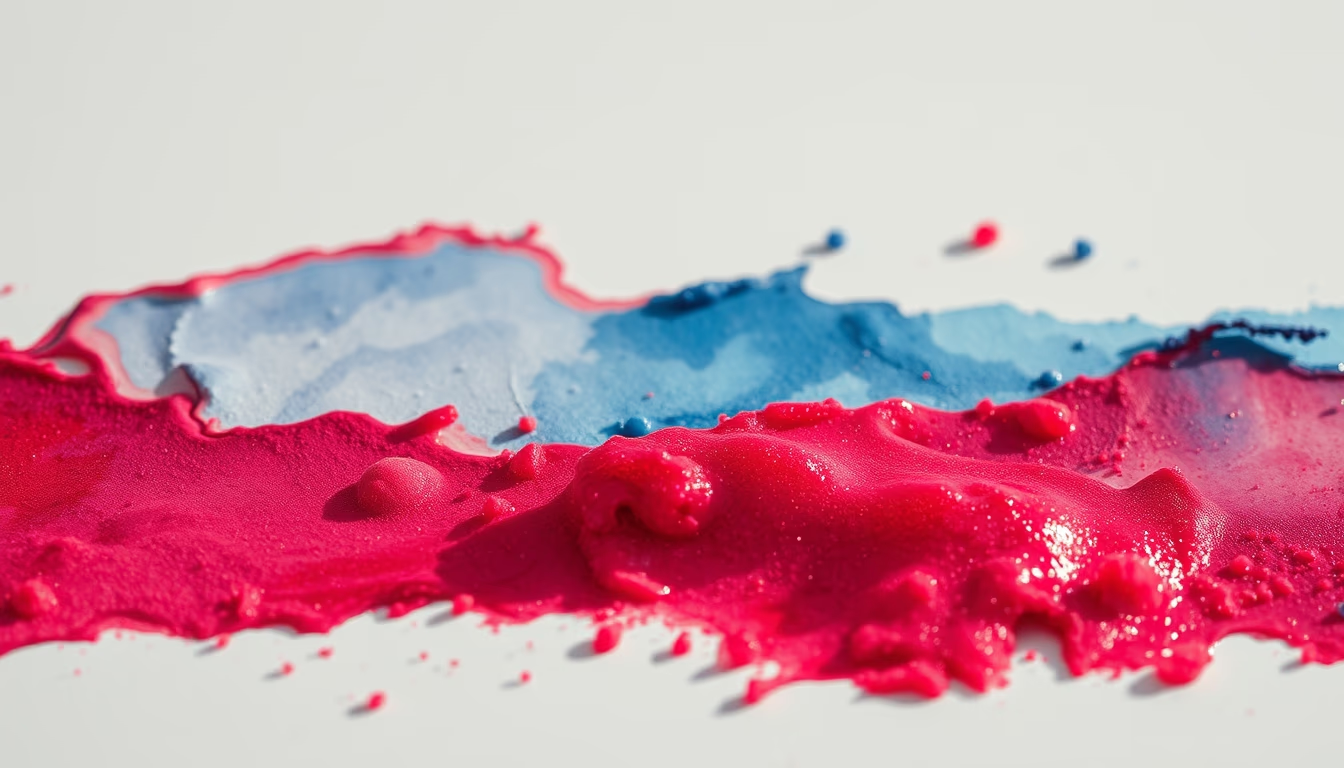
Watercolor wet pigment: a technique that explores the fluidity of paint on wet paper, creating soft and unpredictable effects.
About this subject
Watercolor is an ancient technique using pigments suspended in water to create translucent and luminous artworks. In the wet-on-wet method, the paper is first moistened with clean water, and then pigment is applied, spreading freely. This approach yields soft edges, natural gradients, and organic textures, widely used by artists such as J.M.W. Turner and, in Brazil, by landscape painters like Antonio Parreiras.
Watercolor pigments are finely ground and mixed with gum arabic as a binder. When applied to wet paper, color particles disperse uniquely, depending on paint viscosity and paper absorbency. High-quality paper, usually 100% cotton, is essential to control spread and avoid unwanted blotches.
In Brazil, watercolor gained prominence in the 19th century with the French Artistic Mission and the founding of the National School of Fine Arts. Artists like Jean-Baptiste Debret documented daily scenes using the technique. Today, wet-on-wet watercolor is taught in studios and online courses, valued for its spontaneity and ability to capture light ethereally.
Fun fact: the word "watercolor" comes from the Italian "acquarella" (small water). Mastering the amount of water is crucial, as excess can lead to loss of control. Experienced artists use spray bottles and soft-bristle brushes to manipulate pigment flow, creating everything from atmospheric landscapes to vibrant abstractions.
Frequently Asked Questions
What is the difference between wet and dry watercolor?
In the wet-on-wet technique, paper is moistened before pigment application, creating soft edges and diffuse effects. In wet-on-dry, pigment is applied to dry paper, producing sharp outlines and greater control.
What type of paper is best for wet-on-wet watercolor?
100% cotton papers with a weight above 300 gsm are ideal. They absorb water evenly without warping, allowing pigment to spread in a controlled manner.
How to avoid muddy colors in wet watercolor?
Use few colors at a time and avoid mixing more than three pigments. Let layers dry between applications or use complementary colors instead of opposites to maintain vibrancy.
Direct URL
https://pub-c7d6a6ea828543ac903a74a341ccb2e1.r2.dev/imagens/watercolor-wet-pigment-magazine-editorial-p2.avifHow to credit
Include a visible link back to UtilizAí. Copy one of the snippets below:
<a href="https://xn--utiliza-eza.com/en/midia/imagens/watercolor-wet-pigment-magazine-editorial-p2">Watercolor wet pigment</a> by <a href="https://xn--utiliza-eza.com">UtilizAí</a>, licensed under <a href="https://creativecommons.org/licenses/by/4.0/">CC BY 4.0</a>.
[Watercolor wet pigment](https://xn--utiliza-eza.com/en/midia/imagens/watercolor-wet-pigment-magazine-editorial-p2) by [UtilizAí](https://xn--utiliza-eza.com), CC BY 4.0
License: CC-BY-4.0