Watercolor wet pigment
1344×768 · AVIF · CC BY 4.0
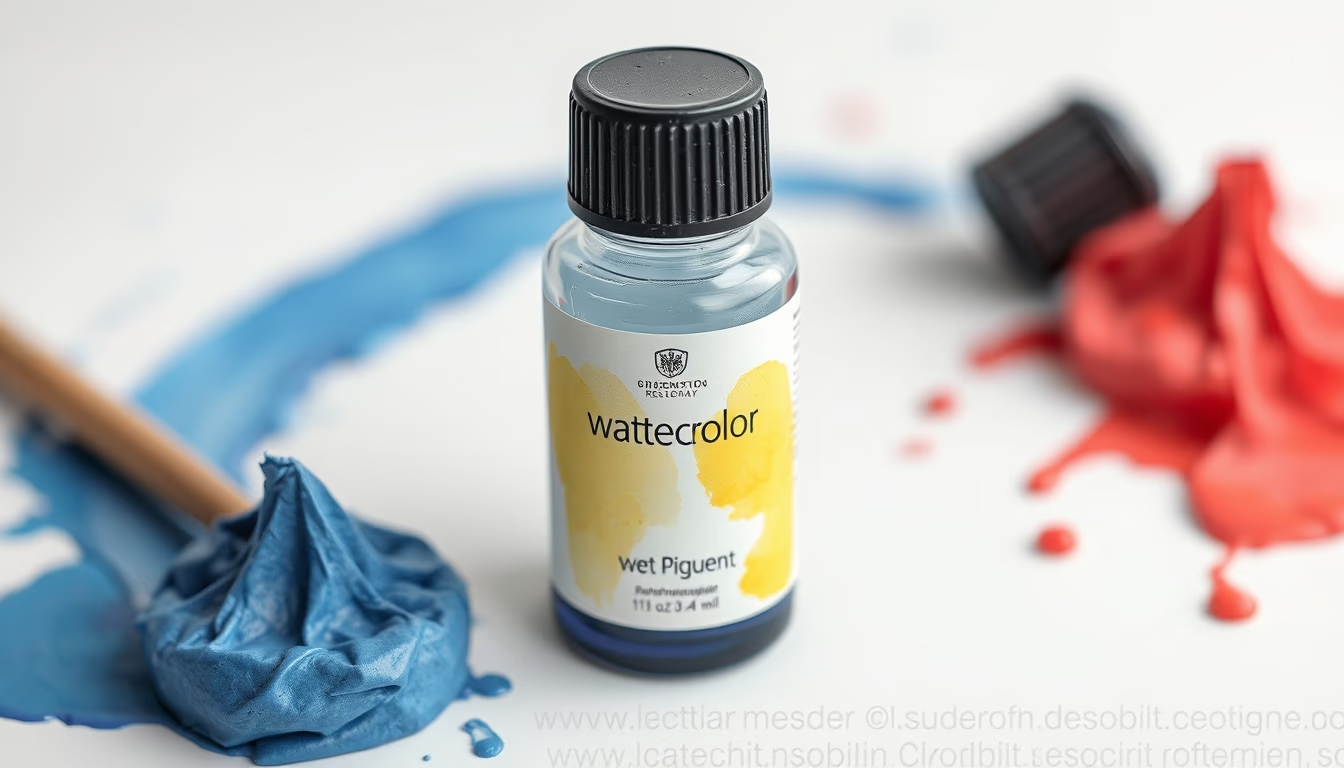
Watercolor wet pigments reveal vibrant colors and artisanal manufacturing techniques, essential for artists and illustrators.
About this subject
Watercolor pigments are finely ground particles of natural or synthetic colorants, suspended in a water-soluble binder, typically gum arabic. When wet, water activates the pigment, allowing it to spread on paper. Pigment quality determines color vibrancy, transparency, and permanence.
The history of watercolor dates back to ancient China, where water-based paints were used on silk. In Europe, the technique flourished in medieval illuminated manuscripts, but watercolor only became a major art form in the 18th century with the English landscape school. Manufacturers like Winsor & Newton, founded in 1832, standardized high-quality pigment production.
Techniques such as washes (uniform layers), wet-on-wet (blending colors), and wet-on-dry (sharp edges) depend on pigment behavior in water. Professional-grade pigments offer higher concentration and granulation, while student-grade pigments are more economical. Transparency is a key feature: opaque pigments, like titanium white, alter the luminosity of other colors.
Facts: historical pigments like ochre (natural clay), ultramarine blue (lapis lazuli), and vermilion (mercury sulfide) were widely used, though some are toxic, such as cadmium yellow. Today, most pigments are synthetic, ensuring consistency and safety. Proper storage in sealed palettes or tubes keeps pigments moist and ready for use.
Frequently Asked Questions
What distinguishes watercolor pigments from other paint types?
Watercolor pigments are ground finer and use a water-soluble binder (gum arabic), resulting in transparency and dilution with water. Unlike oil or acrylic paints, they do not form a thick layer and allow the paper to contribute to luminosity.
How to tell if a watercolor pigment is high quality?
Check the manufacturer's grade: artist-grade pigments have higher pigment concentration, better lightfastness, and finer granulation. Student-grade pigments are more diluted with inert fillers. Also test transparency and the rewetting of dry pigment.
Which natural pigments are most common in watercolor?
Ochre (yellow and red), umber (browns), sienna (yellow-brown), and natural ultramarine blue (lapis lazuli) are examples. However, many natural pigments have been replaced by synthetics for consistency and safety, such as cadmium yellow (natural) replaced by organic pigments.
Direct URL
https://pub-c7d6a6ea828543ac903a74a341ccb2e1.r2.dev/imagens/watercolor-wet-pigment-commercial-product-photography-p3.avifHow to credit
Include a visible link back to UtilizAí. Copy one of the snippets below:
<a href="https://xn--utiliza-eza.com/en/midia/imagens/watercolor-wet-pigment-commercial-product-photography-p3">Watercolor wet pigment</a> by <a href="https://xn--utiliza-eza.com">UtilizAí</a>, licensed under <a href="https://creativecommons.org/licenses/by/4.0/">CC BY 4.0</a>.
[Watercolor wet pigment](https://xn--utiliza-eza.com/en/midia/imagens/watercolor-wet-pigment-commercial-product-photography-p3) by [UtilizAí](https://xn--utiliza-eza.com), CC BY 4.0
License: CC-BY-4.0