Vpn shield protection
1344×768 · AVIF · CC BY 4.0
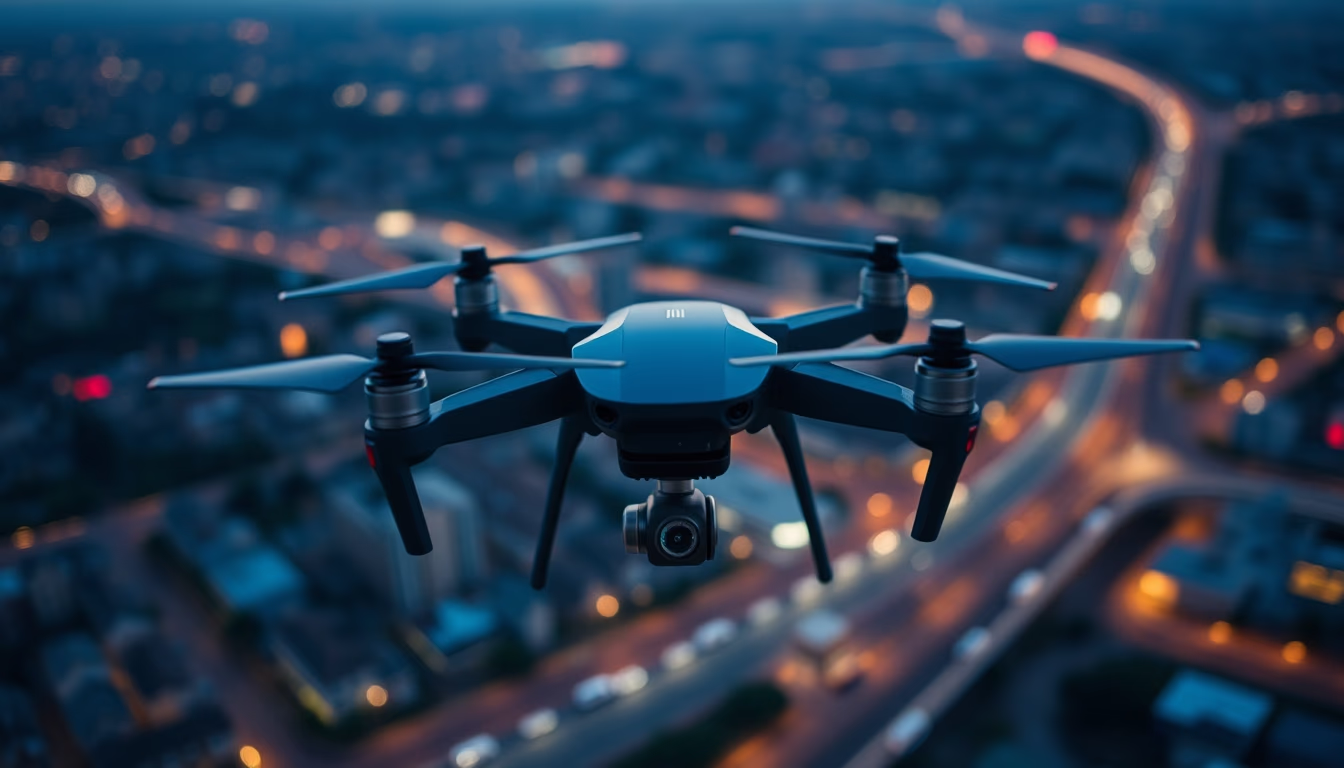
VPN shield protection: how a digital shield safeguards your online privacy against global cyber threats.
About this subject
A Virtual Private Network (VPN) acts as a digital shield that encrypts all internet traffic, hiding the user's IP address and real location. Originally developed to securely connect remote offices, this technology has become essential for online privacy in an increasingly connected world. By creating an encrypted tunnel between the user's device and a remote server, a VPN prevents internet service providers, hackers, or governments from intercepting sensitive data such as passwords and banking information.
The concept of a 'shield' is particularly relevant in 2026, when cyber threats have become more sophisticated with the advancement of artificial intelligence. Ransomware attacks are estimated to have increased by 150% in the last two years, and VPN usage grows in response. Companies and individuals adopt VPNs not only to protect data but also to bypass geographic censorship and access restricted content, such as streaming services or news in countries with internet control.
In Brazil, VPN popularity surged after the General Data Protection Law (LGPD) took effect in 2020 and with the rise of cybercrime. According to the 2025 National Digital Security Survey, 34% of Brazilians already use a VPN regularly, mainly on mobile devices. Choosing a trustworthy provider is critical, as free VPNs may sell user data or contain malware.
The image of a shield associated with a VPN evokes a sense of invisible protection, but it is important to remember that no tool is infallible. Experts recommend combining a VPN with good practices such as two-factor authentication and strong passwords. In a global landscape of digital surveillance, the VPN remains one of the most affordable defenses against the exposure of personal data.
Frequently Asked Questions
Does a VPN make my browsing completely anonymous?
Not entirely. A VPN hides your IP and encrypts traffic, but your VPN provider can still see your data if it does not have a no-logs policy. Additionally, cookies and website logins can identify you.
Is using a VPN legal in Brazil?
Yes, using a VPN is legal in Brazil for privacy and content access purposes. However, using it for criminal activities such as fraud or copyright infringement is still illegal.
What is the difference between free and paid VPNs?
Free VPNs often have data limits, slower speeds, and may sell your data to advertisers. Paid VPNs offer stronger encryption, no-logs policies, and servers in more countries, providing better security and privacy.
Direct URL
https://pub-c7d6a6ea828543ac903a74a341ccb2e1.r2.dev/imagens/vpn-shield-protection-aerial-drone-shot-p4.avifHow to credit
Include a visible link back to UtilizAí. Copy one of the snippets below:
<a href="https://xn--utiliza-eza.com/en/midia/imagens/vpn-shield-protection-aerial-drone-shot-p4">Vpn shield protection</a> by <a href="https://xn--utiliza-eza.com">UtilizAí</a>, licensed under <a href="https://creativecommons.org/licenses/by/4.0/">CC BY 4.0</a>.
[Vpn shield protection](https://xn--utiliza-eza.com/en/midia/imagens/vpn-shield-protection-aerial-drone-shot-p4) by [UtilizAí](https://xn--utiliza-eza.com), CC BY 4.0
License: CC-BY-4.0