Voyager 1 deep space
1344×768 · AVIF · CC BY 4.0
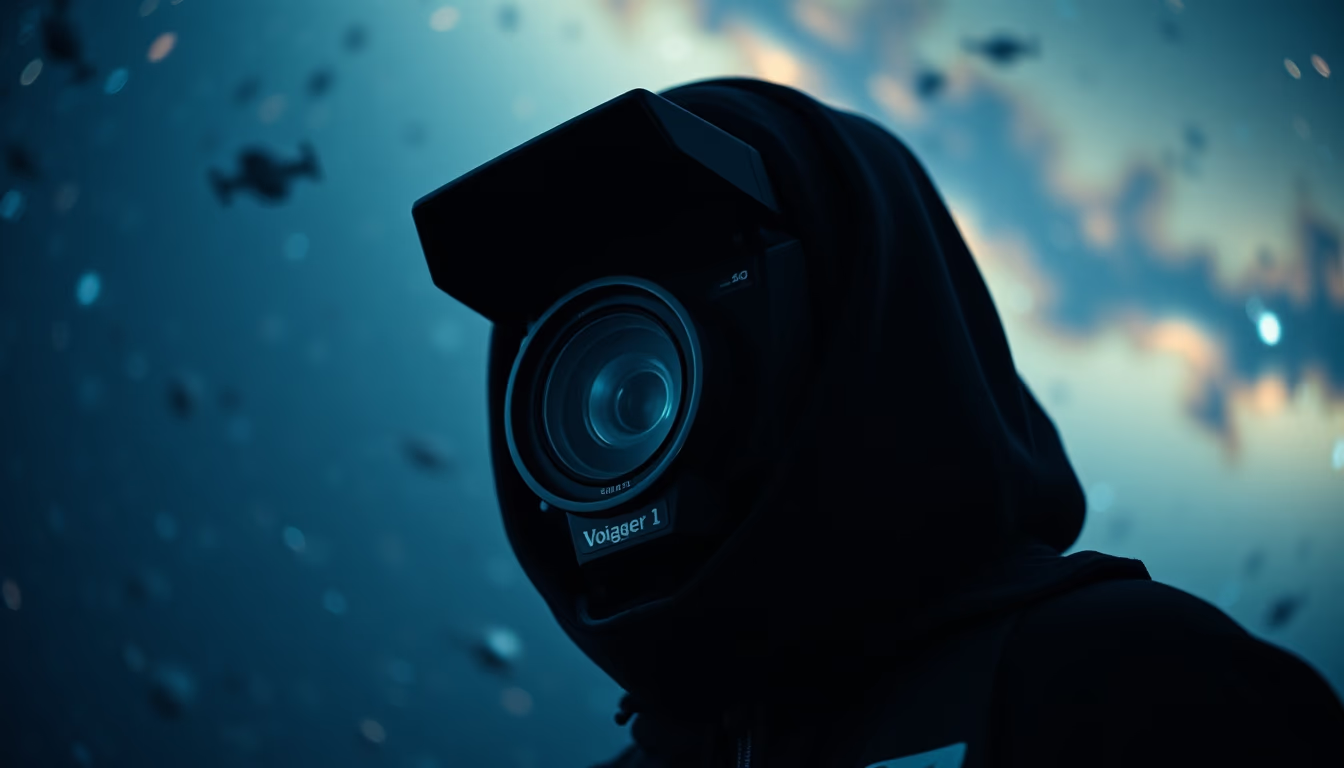
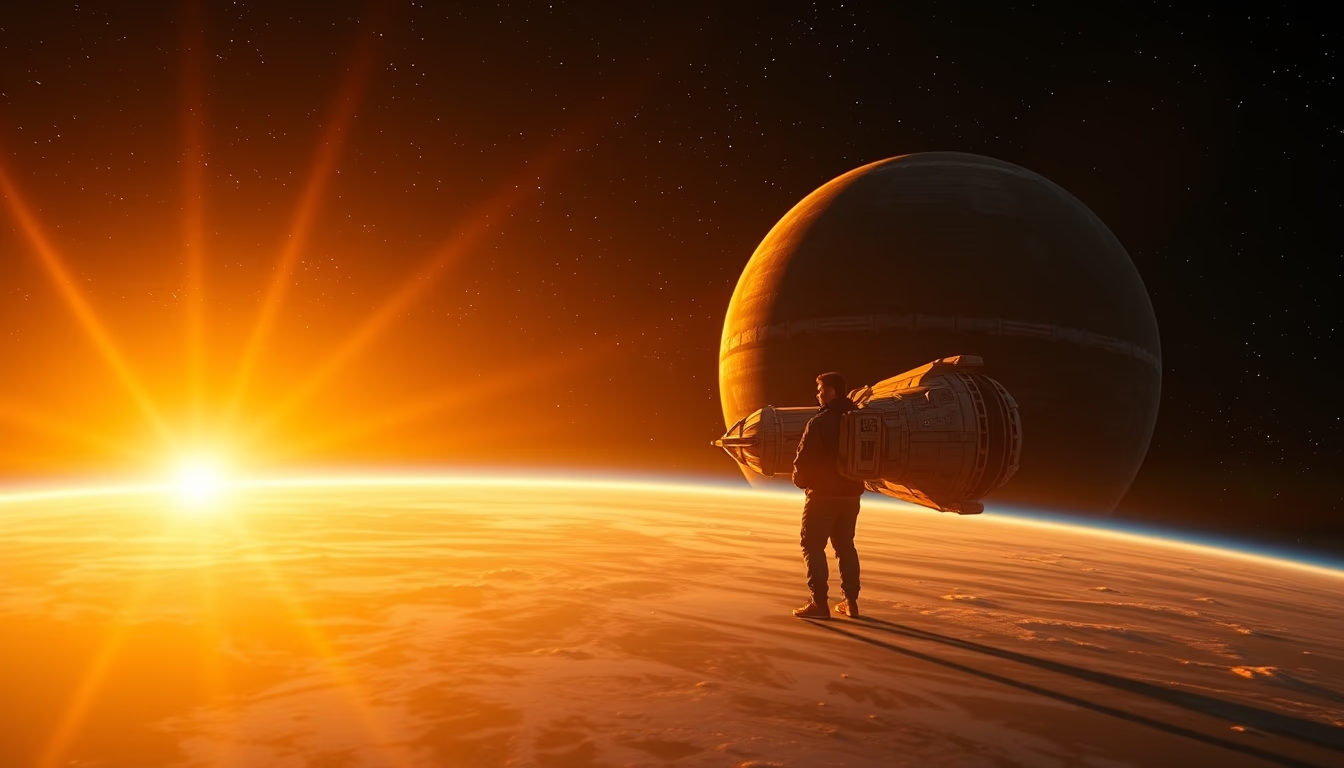
Launched in 1977, Voyager 1 is the farthest human-made object, exploring interstellar space beyond the Solar System.
About this subject
Voyager 1 is a robotic space probe launched by NASA on September 5, 1977, part of the Voyager program to study the outer planets. Originally designed for a five-year mission, Voyager 1 exceeded all expectations. In 1979, it conducted close flybys of Jupiter and its moons, revealing active volcanoes on Io and details of the Great Red Spot. In 1980, it passed Saturn, discovering complexities in its rings and new moons like Atlas and Prometheus.
After these encounters, Voyager 1 was directed on a trajectory that would take it out of the Solar System. On August 25, 2012, it became the first human-made object to enter interstellar space, officially crossing the heliopause, the boundary where the solar wind meets the interstellar medium. Currently traveling at about 17 km/s, it is over 24 billion kilometers from Earth, a distance that takes more than 22 hours for a radio signal to reach.
The probe carries the Golden Record, a phonograph disc with sounds and images of life on Earth, designed to communicate our existence to possible extraterrestrial civilizations. Although its scientific instruments still function, it is expected that Voyager 1 will lose enough power to operate all equipment by 2025. Even then, it will continue its silent journey through the cosmos, becoming a lasting monument to human curiosity.
Frequently Asked Questions
What is the current speed of Voyager 1?
Voyager 1 travels at approximately 17 kilometers per second, or about 61,200 km/h, relative to the Sun.
What is the Golden Record and what does it contain?
The Golden Record is a copper phonograph record plated with gold, containing 116 images, greetings in 55 languages, music from different cultures, and natural sounds of Earth, designed to communicate our civilization to possible extraterrestrial life.
When did Voyager 1 leave the Solar System?
Voyager 1 entered interstellar space on August 25, 2012, by crossing the heliopause, confirmed by the increase in cosmic particle density detected by its instruments.
Direct URL
https://pub-c7d6a6ea828543ac903a74a341ccb2e1.r2.dev/imagens/voyager-1-deep-space-lo-fi-disposable-camera-fresh9.avifHow to credit
Include a visible link back to UtilizAí. Copy one of the snippets below:
<a href="https://xn--utiliza-eza.com/en/midia/imagens/voyager-1-deep-space-lo-fi-disposable-camera-fresh9">Voyager 1 deep space</a> by <a href="https://xn--utiliza-eza.com">UtilizAí</a>, licensed under <a href="https://creativecommons.org/licenses/by/4.0/">CC BY 4.0</a>.
[Voyager 1 deep space](https://xn--utiliza-eza.com/en/midia/imagens/voyager-1-deep-space-lo-fi-disposable-camera-fresh9) by [UtilizAí](https://xn--utiliza-eza.com), CC BY 4.0
License: CC-BY-4.0