Voyager 1 deep space
1344×768 · AVIF · CC BY 4.0
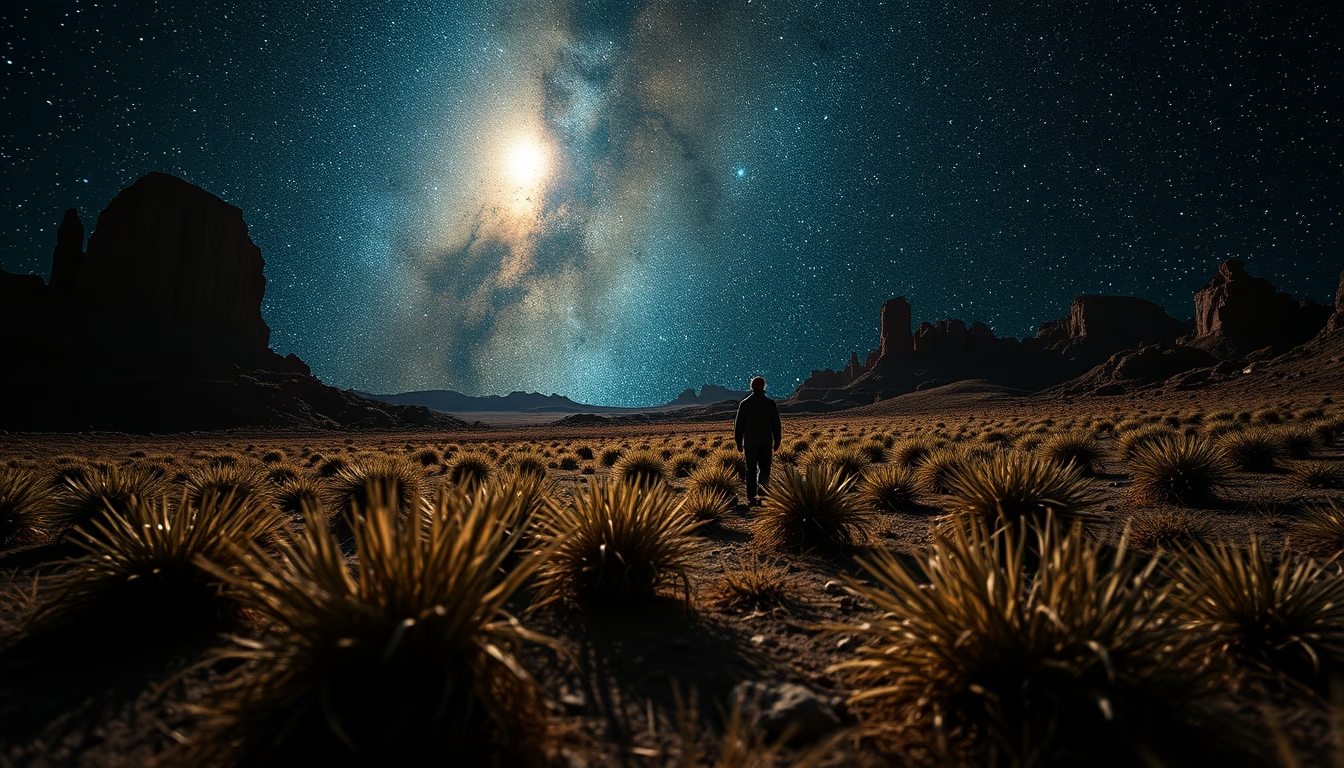
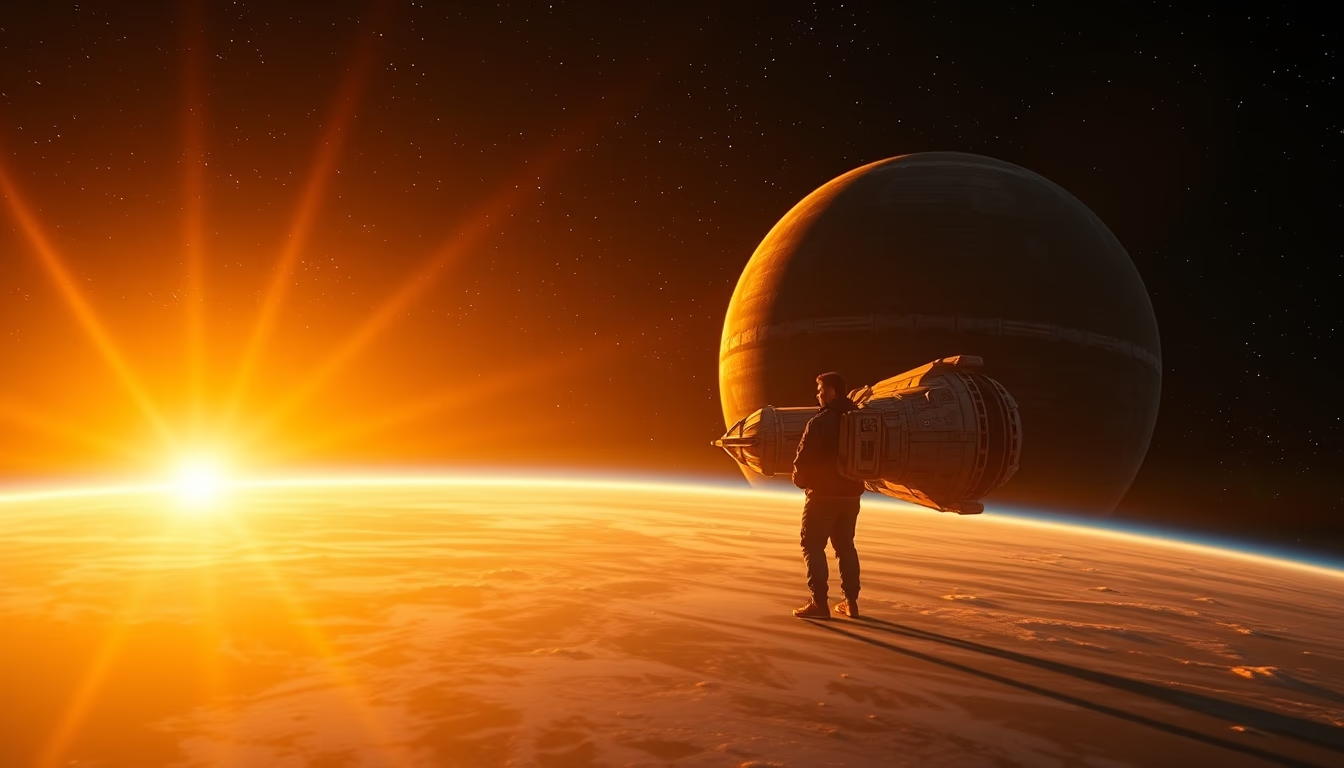
Voyager 1 is the farthest human-made object from Earth, launched in 1977 to explore Jupiter and Saturn.
About this subject
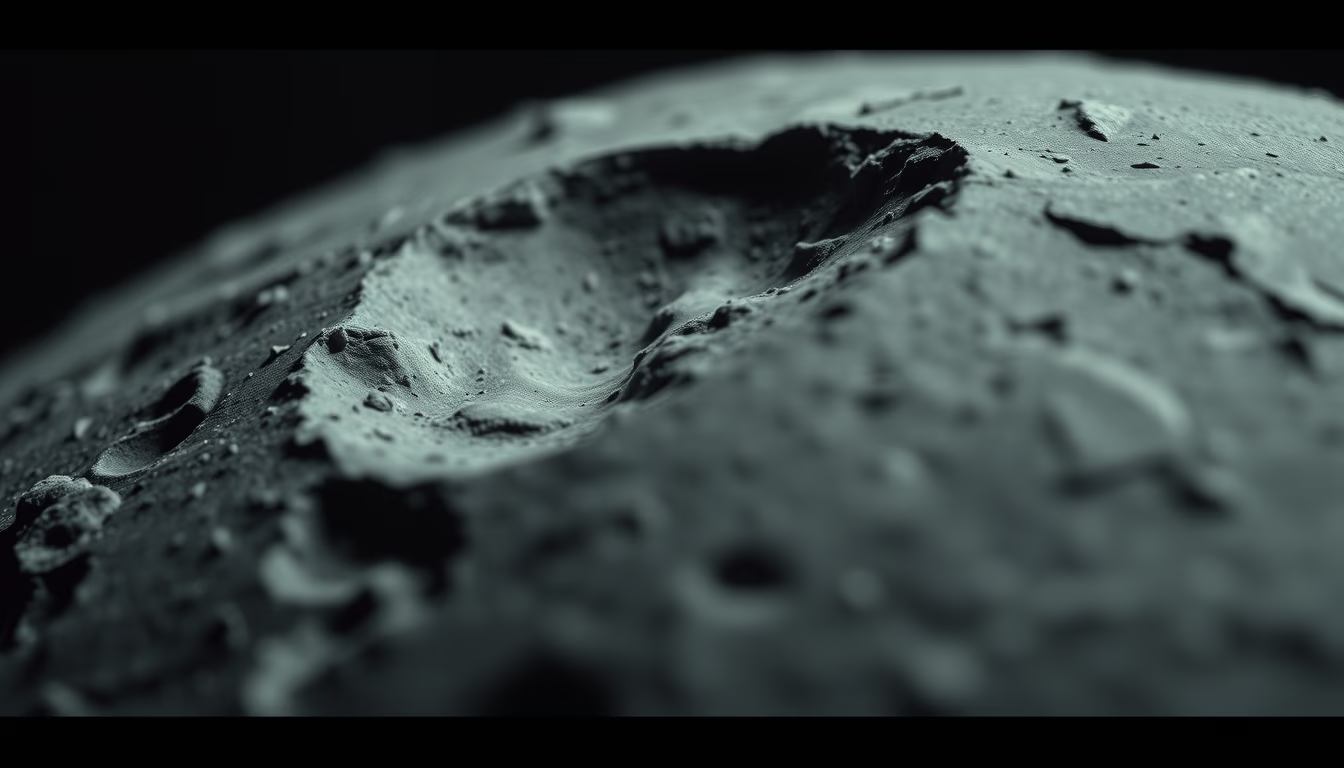
Launched on September 5, 1977, by NASA, Voyager 1 is part of the Voyager program, originally designed to study the outer planets of the Solar System. The probe visited Jupiter in 1979 and Saturn in 1980, revealing unprecedented details: it discovered active volcanoes on Io (a moon of Jupiter) and the complex structure of Saturn's rings, including the F ring. After passing Saturn, the probe was directed onto a trajectory that would take it out of the Solar System, becoming the first human-made object to enter interstellar space.
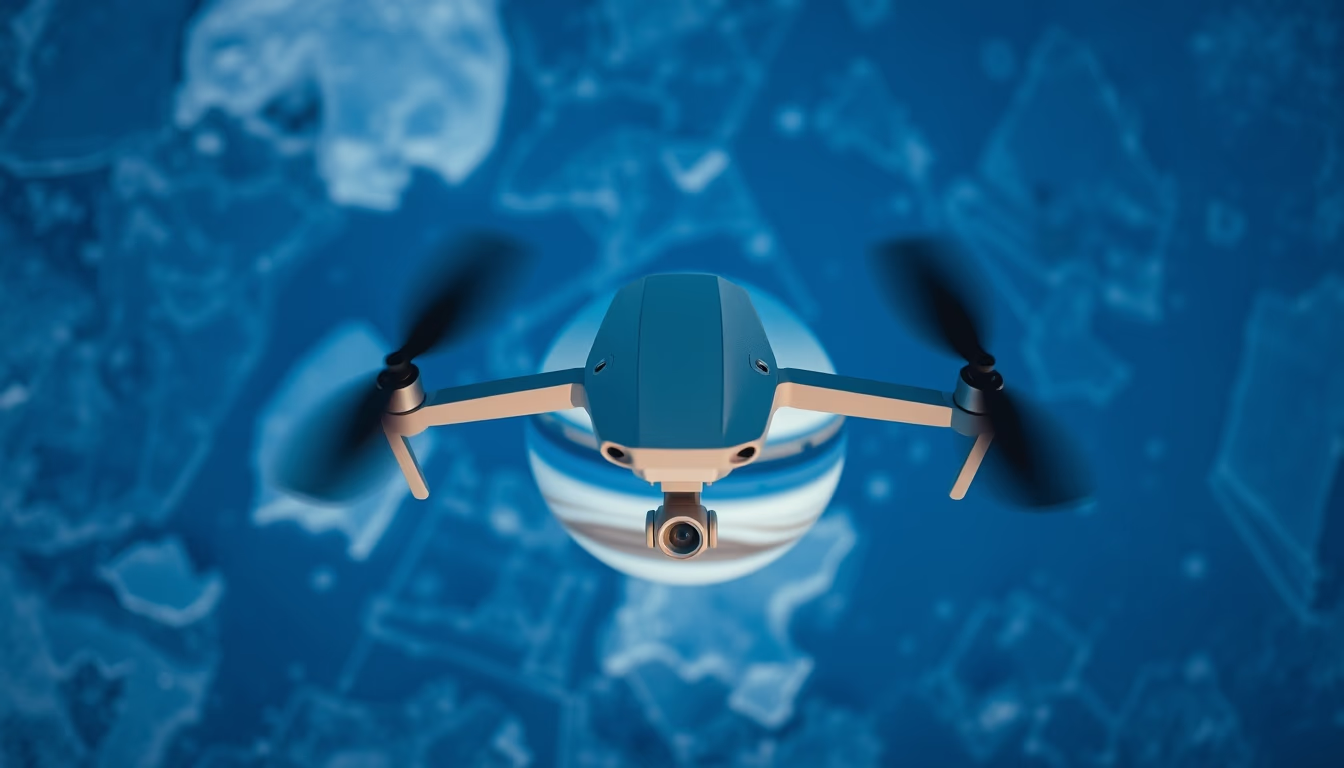
On February 14, 1990, Voyager 1 received commands to turn its camera and photograph Earth, resulting in the iconic 'Pale Blue Dot' image, showing our planet as a tiny speck of light in the vastness of space. This image inspired Carl Sagan's famous speech. The probe also carries the 'Golden Record', a phonograph record containing sounds and images of life on Earth, conceived as a message to potential extraterrestrial civilizations.
Today, Voyager 1 continues to operate, sending data from the heliosphere and interstellar space. As of 2024, it is over 24 billion kilometers from Earth, the farthest human-made object. Its power source, based on plutonium, is expected to allow operation of some instruments until about 2030. The probe crossed the heliopause in 2012, the boundary where the solar wind meets the interstellar medium, marking a historic achievement in space exploration.
Voyager 1's legacy is immense: beyond the scientific data gathered about Jupiter and Saturn, its journey into deep space has expanded our understanding of the interstellar environment. The project demonstrated the capability of long-term missions and laid the groundwork for future probes like Voyager 2 and New Horizons. Voyager 1 remains a symbol of human curiosity and the drive to explore the unknown.
Frequently Asked Questions
What is the current distance of Voyager 1 from Earth?
As of 2024, Voyager 1 is approximately 24 billion kilometers (15 billion miles) from Earth, making it the farthest human-made object.
What is the Voyager Golden Record?
The Golden Record is a copper phonograph record plated with gold containing sounds and images of life on Earth, including greetings in 55 languages, music, and photographs. It was designed to communicate the diversity of life on Earth to any potential extraterrestrial civilizations.
Why is Voyager 1 considered a historic mission?
It was the first probe to visit Jupiter and Saturn in detail, the first to enter interstellar space, and provided fundamental data about the outer planets and the interstellar medium. Its longevity and success inspired future space missions.
Direct URL
https://pub-c7d6a6ea828543ac903a74a341ccb2e1.r2.dev/imagens/voyager-1-deep-space-documentary-nature-style-fresh5.avifHow to credit
Include a visible link back to UtilizAí. Copy one of the snippets below:
<a href="https://xn--utiliza-eza.com/en/midia/imagens/voyager-1-deep-space-documentary-nature-style-fresh5">Voyager 1 deep space</a> by <a href="https://xn--utiliza-eza.com">UtilizAí</a>, licensed under <a href="https://creativecommons.org/licenses/by/4.0/">CC BY 4.0</a>.
[Voyager 1 deep space](https://xn--utiliza-eza.com/en/midia/imagens/voyager-1-deep-space-documentary-nature-style-fresh5) by [UtilizAí](https://xn--utiliza-eza.com), CC BY 4.0
License: CC-BY-4.0