Vintage postcards stack
1344×768 · AVIF · CC BY 4.0
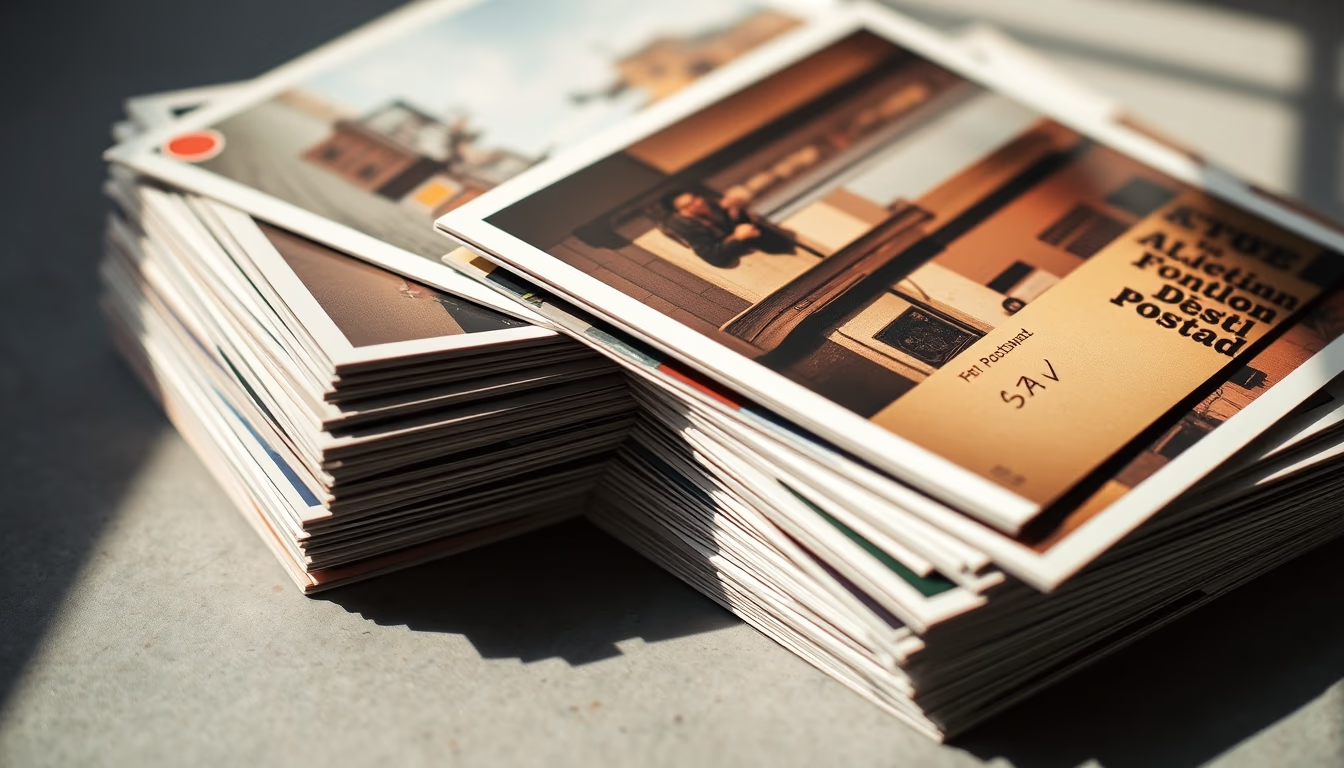
A stack of vintage postcards reveals centuries of visual history, travel, and sentimental memories. Learn more about the art of collecting vintage postcards.
About this subject
Vintage postcards are historical documents that capture the aesthetics, architecture, and daily life of bygone eras. Originating in the late 19th century, shortly after the modernization of postal services, they became a global phenomenon of quick and affordable communication. The period between 1900 and 1915 is known as the golden age of postcards, when billions were mailed annually, especially in Europe and the United States. Images ranged from urban and rural landscapes to political satires and portraits of contemporary celebrities.
Collecting vintage postcards, a practice called deltiology, demands attention to details such as rarity, condition, postmark, and historical context. Some postcards fetch high prices at auctions, especially those with limited print runs or depictions of landmark events like the 1900 World's Fair or the construction of major monuments. Authenticity is verified through watermarks, paper type, and printing technique, the oldest ones used collodion or rotogravure printing.
In Brazil, vintage postcards document the urban development of cities like Rio de Janeiro and São Paulo, showing trams, cafés, and squares that no longer exist. They also record cultural events, such as the early 20th-century Rio Carnival, with costumes and floats now preserved only in images. Many collectors seek thematic series: aviation, ships, or advertising postcards for defunct products.
Digitization has boosted interest in these objects: collections from institutions like the National Library and the Instituto Moreira Salles offer digitized postcards, enabling global research and appreciation. Yet the physical postcard still carries a unique sentimental value, a time capsule that connects sender and receiver to a frozen moment.
Frequently Asked Questions
What is the most valuable period for vintage postcards?
The golden age (1898, 1915) is most valued, especially postcards featuring historical events, famous artists, or limited print runs. Postcards with first-day postmarks or from rare locations are also highly sought after.
How to identify an original vintage postcard?
Check paper quality, watermarks, printing type (photogravure or collodion), and the presence of period stamps and postmarks. Modern postcards tend to use coated paper and offset printing with more vibrant colors.
Where can I find vintage postcards to collect?
Antique fairs, online auction sites (eBay, Etsy), specialized secondhand bookstores, and digital collections from cultural institutions. Deltiology associations often organize swap meets.
Direct URL
https://pub-c7d6a6ea828543ac903a74a341ccb2e1.r2.dev/imagens/vintage-postcards-stack-magazine-editorial-fresh7.avifHow to credit
Include a visible link back to UtilizAí. Copy one of the snippets below:
<a href="https://xn--utiliza-eza.com/en/midia/imagens/vintage-postcards-stack-magazine-editorial-fresh7">Vintage postcards stack</a> by <a href="https://xn--utiliza-eza.com">UtilizAí</a>, licensed under <a href="https://creativecommons.org/licenses/by/4.0/">CC BY 4.0</a>.
[Vintage postcards stack](https://xn--utiliza-eza.com/en/midia/imagens/vintage-postcards-stack-magazine-editorial-fresh7) by [UtilizAí](https://xn--utiliza-eza.com), CC BY 4.0
License: CC-BY-4.0