Venus surface acidic
1344×768 · AVIF · CC BY 4.0
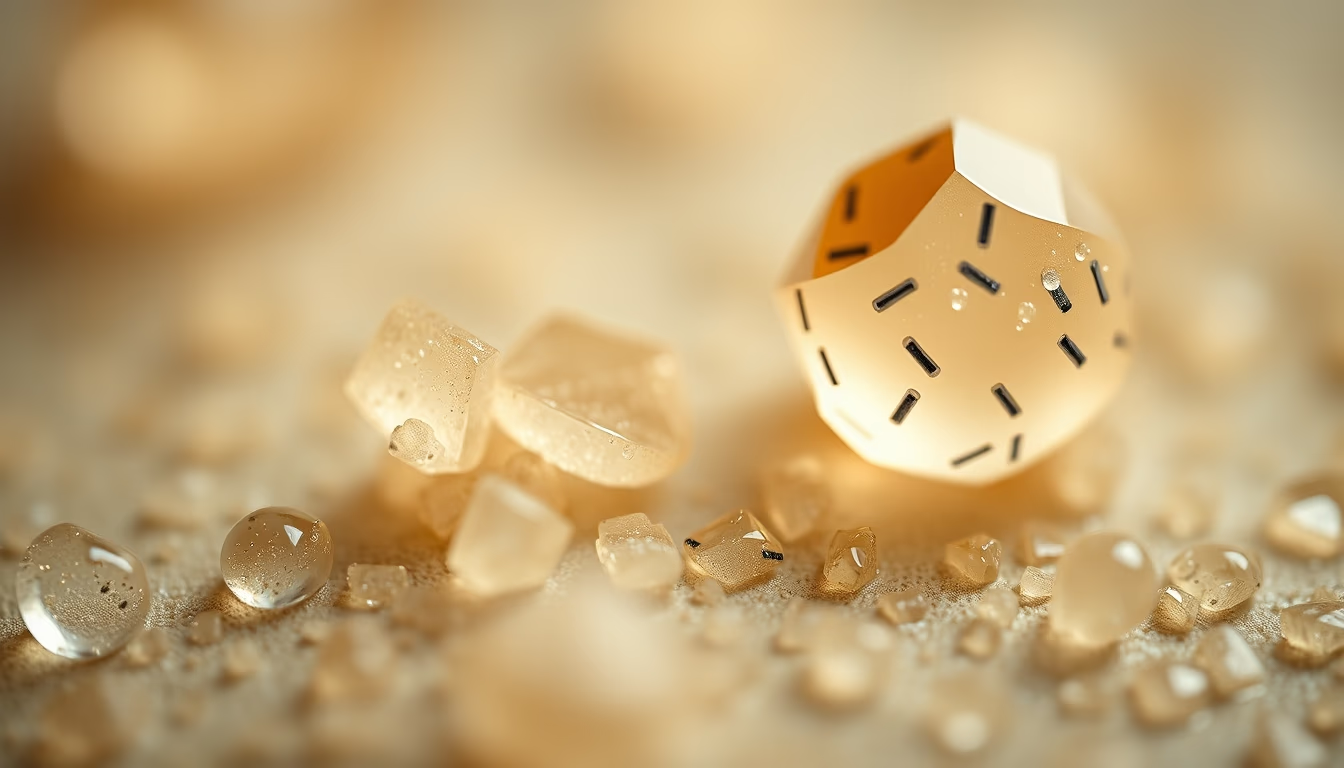
Venus's surface is an acidic hell: temperatures of 462°C, pressure 92 times Earth's, and clouds of sulfuric acid.
About this subject
The surface of Venus, the hottest planet in the Solar System, is an extremely hostile environment. With an average temperature of 462°C, hot enough to melt lead, and an atmospheric pressure 92 times that of Earth at sea level, any solid object would be instantly crushed and incinerated. Venus's atmosphere is composed primarily of carbon dioxide (96.5%), with traces of nitrogen and sulfur dioxide. The latter, combined with water vapor, forms dense clouds of sulfuric acid (H2SO4) that envelop the entire planet in a thick, yellowish layer. These clouds not only reflect sunlight but also contribute to a runaway greenhouse effect that keeps the planet scorching.
Sulfuric acid in Venus's clouds is extremely corrosive, capable of dissolving metals and organic tissues. In the upper atmosphere, about 50-70 km altitude, conditions are milder, with temperatures between -10°C and 80°C, and pressure comparable to Earth's. Thus, some missions, such as the Soviet Venera probes, managed to obtain brief data before succumbing to heat and pressure. For example, Venera 13 transmitted images of the surface for only 127 minutes in 1982, revealing a rocky and flat terrain.
The acidity of the surface is one of the main challenges for Venus exploration. In addition to the sulfuric acid clouds, acid rain falling in the lower altitudes evaporates before reaching the ground due to extreme heat, creating an acid cycle in the atmosphere. The surface itself is composed of basaltic rocks, similar to those on Earth's ocean floor, but constantly bombarded by acidic particles. Recent studies suggest that the lower cloud layer may contain sulfur and phosphorus compounds, raising the possibility of microbial life adapted to extreme conditions. However, the surface remains inhospitable to any known form of life.
Exploration of Venus continues to be a goal for NASA and ESA, with new missions like VERITAS and EnVision planned for the next decade. They will use radar to map the surface through the clouds and study the chemical composition of the atmosphere. Understanding Venus's acidic environment helps scientists better understand extreme greenhouse processes and planetary evolution, as well as providing a natural laboratory for studying conditions that may exist on similar exoplanets.
Frequently Asked Questions
Why is the surface of Venus so acidic?
The acidity comes from sulfuric acid clouds (H2SO4) formed from sulfur dioxide and water vapor in the atmosphere. These clouds release acid that reaches the surface but evaporates due to extreme heat, maintaining a continuous acid cycle.
What are the temperature and pressure on Venus's surface?
The average temperature is 462°C, and the atmospheric pressure is 92 times that of Earth at sea level, equivalent to the pressure at about 900 meters ocean depth on Earth.
Is life possible on Venus?
The surface is too hostile, but in the upper atmosphere (50-70 km) conditions are milder. Some studies suggest microorganisms could exist in the sulfuric acid clouds, though this remains speculative.
Direct URL
https://pub-c7d6a6ea828543ac903a74a341ccb2e1.r2.dev/imagens/venus-surface-acidic-macro-closeup-p8.avifHow to credit
Include a visible link back to UtilizAí. Copy one of the snippets below:
<a href="https://xn--utiliza-eza.com/en/midia/imagens/venus-surface-acidic-macro-closeup-p8">Venus surface acidic</a> by <a href="https://xn--utiliza-eza.com">UtilizAí</a>, licensed under <a href="https://creativecommons.org/licenses/by/4.0/">CC BY 4.0</a>.
[Venus surface acidic](https://xn--utiliza-eza.com/en/midia/imagens/venus-surface-acidic-macro-closeup-p8) by [UtilizAí](https://xn--utiliza-eza.com), CC BY 4.0
License: CC-BY-4.0