Venus surface acidic
1344×768 · AVIF · CC BY 4.0
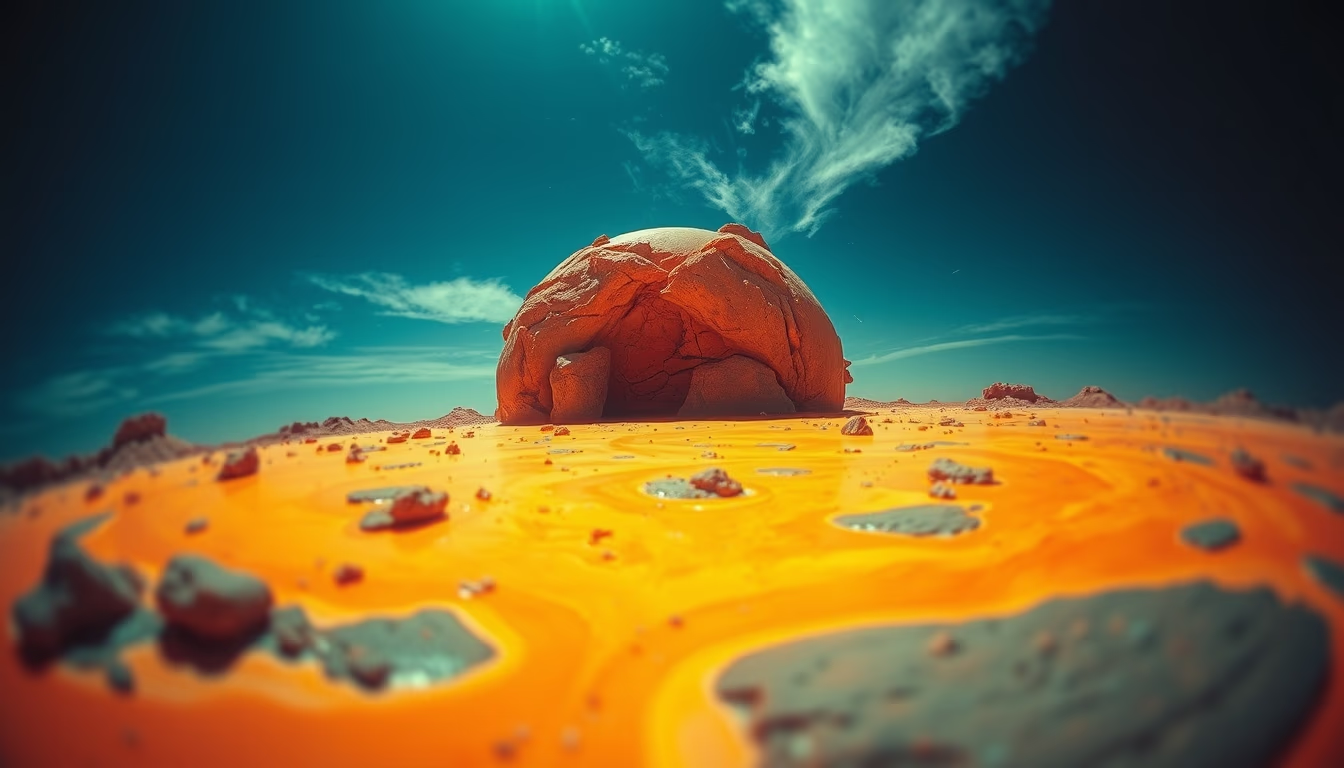
The surface of Venus is a hellish landscape of scorching temperatures, crushing pressure, and sulfuric acid clouds that never allow a direct view of the ground.
About this subject
Venus, the second planet from the Sun, has the most inhospitable surface in the Solar System. Its dense atmosphere, composed mainly of carbon dioxide, creates a runaway greenhouse effect that raises the average temperature to about 462°C, hot enough to melt lead. Atmospheric pressure at the surface is 92 times that of Earth, equivalent to the pressure nearly a kilometer underwater.
The clouds enveloping Venus are not water clouds but concentrated sulfuric acid, forming an opaque layer that reflects sunlight and keeps the surface permanently hidden. This acid is highly corrosive, dissolving most terrestrial materials. Despite this, Soviet missions like Venera 13 and 14 successfully landed and transmitted images for a few minutes before being destroyed by the extreme conditions.
Interestingly, the high pressure and temperature may create supercritical sulfuric acid, a state where the acid behaves as both liquid and gas simultaneously. Studies of the Venusian surface reveal vast volcanic plains, mountains, and few impact craters, indicating recent or ongoing geological activity. The Magellan probe mapped 98% of the surface with radar in the 1990s, uncovering a geologically complex world.
The study of Venus is crucial for understanding the limits of planetary habitability and the effects of extreme global warming. Although often called Earth's twin due to similar size and composition, Venus followed a radically different evolutionary path, becoming a natural laboratory for climate and atmospheric models. Upcoming missions like NASA's DAVINCI+ and VERITAS are expected to explore its surface and atmosphere in detail in the coming decade.
Frequently Asked Questions
Why is the surface of Venus so acidic?
The acidity comes from sulfuric acid clouds in the atmosphere. Although the ground itself is not acidic, sulfuric acid rains evaporate before reaching the surface, and atmospheric chemical reactions maintain an acidic cycle.
Have any probes landed on Venus?
Yes, the Soviet Venera series (especially Venera 13 and 14) landed and transmitted data and images for up to two hours before succumbing to the extreme temperature and pressure.
Was Venus ever habitable in the past?
Studies suggest Venus may have had liquid water oceans for up to 2 billion years, but a runaway greenhouse effect evaporated all the water, turning it into the arid, acidic planet we see today.
Direct URL
https://pub-c7d6a6ea828543ac903a74a341ccb2e1.r2.dev/imagens/venus-surface-acidic-fish-eye-wide-angle-p2.avifHow to credit
Include a visible link back to UtilizAí. Copy one of the snippets below:
<a href="https://xn--utiliza-eza.com/en/midia/imagens/venus-surface-acidic-fish-eye-wide-angle-p2">Venus surface acidic</a> by <a href="https://xn--utiliza-eza.com">UtilizAí</a>, licensed under <a href="https://creativecommons.org/licenses/by/4.0/">CC BY 4.0</a>.
[Venus surface acidic](https://xn--utiliza-eza.com/en/midia/imagens/venus-surface-acidic-fish-eye-wide-angle-p2) by [UtilizAí](https://xn--utiliza-eza.com), CC BY 4.0
License: CC-BY-4.0