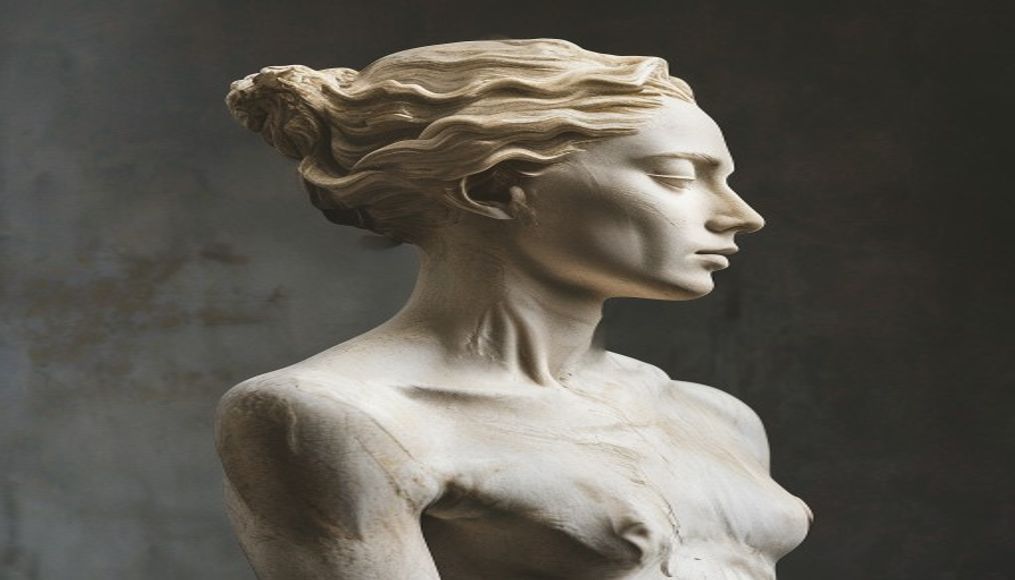
Venus de milo
1344×768 · AVIF · CC BY 4.0

The Venus de Milo is a famous ancient Greek marble sculpture of the goddess Aphrodite, discovered in 1820 on the island of Milos.
About this subject
The Venus de Milo, also known as Aphrodite of Milos, is one of the most iconic sculptures of ancient Greece. Created around 100 BC during the Hellenistic period, the artwork was carved from marble and represents the goddess of love and beauty. The statue was discovered on April 8, 1820, by a farmer named Yorgos Kentrotas in the ruins of an ancient theater on the island of Milos in the Aegean Sea. Standing approximately 2.02 meters tall, the sculpture impresses with its naturalistic forms and elegant pose. Interestingly, the Venus de Milo lost its arms over the centuries, sparking numerous theories and debates among archaeologists about the original position of the limbs. The piece was acquired by the French ambassador Marquis de Rivière and presented to King Louis XVIII, then donated to the Louvre Museum in Paris, where it remains one of the most visited exhibits. Despite the missing arms, the sculpture continues to be a symbol of classical art, inspiring artists, writers, and filmmakers throughout the ages. Recent studies suggest that the statue originally held an apple or a mirror, but no definitive conclusion has been reached. The Venus de Milo is admired not only for its aesthetic beauty but also for its historical context, representing the transition between classical and Hellenistic Greek art.
Frequently Asked Questions
Why is the Venus de Milo missing her arms?
The original arms were lost over time, likely during transport or historical events. The exact position of the arms is unknown, but theories suggest she may have held an apple or a mirror.
Where is the Venus de Milo located today?
The sculpture is displayed at the Louvre Museum in Paris, France. It holds a prominent place in the museum and is one of the most famous artworks in the world.
What is the height of the Venus de Milo?
The statue stands approximately 2.02 meters tall, carved entirely from marble. It is considered a large-scale work for the Hellenistic period.
Direct URL
https://pub-c7d6a6ea828543ac903a74a341ccb2e1.r2.dev/imagens/venus-de-milo-national-geographic-style-p11.avifHow to credit
Include a visible link back to UtilizAí. Copy one of the snippets below:
<a href="https://xn--utiliza-eza.com/en/midia/imagens/venus-de-milo-national-geographic-style-p11">Venus de milo</a> by <a href="https://xn--utiliza-eza.com">UtilizAí</a>, licensed under <a href="https://creativecommons.org/licenses/by/4.0/">CC BY 4.0</a>.
[Venus de milo](https://xn--utiliza-eza.com/en/midia/imagens/venus-de-milo-national-geographic-style-p11) by [UtilizAí](https://xn--utiliza-eza.com), CC BY 4.0
License: CC-BY-4.0