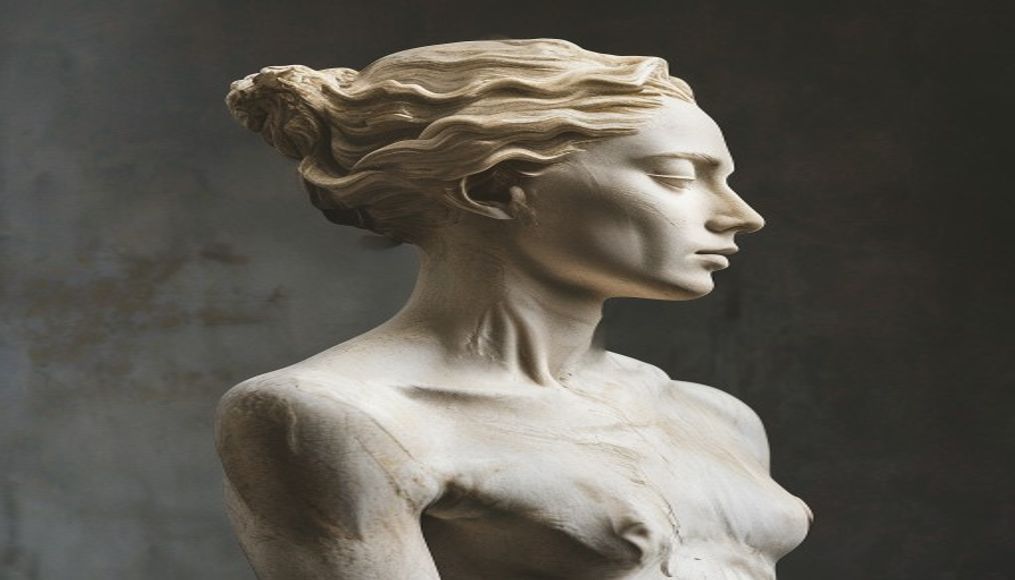
Venus de milo
1344×768 · AVIF · CC BY 4.0
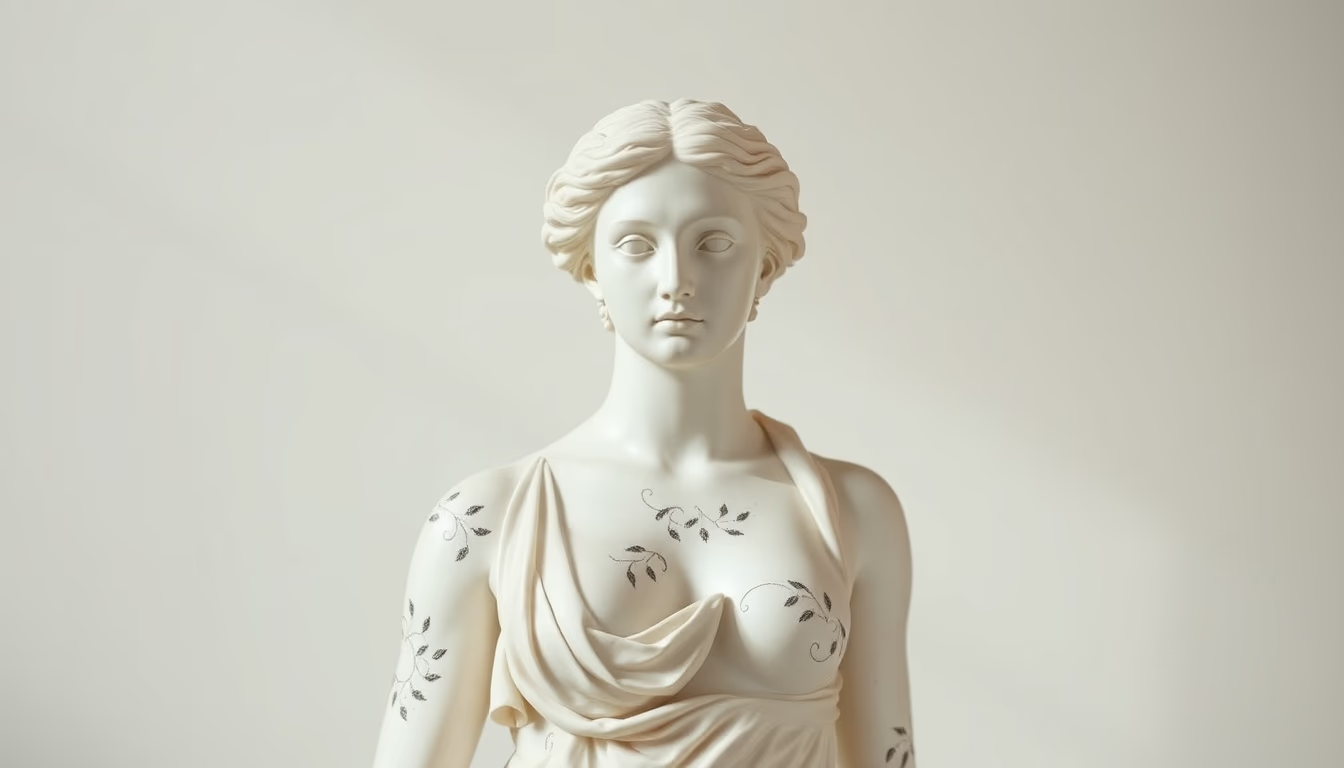
The Venus de Milo is one of the most famous sculptures of ancient Greece, depicting the goddess Aphrodite (Venus to the Romans) in marble, dated to the Hellenistic period (c. 130-100 BC).
About this subject
The Venus de Milo was discovered in 1820 by a farmer on the island of Milos in the Cyclades archipelago, Greece. The sculpture was buried in ruins near an ancient theater. Quickly acquired by the French ambassador, it was presented to King Louis XVIII and donated to the Louvre Museum, where it remains one of its main attractions to this day.
The statue stands 2.02 meters tall and is carved from Parian marble, a noble material widely used in antiquity. Originally, the Venus de Milo had arms, but they were lost at some point after its discovery, possibly during a dispute between the French and the Turks. The left arm held the apple offered by Paris (referring to the Judgment of Paris) and the right rested on the shoulder, but there are several theories about the original pose.
The work is attributed to Alexandros of Antioch, based on an inscription found on its base (now lost). It represents the ideal of female beauty in the Hellenistic period, combining sensuality with majesty. The missing arms, paradoxically, made the sculpture even more iconic, generating countless speculations and homages in popular culture.
The Venus de Milo has influenced artists such as Salvador Dalí and René Magritte, and appears in films and music. Her image is a universal symbol of classical art and timeless beauty, one of the most reproduced and recognized works in the world.
Frequently Asked Questions
Who sculpted the Venus de Milo?
It is believed that the sculptor was Alexandros of Antioch, according to an inscription found on the original base of the statue.
Why does the Venus de Milo have no arms?
The arms were lost after its discovery, possibly during a dispute between the French and the Turks. The statue was found incomplete, and the original arms were never recovered.
Where is the Venus de Milo currently located?
It is on display at the Louvre Museum in Paris since 1821, one of the museum's most visited works.
Direct URL
https://pub-c7d6a6ea828543ac903a74a341ccb2e1.r2.dev/imagens/venus-de-milo-minimalist-composition-p6.avifHow to credit
Include a visible link back to UtilizAí. Copy one of the snippets below:
<a href="https://xn--utiliza-eza.com/en/midia/imagens/venus-de-milo-minimalist-composition-p6">Venus de milo</a> by <a href="https://xn--utiliza-eza.com">UtilizAí</a>, licensed under <a href="https://creativecommons.org/licenses/by/4.0/">CC BY 4.0</a>.
[Venus de milo](https://xn--utiliza-eza.com/en/midia/imagens/venus-de-milo-minimalist-composition-p6) by [UtilizAí](https://xn--utiliza-eza.com), CC BY 4.0
License: CC-BY-4.0