Venus de milo
1344×768 · AVIF · CC BY 4.0
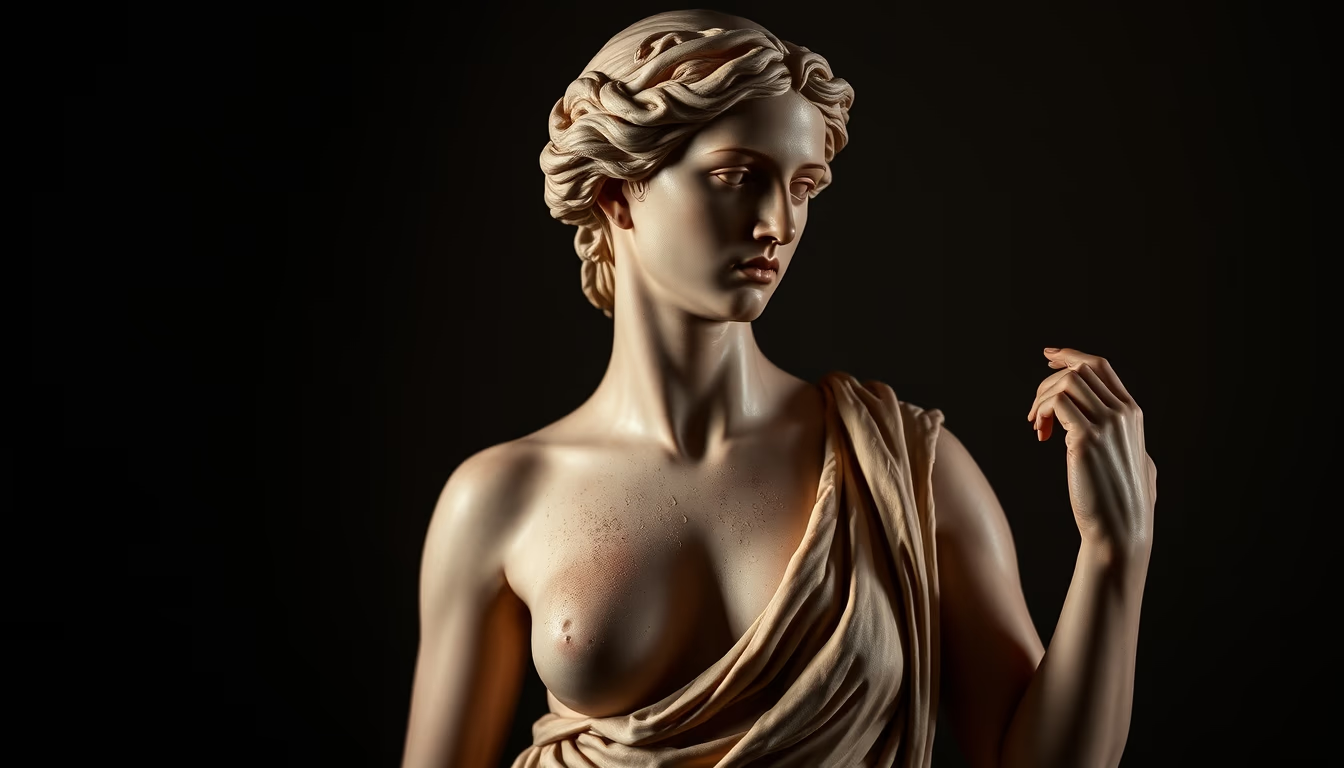
The Venus de Milo is one of the most famous sculptures of antiquity, a symbol of classical Greek beauty, currently displayed at the Louvre Museum in Paris.
About this subject
The Venus de Milo, also known as Aphrodite of Milos, is a Greek marble statue of the goddess of love and beauty, carved around 130, 100 BC during the Hellenistic period. It was discovered in 1820 on the island of Milos (now Milos), Greece, by a local peasant. The work was quickly acquired by France and displayed at the Louvre, where it became one of the museum's centerpieces. The statue stands 2.02 meters tall and impresses with its elegance and refined sculpting technique, featuring detailed drapery and a spiral pose that conveys movement.
What most intrigues scholars is the absence of her arms, lost sometime after the discovery. There is debate about their original position: some theories suggest the goddess held an apple (a reference to the Judgment of Paris), while others propose she leaned on a shield or held a mirror. Despite these gaps, the Venus de Milo is celebrated for its proportional harmony and serene expression, embodying the Greek aesthetic ideal.
Culturally, the sculpture has influenced artists for centuries, inspiring painters, sculptors, and photographers. Her image is reproduced on postcards, in contemporary artworks, and even in pop culture, such as films and advertising. The Venus de Milo remains a symbol of artistic perfection and a testament to the skill of ancient sculptors.
Frequently Asked Questions
Where is the Venus de Milo currently located?
The Venus de Milo is displayed at the Louvre Museum in Paris, in the Sully wing on the first floor, room 346 (Hellenistic Greek sculpture room).
Why is the Venus de Milo missing her arms?
The statue's arms were lost after its discovery in 1820, likely during transport or a conflict between French and Turks on the island. The original arm positions remain unknown.
What is the exact height of the Venus de Milo?
The statue stands 2.02 meters tall, including the base. It is carved from white marble from the island of Paros, Greece.
Direct URL
https://pub-c7d6a6ea828543ac903a74a341ccb2e1.r2.dev/imagens/venus-de-milo-fine-art-photography-p7.avifHow to credit
Include a visible link back to UtilizAí. Copy one of the snippets below:
<a href="https://xn--utiliza-eza.com/en/midia/imagens/venus-de-milo-fine-art-photography-p7">Venus de milo</a> by <a href="https://xn--utiliza-eza.com">UtilizAí</a>, licensed under <a href="https://creativecommons.org/licenses/by/4.0/">CC BY 4.0</a>.
[Venus de milo](https://xn--utiliza-eza.com/en/midia/imagens/venus-de-milo-fine-art-photography-p7) by [UtilizAí](https://xn--utiliza-eza.com), CC BY 4.0
License: CC-BY-4.0