Venus de milo
1344×768 · AVIF · CC BY 4.0
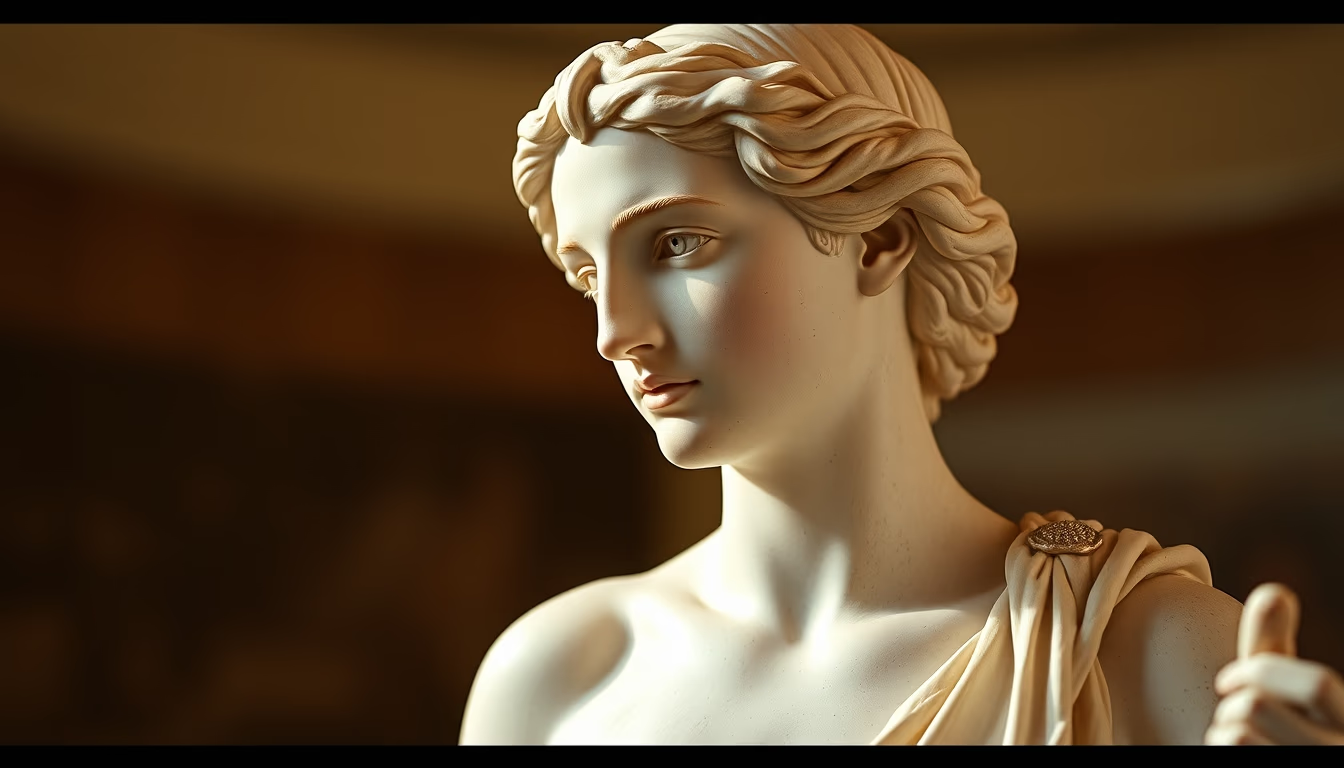
The Venus de Milo is an ancient Greek marble statue of the goddess Aphrodite, renowned for its beauty and missing arms.
About this subject
The Venus de Milo, also known as Aphrodite of Melos, is an ancient Greek sculpture dating from approximately 130 BC to 100 BC. It was discovered in 1820 on the island of Milos (ancient Melos) in southern Greece by a local farmer named Yorgos Kentrotas. The statue was found in two large fragments and several smaller pieces, including a hand holding an apple, which was later lost. The work is attributed to Alexandros of Antioch, according to an inscription on its original pedestal, now missing. Standing 2.02 meters tall and carved from white marble from the islands of Paros and Milos, the figure represents the goddess of love and beauty, Aphrodite (Venus to the Romans). It is believed that the statue originally held an apple in its left hand, symbolizing the prize from the Judgment of Paris, while the right hand held a draped garment over the hip. The arms were lost after discovery during a dispute between the French and the Ottoman Turks over possession. Today, the Venus de Milo is displayed at the Louvre Museum in Paris, where it is one of the most visited and iconic works, considered a paradigm of Hellenistic classical beauty. Its contrapposto stance and the treatment of marble, with suggested transparency in the drapery, exemplify the technical virtuosity of the era. The sculpture has influenced artists like Salvador Dalí and appears in cultural references, from the film 'Mona Lisa Smile' to brand logos.
Frequently Asked Questions
Where is the Venus de Milo displayed?
The Venus de Milo is at the Louvre Museum in Paris, France, where it is one of the most famous attractions.
Why is the Venus de Milo missing arms?
The original arms were lost after discovery, likely during a dispute between the French and the Ottoman Turks over possession of the statue.
Who sculpted the Venus de Milo?
The statue is attributed to Alexandros of Antioch, according to an inscription on its original pedestal, now missing.
Direct URL
https://pub-c7d6a6ea828543ac903a74a341ccb2e1.r2.dev/imagens/venus-de-milo-documentary-photography-p1.avifHow to credit
Include a visible link back to UtilizAí. Copy one of the snippets below:
<a href="https://xn--utiliza-eza.com/en/midia/imagens/venus-de-milo-documentary-photography-p1">Venus de milo</a> by <a href="https://xn--utiliza-eza.com">UtilizAí</a>, licensed under <a href="https://creativecommons.org/licenses/by/4.0/">CC BY 4.0</a>.
[Venus de milo](https://xn--utiliza-eza.com/en/midia/imagens/venus-de-milo-documentary-photography-p1) by [UtilizAí](https://xn--utiliza-eza.com), CC BY 4.0
License: CC-BY-4.0