Usdt stablecoin chart on tablet screen close-up
1344×768 · AVIF · CC BY 4.0
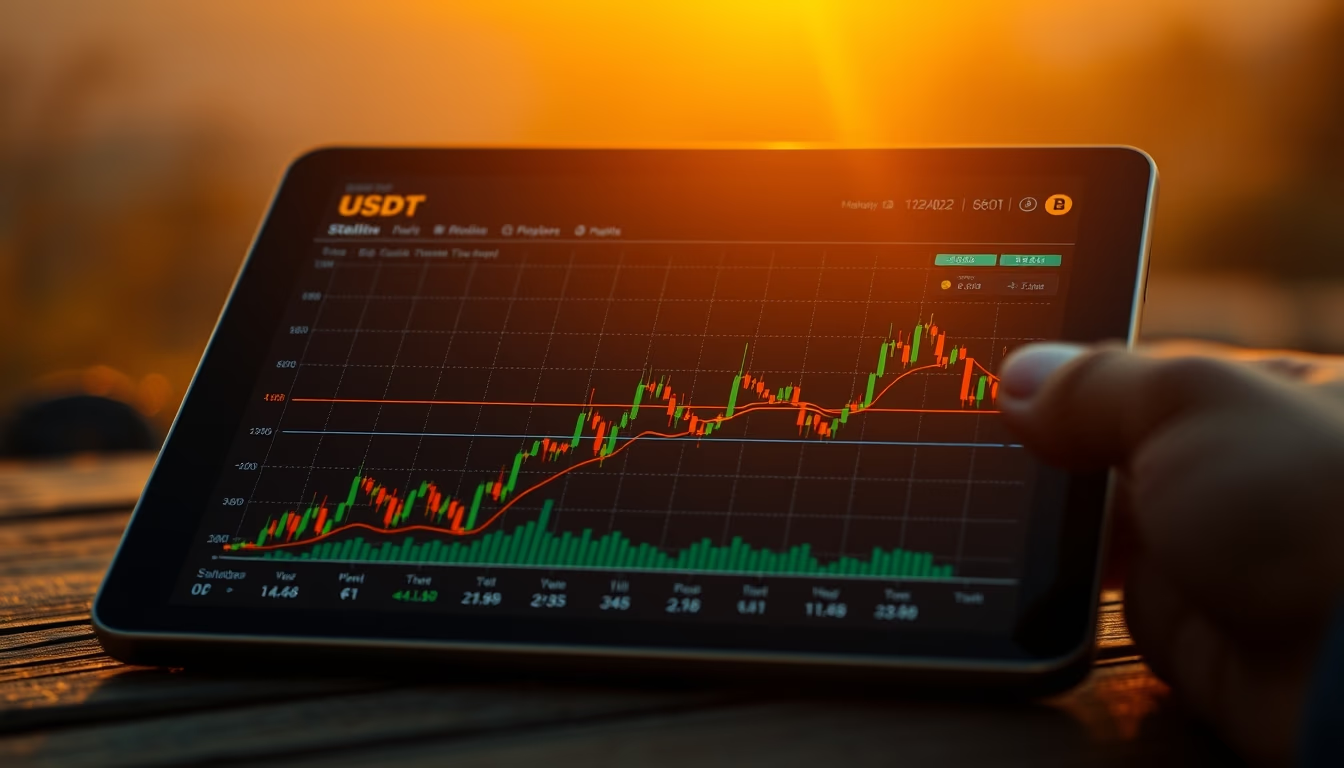
A close-up of a USDT stablecoin chart on a tablet screen highlights Tether's liquidity and stability in the global crypto market, showing real-time data.
About this subject
USDT (Tether) is the world's largest stablecoin, with a market capitalization exceeding US$100 billion as of 2025. Launched in 2014, it is designed to maintain parity with the US dollar, backed by reserves including US Treasury bonds, cash, and other assets. This stability makes it essential for traders seeking to preserve value during volatility, such as Bitcoin or Ethereum downturns.
The image, likely captured in a trading environment, shows a candlestick or line chart on a tablet screen, indicating USDT price movements. Although the stablecoin rarely deviates from $1.00, small fluctuations can occur on decentralized exchanges or during high-demand events. USDT is widely used for international transactions, remittances, and as a base pair in trading pairs, accounting for over 50% of daily volume on centralized exchanges.
Interestingly, Tether has faced regulatory scrutiny, especially in the US, regarding its reserve composition. In 2021, the company paid an $18.5 million fine to the New York Attorney General for allegedly lacking full backing. Since then, Tether publishes quarterly attestation reports, though it does not undergo complete audits. Despite controversies, USDT remains the most liquid stablecoin, with daily trading volume often exceeding $50 billion.
For the average user, a USDT chart on a tablet symbolizes the accessibility of the crypto market, allowing digital asset monitoring from anywhere. Apps like Binance, Coinbase, or Kraken provide real-time views, ideal for day traders or long-term investors tracking correlations between stablecoins and traditional markets.
Frequently Asked Questions
What is USDT and what is it used for?
USDT (Tether) is a stablecoin pegged to the US dollar, used to preserve value during volatility, facilitate international transactions, and serve as a base pair in crypto trading.
How does USDT maintain its $1 value?
Tether claims each USDT is backed by equivalent reserves in assets like US Treasury bonds, cash, and other instruments. The company publishes quarterly attestation reports to prove the backing.
Is USDT safe?
Although widely used, USDT has faced controversies over reserve transparency. In 2021, Tether paid a fine for lacking full backing. Many traders still trust its liquidity, but regulatory risks remain.
Direct URL
https://pub-c7d6a6ea828543ac903a74a341ccb2e1.r2.dev/imagens/usdt-stablecoin-chart-on-tablet-screen-close-up-cinematic-wide-shot-v2.avifHow to credit
Include a visible link back to UtilizAí. Copy one of the snippets below:
<a href="https://xn--utiliza-eza.com/en/midia/imagens/usdt-stablecoin-chart-on-tablet-screen-close-up-cinematic-wide-shot-v2">Usdt stablecoin chart on tablet screen close-up</a> by <a href="https://xn--utiliza-eza.com">UtilizAí</a>, licensed under <a href="https://creativecommons.org/licenses/by/4.0/">CC BY 4.0</a>.
[Usdt stablecoin chart on tablet screen close-up](https://xn--utiliza-eza.com/en/midia/imagens/usdt-stablecoin-chart-on-tablet-screen-close-up-cinematic-wide-shot-v2) by [UtilizAí](https://xn--utiliza-eza.com), CC BY 4.0
License: CC-BY-4.0