Usb-c connector macro
1344×768 · AVIF · CC BY 4.0
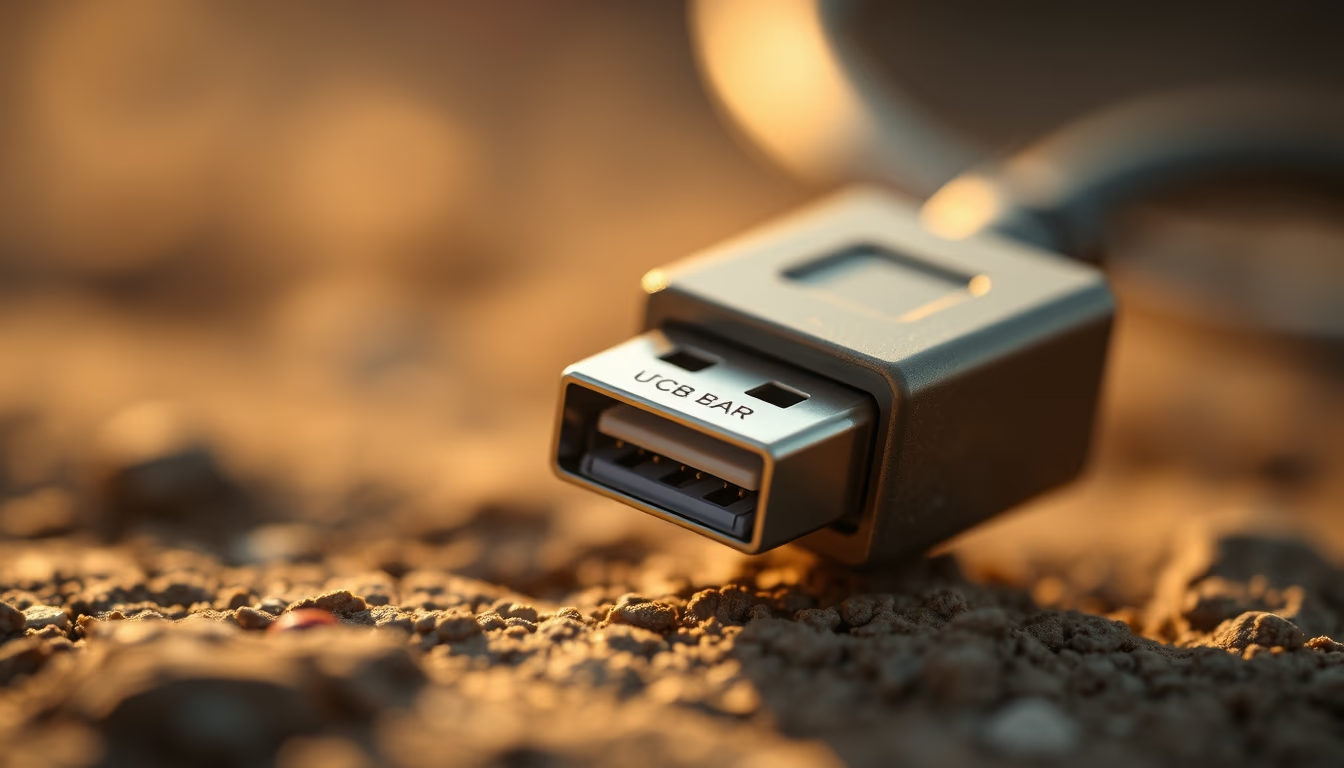
The USB-C connector is a reversible and multifunctional standard for data transfer, charging, and video, found in modern devices.
About this subject
The USB Type C connector, introduced in 2014 by the USB Implementers Forum, revolutionized connectivity by being reversible and supporting multiple protocols. It replaces connectors such as USB A, Micro USB, and even proprietary charging cables, unifying ports on laptops, smartphones, tablets, and cameras. Its ability to deliver up to 240 watts via USB Power Delivery 3.1 makes it suitable for charging even high end laptops, while data transfer rates reach 40 Gbps with Thunderbolt 4 or USB4.
Technically, the connector itself does not determine speed: the protocol used (USB 3.2, USB4, Thunderbolt) depends on the device and cable. Alternate modes allow video transmission via DisplayPort or HDMI, plus audio and Ethernet. Compared to USB A, USB C is smaller, more durable (rated for 10,000 insertion cycles), and lacks an orientation, eliminating the frustration of plugging it in wrong.
Global adoption was driven by regulations such as the European Union's mandate for common chargers starting in 2024. For travelers and photographers, especially those into travel photography, USB C simplifies gear: one cable charges camera, laptop, and phone. However, the variety of cables (some charge only, others transfer data only) causes confusion. A macro view of the connector's 24 pins reveals the engineering behind supporting so many functions simultaneously, like high current pass through and high speed differential signals.
Fun fact: the connector design is symmetrical, but pins are assigned so the device can detect orientation and configure paths accordingly. The official name is USB Type C, though USB C is common. The macro image itself is not the focus, but the detail of gold contacts and shielding shows the precision needed to support frequencies in the GHz range.
Frequently Asked Questions
What is the USB-C connector?
It is a reversible connector standard that supports data transfer, high power charging (up to 240W), and video/audio transmission. Introduced in 2014, it has become the universal connector for modern devices.
What is the difference between USB-C and USB-A?
USB C is smaller, reversible, and faster, supporting up to 40 Gbps with Thunderbolt 4. USB A is larger, non reversible, and typically limited to 5 Gbps (USB 3.0). USB C can also deliver more power and transmit video.
Will USB-C become mandatory by law?
Yes, the European Union has mandated that from 2024 all portable electronic devices sold in the bloc must have a USB C port, aiming to reduce e waste and unify chargers.
Direct URL
https://pub-c7d6a6ea828543ac903a74a341ccb2e1.r2.dev/imagens/usb-c-connector-macro-travel-photography-p7.avifHow to credit
Include a visible link back to UtilizAí. Copy one of the snippets below:
<a href="https://xn--utiliza-eza.com/en/midia/imagens/usb-c-connector-macro-travel-photography-p7">Usb-c connector macro</a> by <a href="https://xn--utiliza-eza.com">UtilizAí</a>, licensed under <a href="https://creativecommons.org/licenses/by/4.0/">CC BY 4.0</a>.
[Usb-c connector macro](https://xn--utiliza-eza.com/en/midia/imagens/usb-c-connector-macro-travel-photography-p7) by [UtilizAí](https://xn--utiliza-eza.com), CC BY 4.0
License: CC-BY-4.0