Usb-c connector macro
1344×768 · AVIF · CC BY 4.0
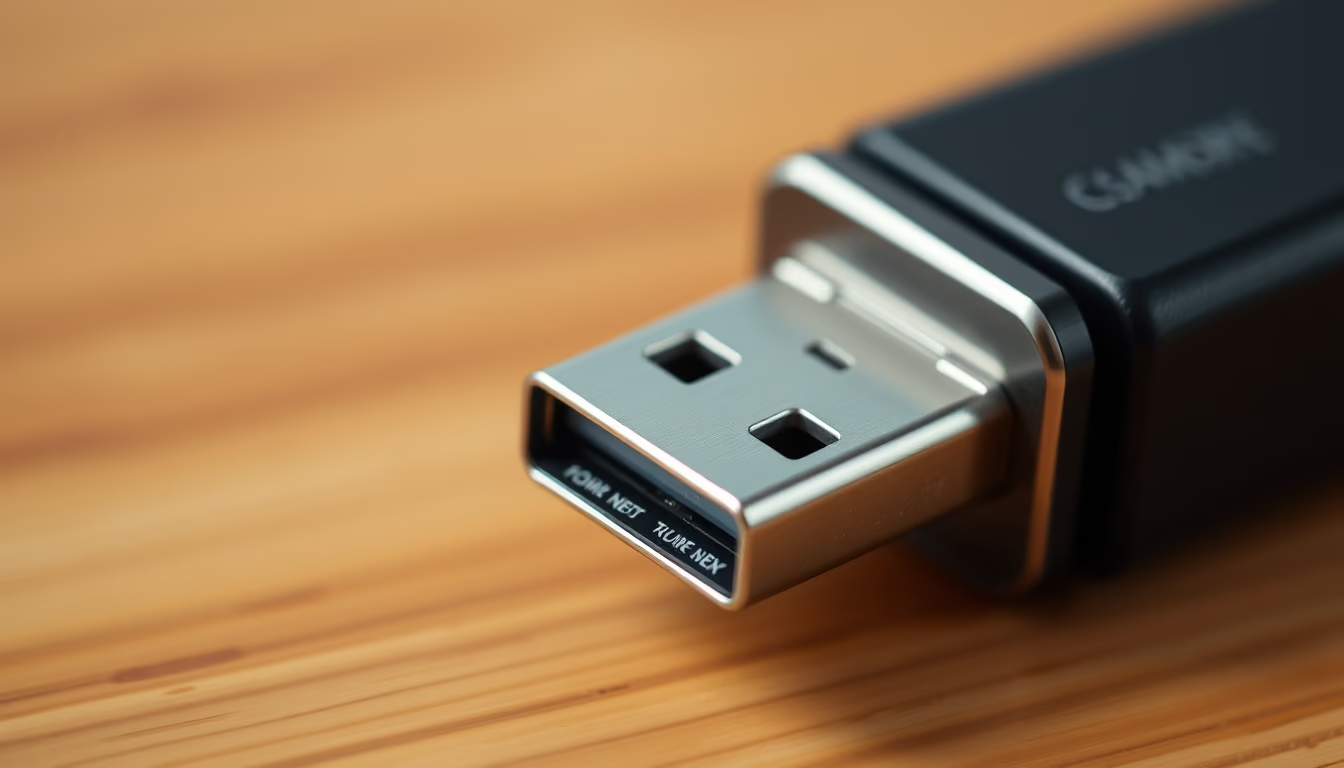
The USB-C connector revolutionized data transfer and device charging with its reversible design, high speed, and ability to deliver up to 100W.
About this subject
The USB-C connector, developed by the USB Implementers Forum (USB-IF), was introduced in 2014 to unify and modernize wired connections. Unlike its predecessors USB-A and USB-B, USB-C features a compact, symmetrical, and reversible design, eliminating the frustration of plug orientation. Its versatility allows simultaneous data transfer, video output, and power delivery through alternate modes such as DisplayPort and HDMI.
Technically, USB-C can achieve speeds up to 40 Gbps with USB4, far surpassing the 5 Gbps of USB 3.0. Power Delivery capabilities reach 100W, enough to charge laptops and even monitors. This power combined with standardization drove widespread adoption in smartphones, laptops (like Apple's MacBooks from 2015 onward), and peripherals.
A significant milestone for USB-C was the European Union's 2022 decision to mandate the connector for portable electronic devices sold in the bloc by 2024. The regulation aims to reduce electronic waste and simplify consumer choices. However, implementation faces challenges: not all USB-C cables are equal, quality varies, and low-cost cables may not support high speeds or safe power levels.
A macro photograph of a USB-C connector reveals its internal details, such as the 24 symmetrically arranged pins that allow plug reversal. This complex design, combined with precise manufacturing tolerances, ensures durability and reliability for thousands of connection cycles.
Frequently Asked Questions
Is the USB-C connector backward compatible?
Yes, using appropriate adapters or cables. However, compatibility depends on the protocol: a USB-C device with USB 3.0 can work with a USB-A hub, but speed will be limited to the slower bus.
What is the maximum transfer speed of USB-C?
With USB4, USB-C can achieve up to 40 Gbps. Older versions like USB 3.2 Gen 2x2 offer 20 Gbps, and USB 3.2 Gen 2 reaches 10 Gbps.
Why did USB-C become the standard in Europe?
The European Union passed a law in 2022 mandating USB-C for all portable electronic devices (phones, tablets, cameras, headphones, etc.) sold in the bloc by 2024, aiming to reduce electronic waste and simplify charging.
Direct URL
https://pub-c7d6a6ea828543ac903a74a341ccb2e1.r2.dev/imagens/usb-c-connector-macro-lo-fi-disposable-camera-p12.avifHow to credit
Include a visible link back to UtilizAí. Copy one of the snippets below:
<a href="https://xn--utiliza-eza.com/en/midia/imagens/usb-c-connector-macro-lo-fi-disposable-camera-p12">Usb-c connector macro</a> by <a href="https://xn--utiliza-eza.com">UtilizAí</a>, licensed under <a href="https://creativecommons.org/licenses/by/4.0/">CC BY 4.0</a>.
[Usb-c connector macro](https://xn--utiliza-eza.com/en/midia/imagens/usb-c-connector-macro-lo-fi-disposable-camera-p12) by [UtilizAí](https://xn--utiliza-eza.com), CC BY 4.0
License: CC-BY-4.0