Usb-c connector macro
1344×768 · AVIF · CC BY 4.0
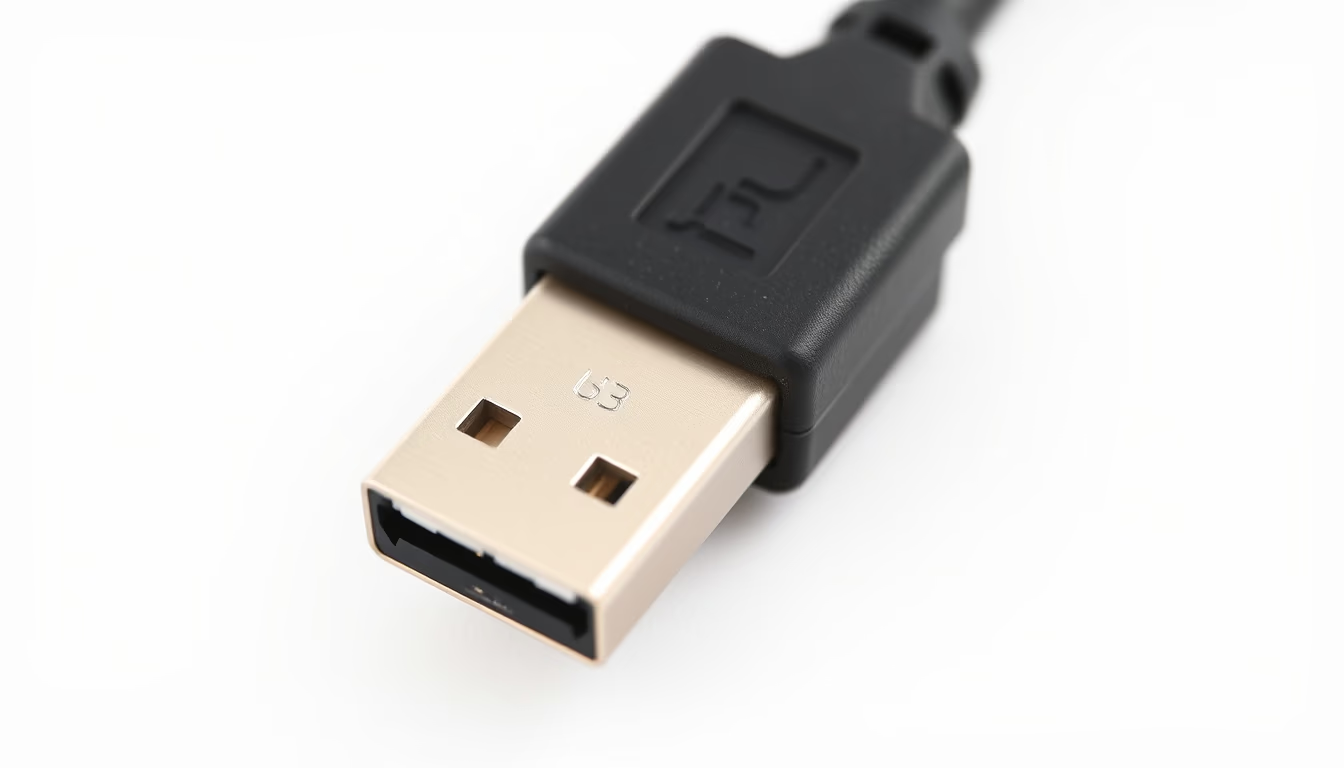
Macro shot of a USB-C connector reveals its 24-pin reversible design, the modern standard for data, video, and charging in devices.
About this subject
The USB-C connector, officially known as USB Type-C, was introduced in 2014 by the USB Implementers Forum as a universal replacement for older connectors like USB-A and Micro-USB. Its symmetrical, reversible design eliminates the frustration of plugging in the wrong orientation, a feature that quickly made it popular in smartphones, laptops, tablets, and accessories. The connector has 24 pins arranged in two rows of 12, enabling high data transfer rates (up to 40 Gbps with USB4), power delivery up to 240 W via USB Power Delivery 3.1, and alternate modes for video such as DisplayPort and HDMI.
Adoption of USB-C was driven by its multifunctional capabilities: a single cable can transmit data, video, and charge devices, reducing the need for multiple cables and chargers. Major manufacturers like Apple, Samsung, Dell, and Lenovo have integrated the port into their products, and the European Union made USB-C mandatory for portable electronic devices from 2024, a move that also influences the Brazilian market. Brazil's National Telecommunications Agency (ANATEL) had already been pushing for charger standardization, and the trend is for USB-C to become the global single connector.
In terms of construction, the USB-C connector is designed to withstand at least 10,000 insertion and removal cycles, ensuring durability. Its metal shielding and sturdy pins allow use in harsh environments, though periodic cleaning is recommended to prevent dust buildup. The versatility of USB-C has also created compatibility challenges, as not all cables and devices support all features (e.g., high speeds or power), requiring consumers to check specifications. Macro images like this are common in technical reviews and e-commerce, highlighting the finish and pin precision to help assess connector quality.
Frequently Asked Questions
What is a USB-C connector?
USB-C is a 24-pin connector standard introduced in 2014, known for being reversible and supporting data transfer, video output, and high-power charging through a single cable.
Is USB-C the same as Thunderbolt?
Not exactly. Both use the same physical connector, but Thunderbolt 3 and 4 offer higher bandwidth (up to 40 Gbps) and additional features. Many USB-C devices are Thunderbolt-compatible, but you should check specifications.
Can I charge my laptop with any USB-C cable?
It depends on power requirements. For laptops needing more than 60 W, you need a USB-C cable that supports USB Power Delivery (PD) and the required wattage. Regular phone cables may not suffice.
Direct URL
https://pub-c7d6a6ea828543ac903a74a341ccb2e1.r2.dev/imagens/usb-c-connector-macro-commercial-product-photography-p6.avifHow to credit
Include a visible link back to UtilizAí. Copy one of the snippets below:
<a href="https://xn--utiliza-eza.com/en/midia/imagens/usb-c-connector-macro-commercial-product-photography-p6">Usb-c connector macro</a> by <a href="https://xn--utiliza-eza.com">UtilizAí</a>, licensed under <a href="https://creativecommons.org/licenses/by/4.0/">CC BY 4.0</a>.
[Usb-c connector macro](https://xn--utiliza-eza.com/en/midia/imagens/usb-c-connector-macro-commercial-product-photography-p6) by [UtilizAí](https://xn--utiliza-eza.com), CC BY 4.0
License: CC-BY-4.0