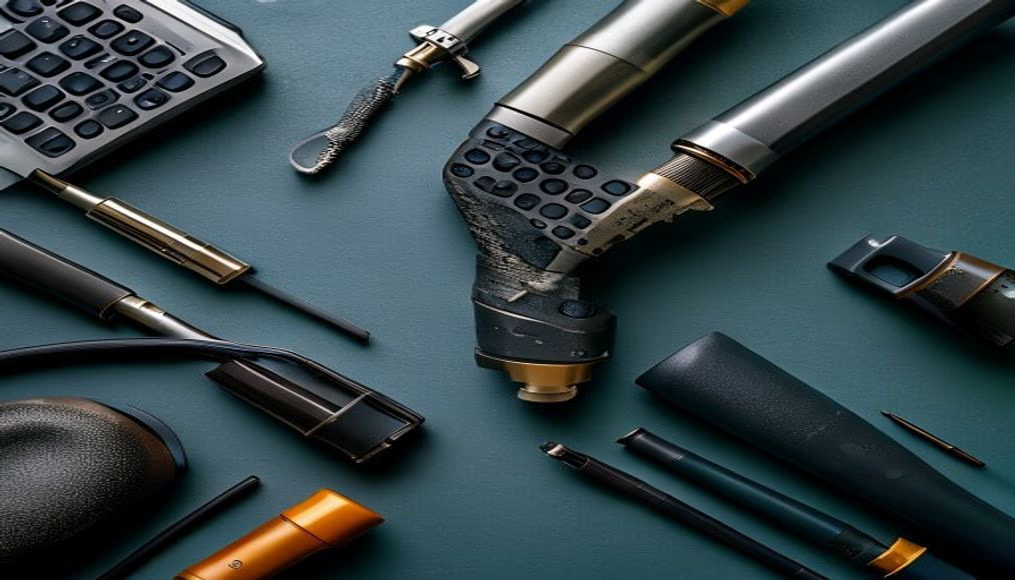
Usb-c connector macro
1344×768 · AVIF · CC BY 4.0

The USB-C connector revolutionized modern connectivity, offering high speed and versatility in a compact, reversible design.
About this subject
The USB-C standard was developed by the USB Implementers Forum (USB-IF) and launched in 2014 as an evolution of previous connectors. Its most striking feature is symmetry: the plug can be inserted in any orientation, eliminating the frustration common with USB-A and micro USB connectors. Additionally, the connector has 24 pins, allowing it to support multiple protocols simultaneously.
Technically, USB-C can transmit data at speeds up to 40 Gbps when combined with the USB4 specification and deliver up to 240 watts of power with the USB Power Delivery 3.1 standard. This means a single cable can charge laptops, transfer 8K video to monitors, and connect high-speed peripherals. The versatility of USB-C also includes support for alternate modes such as DisplayPort, HDMI, and Thunderbolt.
The adoption of USB-C has been gradual but is now ubiquitous. Android smartphones, MacBooks, Windows laptops, tablets, cameras, and gaming consoles use the connector. The European Union made USB-C mandatory for portable electronic devices starting in 2024, further standardizing the market. Despite this, Apple retained the Lightning connector on iPhones until 2023, but with the iPhone 15 it switched to USB-C.
Compared to previous connectors, USB-C offers greater durability, with an estimated lifespan of 10,000 insertion cycles. Its ability to transmit power, data, and video over a single cable simplifies device infrastructure, reducing the need for multiple cables and adapters. However, cable quality and compatibility with standards like USB 3.2 or USB4 can vary, requiring consumer attention.
Frequently Asked Questions
What is the difference between USB-C and USB-A?
USB-C is a reversible, compact connector with support for higher transfer speeds and power delivery. USB-A is the traditional rectangular connector, non-reversible, and with lower transmission capabilities.
Is USB-C compatible with all devices?
No. Compatibility depends on device and cable support. Not all USB-C cables support the same protocols (e.g., Thunderbolt or USB4). Always check device and cable specifications.
What are the advantages of USB-C over micro USB?
USB-C offers reversibility, higher data speeds (up to 40 Gbps vs 480 Mbps), power delivery up to 240 W, and support for alternate modes like video. It is also more durable, with 10,000 insertion cycles compared to 5,000 for micro USB.
Direct URL
https://pub-c7d6a6ea828543ac903a74a341ccb2e1.r2.dev/imagens/usb-c-connector-macro-architectural-photography-p10.avifHow to credit
Include a visible link back to UtilizAí. Copy one of the snippets below:
<a href="https://xn--utiliza-eza.com/en/midia/imagens/usb-c-connector-macro-architectural-photography-p10">Usb-c connector macro</a> by <a href="https://xn--utiliza-eza.com">UtilizAí</a>, licensed under <a href="https://creativecommons.org/licenses/by/4.0/">CC BY 4.0</a>.
[Usb-c connector macro](https://xn--utiliza-eza.com/en/midia/imagens/usb-c-connector-macro-architectural-photography-p10) by [UtilizAí](https://xn--utiliza-eza.com), CC BY 4.0
License: CC-BY-4.0