Usb-c connector macro
1344×768 · AVIF · CC BY 4.0
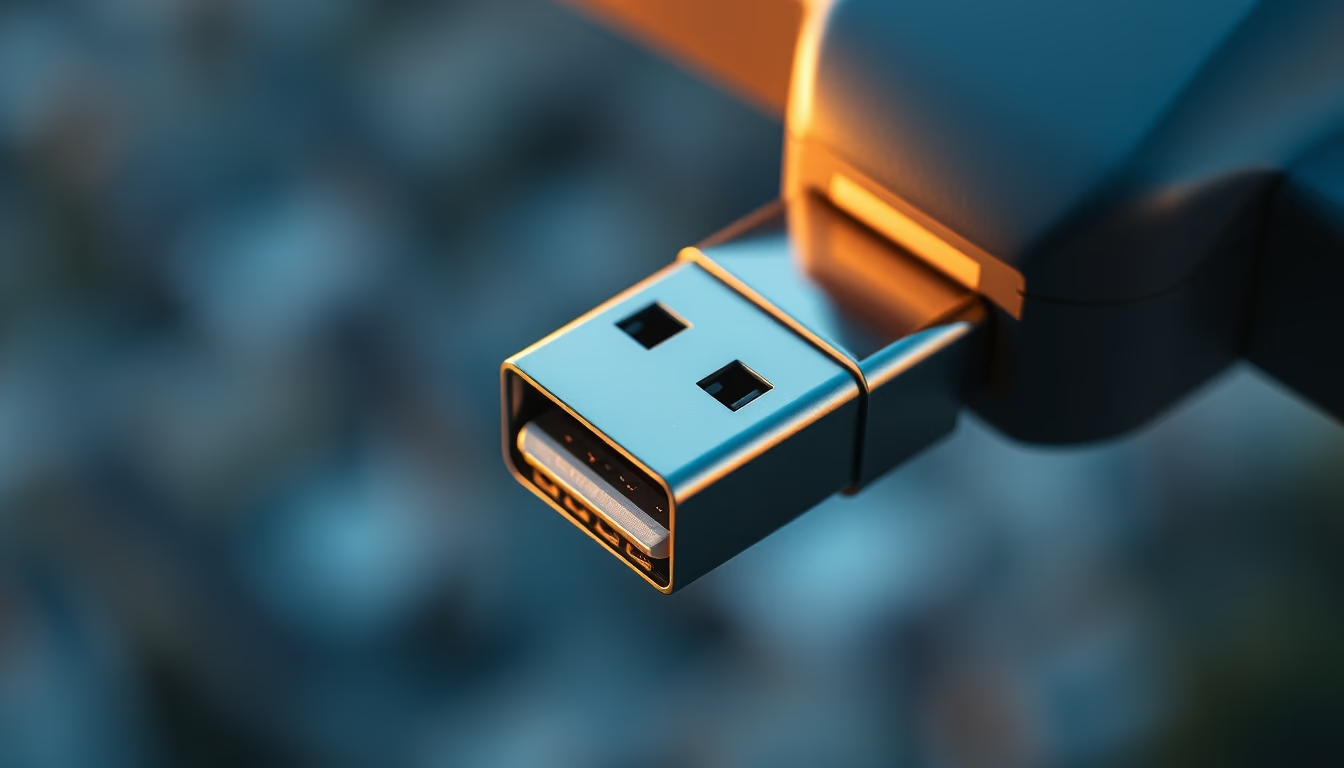
The USB-C connector is a modern universal connection standard, found in devices worldwide. Discover its advantages, technical specifications, and impact on the electronics market.
About this subject
The USB-C (Universal Serial Bus Type-C) connector was developed by the USB Implementers Forum (USB-IF) and officially launched in 2014. It represents a significant evolution over previous USB connectors like USB-A and USB-B. Its key feature is the symmetric, reversible design that allows insertion in any orientation, eliminating the frustration of plugging in the wrong way. Additionally, USB-C supports high data transfer rates, up to 40 Gbps with USB4, and power delivery of up to 240W with USB Power Delivery (USB-PD).
USB-C has become ubiquitous in modern devices, including smartphones, laptops, tablets, monitors, and accessories. Apple adopted the connector in its MacBooks starting in 2015, and more recently, the European Union made USB-C mandatory as a common charger for electronic devices from 2024, aiming to reduce e-waste. This standardization forced Apple to replace the Lightning connector in iPhones starting with the iPhone 15.
A technical curiosity: USB-C can operate in different signaling modes, such as USB 2.0, USB 3.x, Thunderbolt 3/4, and DisplayPort, thanks to the Alternate Mode (Alt Mode). This allows a single cable to transmit video, data, and power simultaneously. Moreover, the connector is designed to withstand over 10,000 insertion and removal cycles, ensuring durability.
The impact of USB-C goes beyond convenience: it simplifies connectivity, reduces the need for multiple cables and chargers, and drives innovation in fast charging and data transfer. However, the proliferation of low-quality cables can compromise safety, making it important to purchase USB-IF certified products.
Frequently Asked Questions
What does it mean that USB-C is reversible?
It means the connector can be inserted in any orientation, with no right or wrong side. This is possible due to the symmetrical pin design, which connects regardless of position.
What is the difference between USB-C and USB-A?
USB-A is the traditional rectangular connector, non-reversible, and with limited speeds. USB-C is smaller, reversible, supports higher transfer rates and power delivery, and allows alternate modes for video and data.
Are all USB-C cables the same?
No. USB-C cables vary in data capability (USB 2.0, 3.0, 3.1, 4) and charging power. Low-quality cables can damage devices. It is recommended to use USB-IF certified cables.
Direct URL
https://pub-c7d6a6ea828543ac903a74a341ccb2e1.r2.dev/imagens/usb-c-connector-macro-aerial-drone-shot-p1.avifHow to credit
Include a visible link back to UtilizAí. Copy one of the snippets below:
<a href="https://xn--utiliza-eza.com/en/midia/imagens/usb-c-connector-macro-aerial-drone-shot-p1">Usb-c connector macro</a> by <a href="https://xn--utiliza-eza.com">UtilizAí</a>, licensed under <a href="https://creativecommons.org/licenses/by/4.0/">CC BY 4.0</a>.
[Usb-c connector macro](https://xn--utiliza-eza.com/en/midia/imagens/usb-c-connector-macro-aerial-drone-shot-p1) by [UtilizAí](https://xn--utiliza-eza.com), CC BY 4.0
License: CC-BY-4.0