Urban farm vertical building
1344×768 · AVIF · CC BY 4.0
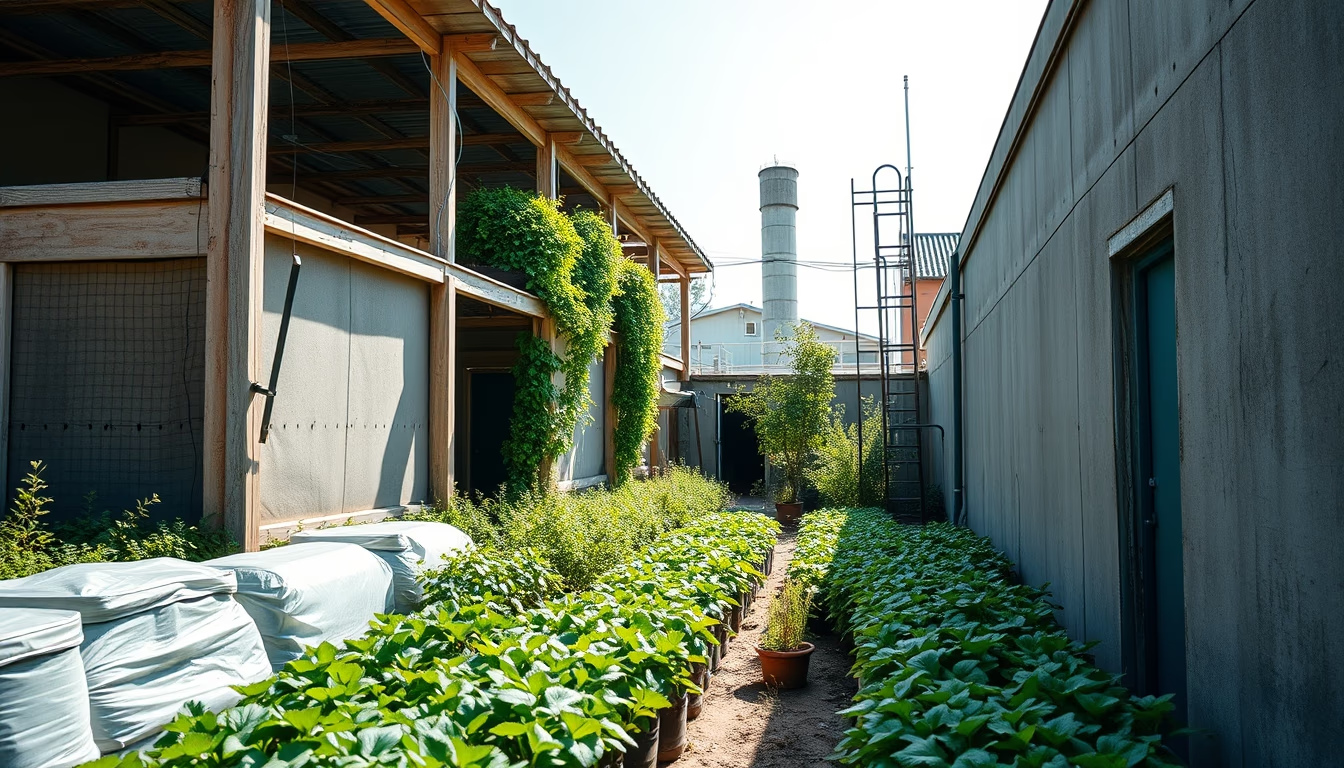
Urban vertical farm architecture combines high-tech agriculture with sustainable buildings to produce food in dense cities, reducing the distance from producer to consumer.
About this subject
Vertical farms are buildings designed to grow food in stacked layers, using techniques such as hydroponics, aeroponics, and LED lighting. This approach enables food production in urban areas where horizontal space is scarce and expensive. The concept has gained momentum in recent decades as a response to growing global urbanization and the need for more resilient food systems.
Notable examples include Sky Greens in Singapore, one of the world's first commercial vertical farms, with rotating towers that maximize sun exposure. In the United States, AeroFarms operates one of the largest vertical farms in the world in Newark, New Jersey, using aeroponics to grow leafy greens with 95% less water than traditional agriculture. In Europe, Infarm built modular units inside German supermarkets, integrating production at the point of sale.
Environmental benefits are significant: up to 90% reduction in water use, elimination of pesticides and herbicides, and lower transportation emissions due to shortened supply chains. Moreover, vertical farms can operate year-round regardless of weather conditions and are often installed in abandoned or underutilized buildings, revitalizing degraded urban areas.
However, challenges remain. High electricity consumption for artificial lighting and climate control can make operations expensive. Current research explores renewable sources, such as integrated solar panels, and energy-saving systems. Still, experts predict that with technological advances and economies of scale, vertical farms will become an essential part of the future urban landscape, especially in regions with poor soil or extreme climate.
Frequently Asked Questions
How does a vertical farm work?
A vertical farm grows plants in stacked layers, usually inside buildings. It uses hydroponic (nutrients in water), aeroponic (nutrients in mist), or aquaponic (with fish) systems, combined with LED lighting to replace sunlight. The environment is controlled to optimize growth.
What are the main environmental benefits of vertical farms?
Water savings of 70% to 95% compared to traditional agriculture, elimination of pesticides and herbicides, significant reduction in transport emissions, and the ability to produce food locally in urban areas, reducing waste.
What types of plants can be grown in vertical farms?
Leafy greens like lettuce, arugula, and spinach are common. Aromatic herbs, microgreens, strawberries, cherry tomatoes, and even some roots are also possible. Grains and tubers remain challenging due to space and cost.
Direct URL
https://pub-c7d6a6ea828543ac903a74a341ccb2e1.r2.dev/imagens/urban-farm-vertical-building-minimalist-composition-p3.avifHow to credit
Include a visible link back to UtilizAí. Copy one of the snippets below:
<a href="https://xn--utiliza-eza.com/en/midia/imagens/urban-farm-vertical-building-minimalist-composition-p3">Urban farm vertical building</a> by <a href="https://xn--utiliza-eza.com">UtilizAí</a>, licensed under <a href="https://creativecommons.org/licenses/by/4.0/">CC BY 4.0</a>.
[Urban farm vertical building](https://xn--utiliza-eza.com/en/midia/imagens/urban-farm-vertical-building-minimalist-composition-p3) by [UtilizAí](https://xn--utiliza-eza.com), CC BY 4.0
License: CC-BY-4.0