Urban farm vertical building
1344×768 · AVIF · CC BY 4.0
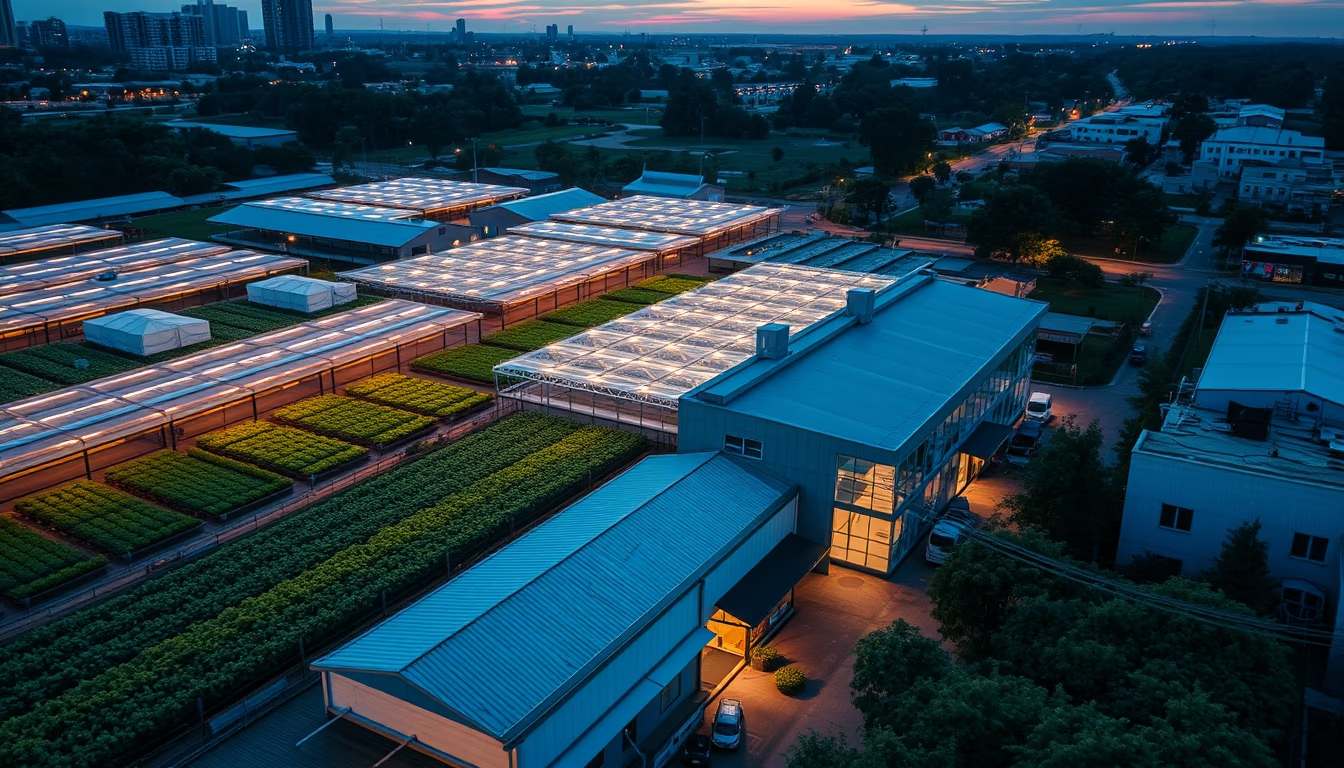
Urban vertical farms are transforming agriculture by growing food in multi-story buildings, captured here from an aerial perspective.
About this subject
Urban vertical farms represent an innovative response to the challenges of food production in densely populated cities. By using vertical space, these facilities can grow a wide variety of vegetables, herbs, and fruits in controlled environments close to consumption centers. This model reduces dependence on long supply chains and minimizes post-harvest waste. In metropolises such as Singapore, Tokyo, and New York, pilot projects have already demonstrated technical and economic viability, with some farms producing up to 10 times more per square meter than conventional agriculture.
The technology combines hydroponics, aeroponics, and adjustable-spectrum LED lighting that mimics sunlight and optimizes photosynthesis. Sensors monitor temperature, humidity, and nutrient levels in real time, while artificial intelligence algorithms adjust conditions for each crop. This precise control eliminates the need for pesticides and reduces water consumption by up to 95% compared to traditional farming. In addition, production is continuous, independent of seasons, ensuring a stable supply of fresh food.
Environmental benefits are significant: vertical farms help reduce carbon emissions associated with food transport and decrease agricultural land use. By 2026, the global vertical farming market is expected to surpass $10 billion, driven by investments in technology and demand for local, sustainable food. Challenges such as high energy costs and the need for specialized labor remain, but innovations in solar panels and batteries promise to make the system more accessible.
The concept of vertical farming also aligns with sustainable urban planning, integrating into commercial and residential buildings. Projects like "Sky Greens" in Singapore or "Farm.One" in New York serve as global references. The aerial view of such a building highlights the scale and architectural integration of this solution, which may become increasingly common in urban landscapes worldwide.
Frequently Asked Questions
How does an urban vertical farm work?
It uses hydroponic or aeroponic systems on stacked floors with controlled LED lighting. Plants grow without soil, receiving dissolved nutrients in water, while sensors maintain optimal climate and light conditions.
Which crops are most common in vertical farms?
Lettuce, arugula, basil, strawberries, and microgreens are popular due to short cycles and high yields. Tomatoes, bell peppers, and medicinal herbs are also cultivated, depending on building height and available technology.
What are the main environmental benefits of this model?
Up to 95% reduction in water use, elimination of pesticides, decreased food transportation, and utilization of underused urban spaces. Local production also lowers CO2 emissions and provides fresher food.
Direct URL
https://pub-c7d6a6ea828543ac903a74a341ccb2e1.r2.dev/imagens/urban-farm-vertical-building-aerial-drone-shot-p1.avifHow to credit
Include a visible link back to UtilizAí. Copy one of the snippets below:
<a href="https://xn--utiliza-eza.com/en/midia/imagens/urban-farm-vertical-building-aerial-drone-shot-p1">Urban farm vertical building</a> by <a href="https://xn--utiliza-eza.com">UtilizAí</a>, licensed under <a href="https://creativecommons.org/licenses/by/4.0/">CC BY 4.0</a>.
[Urban farm vertical building](https://xn--utiliza-eza.com/en/midia/imagens/urban-farm-vertical-building-aerial-drone-shot-p1) by [UtilizAí](https://xn--utiliza-eza.com), CC BY 4.0
License: CC-BY-4.0