Underwater camera housing
1344×768 · AVIF · CC BY 4.0
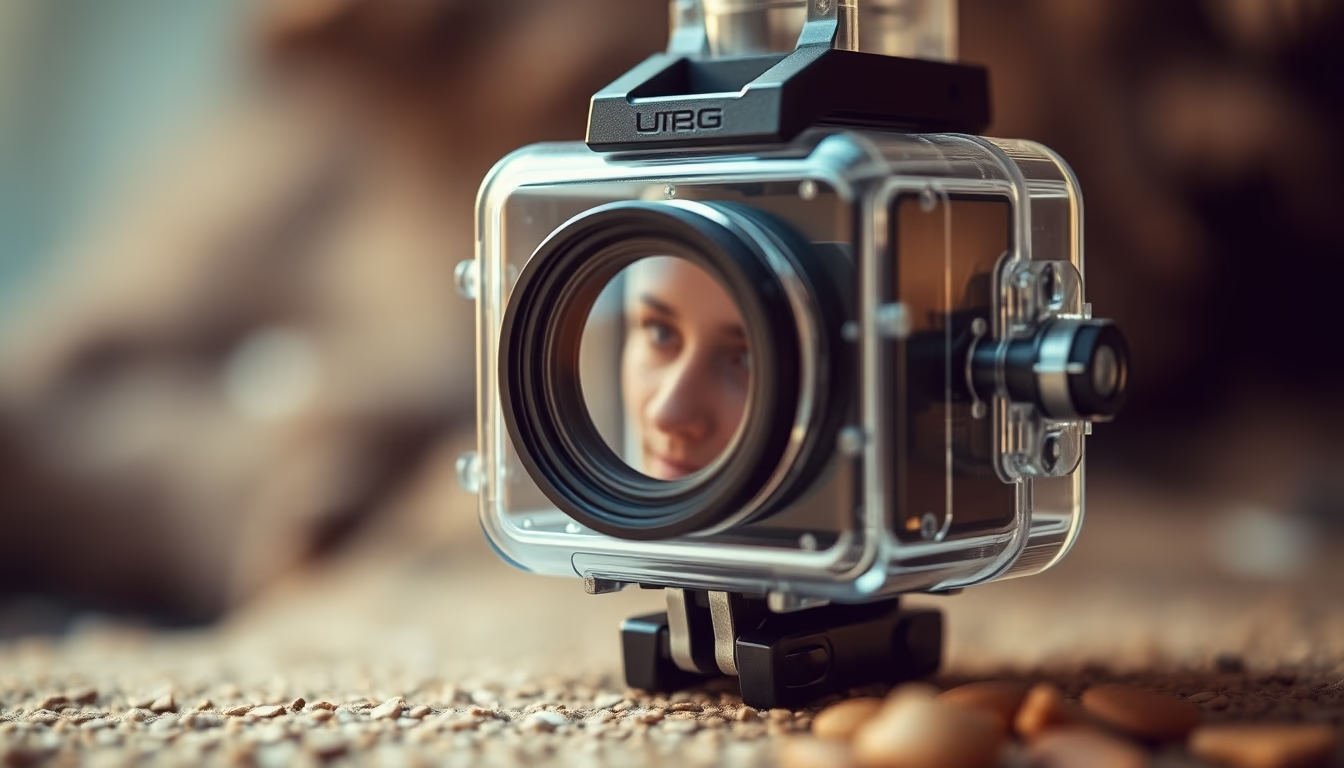
Waterproof camera housing, essential for underwater photography in recreational and professional diving.
About this subject
An underwater camera housing is a sealed enclosure that protects photographic equipment from pressure, moisture, and impacts during underwater activities. Early prototypes appeared in the 1950s, with French oceanographer Jacques Cousteau popularizing submersible cameras. Modern housings are made of polycarbonate, anodized aluminum, or acrylic, capable of withstanding depths from 10 to over 100 meters depending on rating.
Functionality relies on rubber O-rings for sealing and mechanical or electronic controls to adjust focus, zoom, and shutter without exposing the camera. Manufacturers such as Ikelite, Nauticam, and Aquatica produce housings for compact, mirrorless, and DSLR cameras, with interchangeable lenses attached via specific ports. Maximum depth is determined by pressure testing: recreational housings typically handle 40 m, while professional models reach 130 m or more.
Choosing a housing involves considering dive type (clear vs. murky water), ergonomics, and internal pressure compensation. For macro or wide-angle photography, lens ports use high-transmission optical glass to minimize aberrations. Maintenance, lubricating rings and cleaning after use, is critical to prevent leaks. Industry data shows the housing market grew 8% annually from 2018 to 2023, fueled by dive tourism and social media's appetite for underwater imagery.
Fun fact: the first commercially successful underwater housing was the Nikonos, released by Nikon in 1963, which was an integrated submersible camera. Today, most photographers prefer custom housings for standard cameras, as they offer lens flexibility and familiar controls. Brands like Sony and Canon provide official housings, but third-party options dominate due to price and variety.
Frequently Asked Questions
How deep can an underwater camera housing go?
Maximum depth varies: recreational housings typically handle 40 meters, while professional models certified for technical diving can reach 130 meters or more. Always check the manufacturer's depth rating before diving.
What materials are used in underwater camera housings?
Common materials include polycarbonate (light and impact-resistant), anodized aluminum (durable for professionals), and acrylic (used for windows and ports). Each material offers trade-offs in weight, strength, and cost.
Can I use any camera in a housing?
No. Housings are designed for specific camera models. Universal versions exist for compact cameras, but for mirrorless and DSLR you need a custom housing exactly matching the model to ensure access to all controls.
Direct URL
https://pub-c7d6a6ea828543ac903a74a341ccb2e1.r2.dev/imagens/underwater-camera-housing-tilt-shift-miniature-fresh18.avifHow to credit
Include a visible link back to UtilizAí. Copy one of the snippets below:
<a href="https://xn--utiliza-eza.com/en/midia/imagens/underwater-camera-housing-tilt-shift-miniature-fresh18">Underwater camera housing</a> by <a href="https://xn--utiliza-eza.com">UtilizAí</a>, licensed under <a href="https://creativecommons.org/licenses/by/4.0/">CC BY 4.0</a>.
[Underwater camera housing](https://xn--utiliza-eza.com/en/midia/imagens/underwater-camera-housing-tilt-shift-miniature-fresh18) by [UtilizAí](https://xn--utiliza-eza.com), CC BY 4.0
License: CC-BY-4.0