Underwater camera housing
1344×768 · AVIF · CC BY 4.0
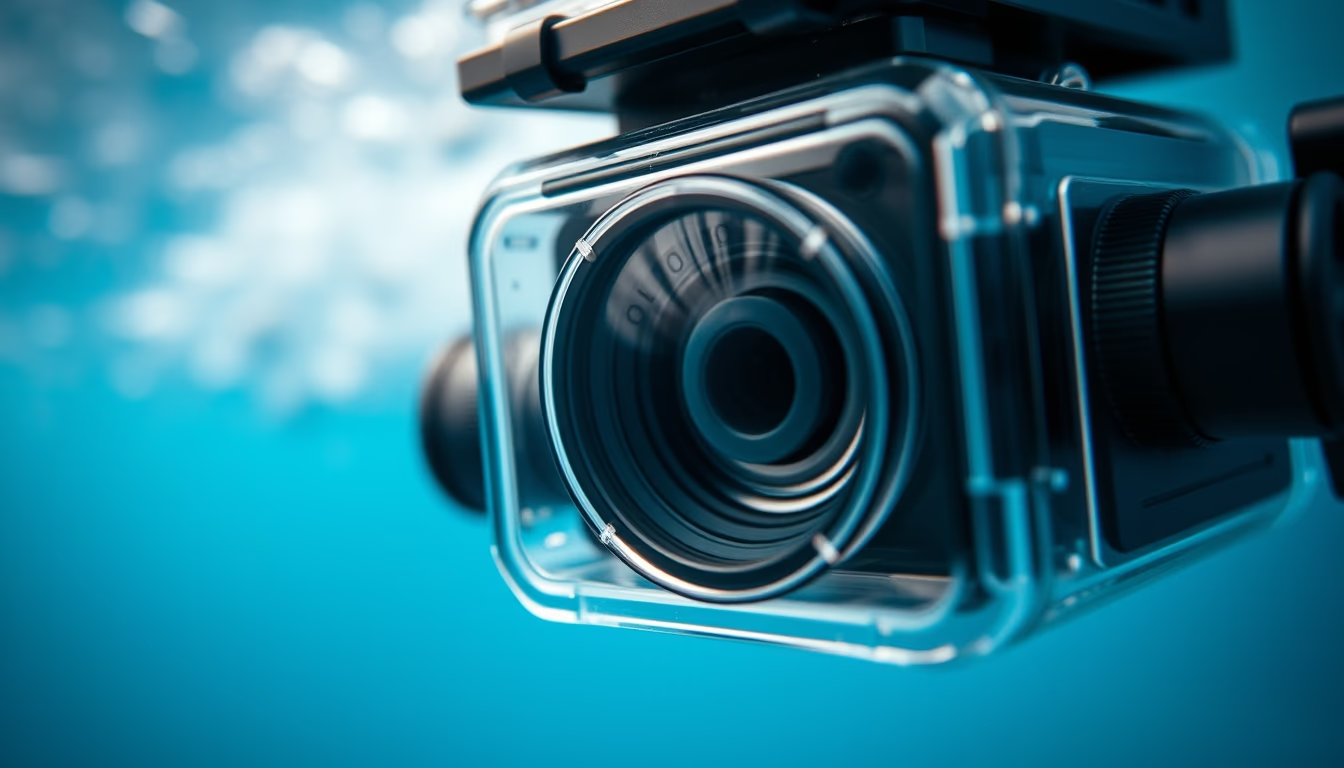
Waterproof housing for underwater cameras, essential for diving photography, oceanography, and marine documentation.
About this subject
An underwater camera housing is a waterproof enclosure designed to protect photographic and video equipment during dives. Typically made of anodized aluminum or high-strength polycarbonate, it withstands pressures varying by depth: leisure models handle up to 40 meters, while professional versions exceed 100 meters. Advanced housings provide access to all camera controls, zoom, focus, shutter, via rubber seals and mechanical rods.
Underwater photography gained popularity in the 1950s with cameras like the Calypso (predecessor of the Nikonos), but adaptable housings for SLR and mirrorless cameras now dominate the market. Brands such as Ikelite, Nauticam, and Sea&Sea offer housings with external flash connectivity, enlarged viewfinders, and lever-based focus systems. A good housing must be neutrally buoyant or ballasted to avoid hindering diver mobility.
Beyond recreational diving, housings are crucial for scientific research, underwater archaeology, and documentary filming. High-performance models capture images in strong currents and low light. Maintenance is strict: after each saltwater dive, the housing must be rinsed in freshwater, and O-rings lubricated periodically to prevent leaks. Seal failure is the leading cause of equipment loss.
Technical curiosities: modern housings feature optical glass with anti-reflective coatings; some allow lens changes underwater. Internal pressure is equalized by relief valves, and heating systems prevent lens fogging in cold water. Aerodynamic designs reduce drag when moving swiftly, such as following turtles or schools of fish.
Frequently Asked Questions
What maximum depth can an underwater housing withstand?
It depends on the model. Recreational housings typically support up to 40 meters, while professional ones can reach 100 meters or more, as used in technical diving.
How to properly maintain an underwater housing?
After each dive in saltwater, rinse the housing with fresh water and dry it. Lubricate O-rings with silicone grease, checking for debris or wear. Store in a dry place away from direct sunlight.
Can I change the camera lens inside the housing?
Yes, some professional models feature interchangeable ports that allow lens changes underwater, provided the housing is compatible and the procedure is done carefully to avoid water entry.
Direct URL
https://pub-c7d6a6ea828543ac903a74a341ccb2e1.r2.dev/imagens/underwater-camera-housing-macro-closeup-fresh4.avifHow to credit
Include a visible link back to UtilizAí. Copy one of the snippets below:
<a href="https://xn--utiliza-eza.com/en/midia/imagens/underwater-camera-housing-macro-closeup-fresh4">Underwater camera housing</a> by <a href="https://xn--utiliza-eza.com">UtilizAí</a>, licensed under <a href="https://creativecommons.org/licenses/by/4.0/">CC BY 4.0</a>.
[Underwater camera housing](https://xn--utiliza-eza.com/en/midia/imagens/underwater-camera-housing-macro-closeup-fresh4) by [UtilizAí](https://xn--utiliza-eza.com), CC BY 4.0
License: CC-BY-4.0