Underwater camera housing
1344×768 · AVIF · CC BY 4.0
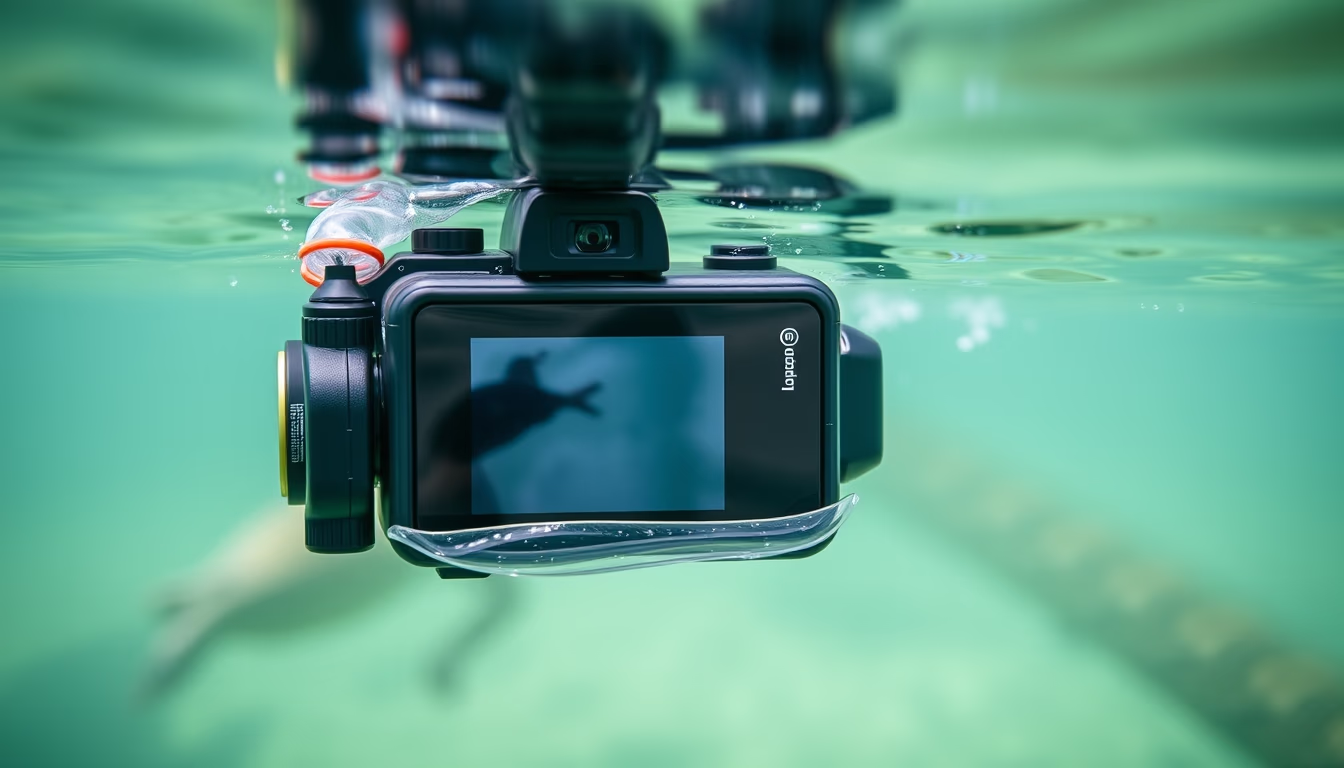
Learn how an underwater camera housing works, an essential piece of equipment for photography and filming beneath the surface.
About this subject
An underwater camera housing is a waterproof enclosure that allows standard or specialized cameras to be used in submerged environments. These housings are typically made from materials such as anodized aluminum, polycarbonate, or acrylic, designed to withstand pressures ranging from a few meters to hundreds of meters deep. Sealing is achieved through rubber O-rings and mechanical locking systems, preventing water ingress while letting the photographer access camera controls via external buttons and levers.
The development of modern housings is closely linked to the evolution of underwater photography, which gained momentum with pioneers like Jacques Cousteau and engineer Jean de Wouters in the 1950s. Today, the industry offers models for compact, mirrorless, and DSLR cameras, with options for different depths and budgets. Brands such as Nauticam, AquaTech, and Ikelite are market leaders, producing housings that can cost from a few hundred to tens of thousands of dollars.
Beyond waterproofing, housings play a crucial role in stabilizing the camera and adapting accessories, such as arms for underwater strobes, external monitors, and wide-angle lenses. Choosing the right housing depends on the camera model, maximum depth requirement, and type of photography, whether macro, sports, or documentary. In scientific expeditions and nature documentaries, like those by the BBC or National Geographic, housings are indispensable for capturing images of coral reefs, shipwrecks, and marine life in their natural habitat.
A notable technical fact is that hydrostatic pressure at 10 meters depth is double atmospheric pressure, requiring housings to be engineered to withstand considerable forces. Therefore, waterproofing tests are performed before each dive, either by immersion in a shallow pool or using vacuum systems. Periodic maintenance of O-rings and lubrication with silicone grease are essential practices to prevent leaks and extend the equipment's lifespan.
Frequently Asked Questions
What is the maximum depth an underwater camera housing can withstand?
It depends on the model and material. Aluminum housings can reach up to 100 meters for DSLR cameras, while polycarbonate or acrylic models typically handle 40 to 60 meters. Special deep-sea housings for cinema cameras can go as deep as 300 meters.
How can I ensure the housing will not leak during a dive?
Perform a leak test before each use: submerge the empty housing in a shallow pool for a few minutes and check for bubbles or water ingress. Also, inspect the O-rings for dirt, cuts, or dryness, and lubricate them with appropriate silicone grease.
Can I use any camera inside an underwater housing?
No, each housing is designed for specific camera models because the external controls must align perfectly with the camera's buttons. Universal housings exist but may have limited functionality. It's best to buy a housing made for your exact camera model.
Direct URL
https://pub-c7d6a6ea828543ac903a74a341ccb2e1.r2.dev/imagens/underwater-camera-housing-documentary-nature-style-fresh9.avifHow to credit
Include a visible link back to UtilizAí. Copy one of the snippets below:
<a href="https://xn--utiliza-eza.com/en/midia/imagens/underwater-camera-housing-documentary-nature-style-fresh9">Underwater camera housing</a> by <a href="https://xn--utiliza-eza.com">UtilizAí</a>, licensed under <a href="https://creativecommons.org/licenses/by/4.0/">CC BY 4.0</a>.
[Underwater camera housing](https://xn--utiliza-eza.com/en/midia/imagens/underwater-camera-housing-documentary-nature-style-fresh9) by [UtilizAí](https://xn--utiliza-eza.com), CC BY 4.0
License: CC-BY-4.0