Underwater camera housing
1344×768 · AVIF · CC BY 4.0
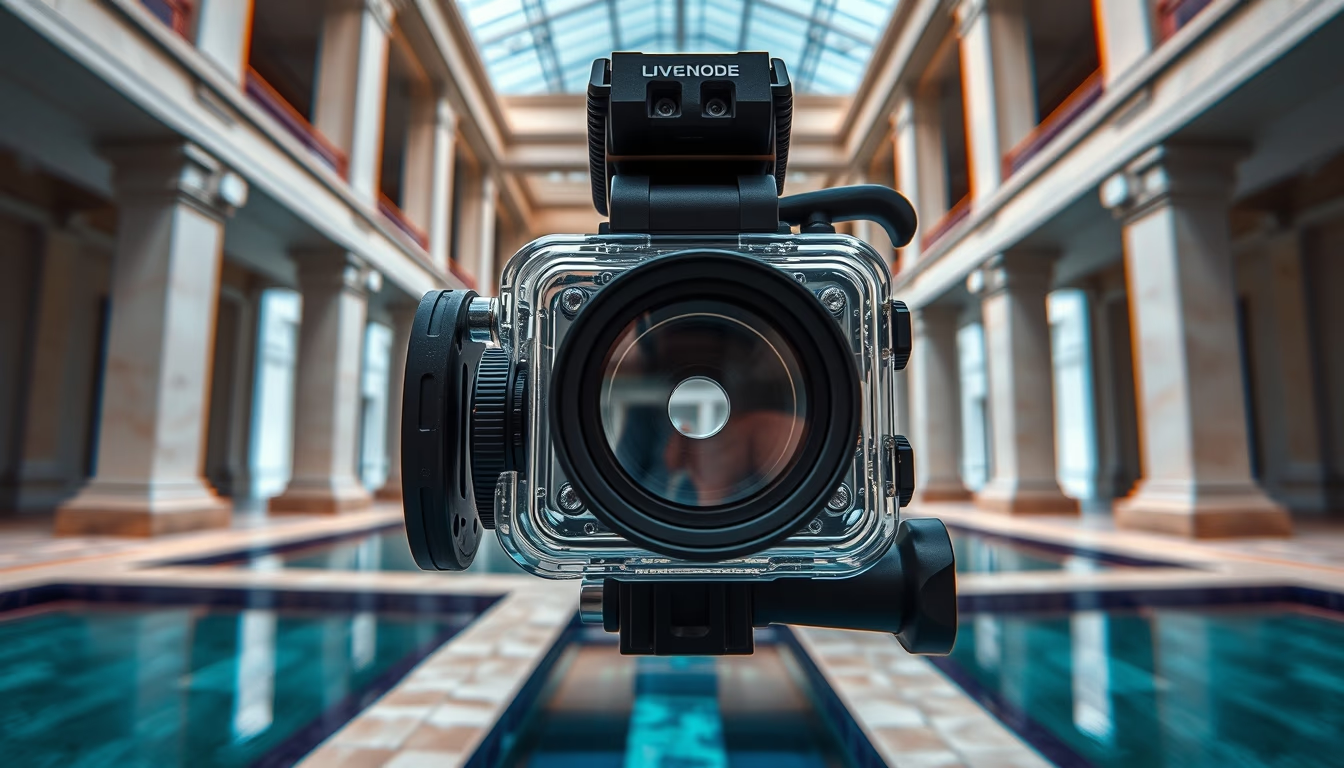
Waterproof camera housing: essential gear for underwater photography and videography, used by professional and amateur divers alike.
About this subject
An underwater camera housing is a waterproof enclosure that allows standard cameras to function at depths of up to hundreds of meters. Made from materials like polycarbonate, anodized aluminum, or titanium, these housings withstand extreme pressure and protect equipment from corrosion and impacts. The design includes passthrough controls (buttons, levers) that replicate the camera's original functions, along with optical glass windows for lenses and flash.
In the market, there are generic (universal) and camera-specific models. Brands like Ikelite, SeaLife, and Nauticam dominate the sector, with prices ranging from a few hundred to tens of thousands of dollars. These housings are indispensable in fields such as marine biology, underwater archaeology, inspection of submerged infrastructure (pipelines, platforms), and, of course, artistic photography of reefs and shipwrecks.
Underwater architectural photography, though less common, uses these housings to record submerged artificial structures like underwater hotels, sunken statues (e.g., Cancún), or ancient flooded cities. Exposure and focus control are challenging due to light refraction and suspended particles. Recent advances include underwater autofocus systems and electronic stabilization in housings for mirrorless cameras.
Interestingly, the first underwater housings were created in the early 20th century by French photographer Louis Boutan, using metal and rubber structures. Today, compact models allow the camera to operate at over 100 meters depth without risk.
Frequently Asked Questions
What is the maximum depth supported by an underwater camera housing?
It depends on the model. Common polycarbonate housings support up to 60 meters. Professional aluminum or titanium models can reach 300 meters or more, as used in technical diving and exploration.
Can I use any camera inside an underwater housing?
Not all. There are universal housings for compact cameras, but DSLR and mirrorless cameras require a specific housing that fits the body exactly, ensuring access to all controls.
How to prevent lens fogging inside the housing?
Fogging occurs due to condensation. To prevent it, insert silica gel inside the housing and let the gear stabilize to water temperature before diving. Some housings have built-in anti-fog systems.
Direct URL
https://pub-c7d6a6ea828543ac903a74a341ccb2e1.r2.dev/imagens/underwater-camera-housing-architectural-photography-fresh11.avifHow to credit
Include a visible link back to UtilizAí. Copy one of the snippets below:
<a href="https://xn--utiliza-eza.com/en/midia/imagens/underwater-camera-housing-architectural-photography-fresh11">Underwater camera housing</a> by <a href="https://xn--utiliza-eza.com">UtilizAí</a>, licensed under <a href="https://creativecommons.org/licenses/by/4.0/">CC BY 4.0</a>.
[Underwater camera housing](https://xn--utiliza-eza.com/en/midia/imagens/underwater-camera-housing-architectural-photography-fresh11) by [UtilizAí](https://xn--utiliza-eza.com), CC BY 4.0
License: CC-BY-4.0