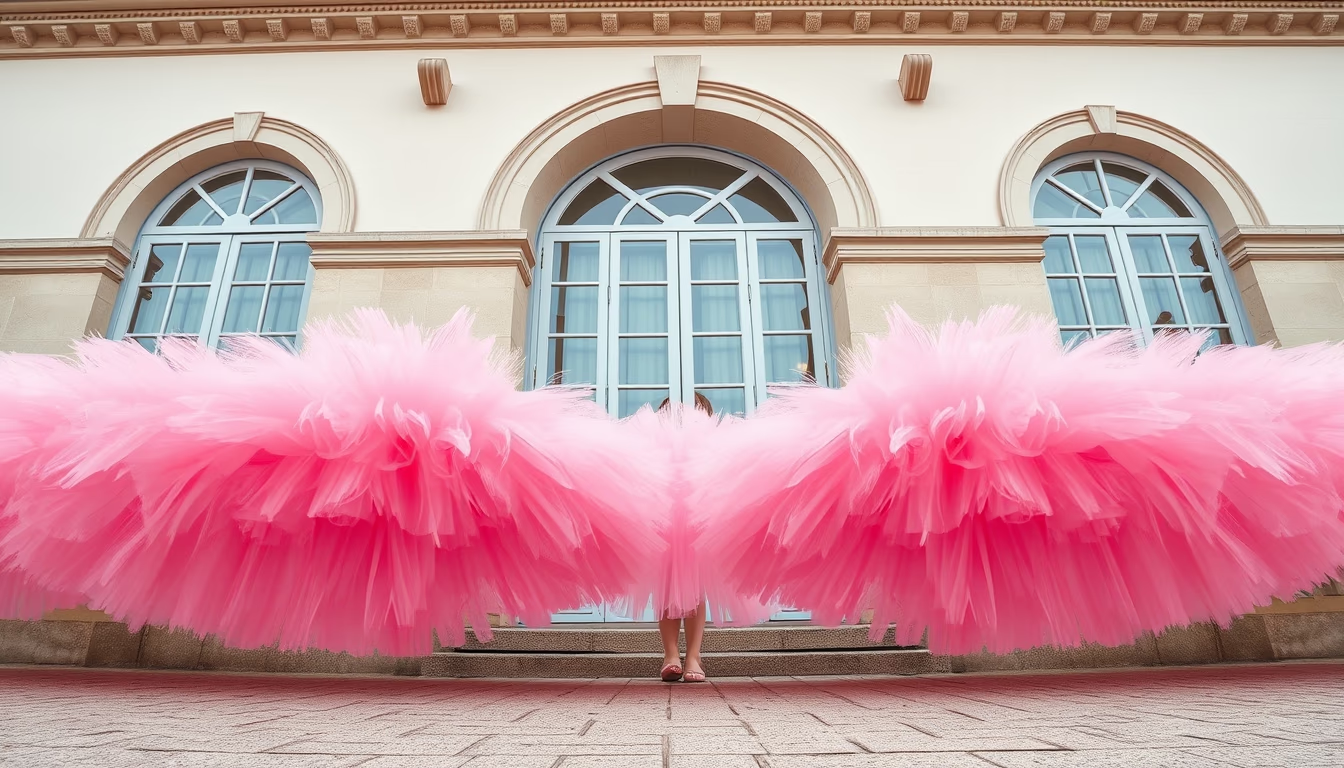
Tutu pink delicate
1344×768 · AVIF · CC BY 4.0

Tutu pink delicate captures the lightness and sophistication of classical ballet, delving into the history and technical details of this iconic dance garment.
About this subject
The tutu is a skirt used in classical ballet, particularly in romantic and 19th-century repertoire. Its origins trace back to the 1830s, when ballerina Marie Taglioni popularized a long, flowing style in "La Sylphide." Over time, the tutu evolved into shorter, stiffer versions known as the pancake tutu, which allow greater freedom of movement and showcase the dancer's legs. The pink delicate tutu, in a light rose shade, is often associated with youthful or romantic roles, such as in "Swan Lake" or "The Sleeping Beauty."
Crafting a tutu is a meticulous handmade process. Traditionally, layers of tulle or silk gazar are reinforced with steel or plastic hoops to maintain the shape. Each tutu can take between 40 and 100 hours to complete, depending on the model. Layers are hand-gathered, and the skirt may have up to 15 layers of tulle. The bodice is fitted to the dancer's body, often embellished with beads, embroidery, and pleating. The pink delicate tutu likely features a soft pastel tone, common in ballet pieces for fairy or princess roles.
In Brazil, classical ballet is strongly present, with companies like Theatro Municipal do Rio de Janeiro and Teatro Municipal de São Paulo maintaining traditions and producing tutus locally. Dance is an appreciated art form across the country, and tutus are symbols of elegance and refined technique. The color pink is especially associated with ballets like "Petrushka" or "Don Quixote," but also appears in contemporary choreographies that reinterpret the classic.
Fun facts: The world's largest tutu, listed in the Guinness World Records, was created in 2012 in Belgium, measuring 12 meters in diameter. Historical tutus are preserved in museums, such as the Royal Opera House in London, showing the evolution of materials and designs over centuries. The word "tutu" derives from the French "cucu," a childish slang for bottom, reflecting how the skirt accentuates that part of the body.
Frequently Asked Questions
What is a tutu in ballet?
A tutu is a skirt worn by ballerinas in classical ballet performances. There are two main types: the romantic tutu, long and flowing, and the pancake tutu, short and stiff that projects horizontally from the hips.
How is a tutu made?
A tutu is handcrafted with layers of tulle or silk gazar, reinforced with steel or plastic hoops. The process includes gathering, sewing, and fitting the bodice, often requiring 40 to 100 hours of manual work.
What is the origin of the word 'tutu'?
The word 'tutu' comes from the French 'cucu,' a childish slang for bottom. The term was adopted because the short skirt accentuates the buttocks during dance movements.
Direct URL
https://pub-c7d6a6ea828543ac903a74a341ccb2e1.r2.dev/imagens/tutu-pink-delicate-aerial-drone-shot-fresh10.avifHow to credit
Include a visible link back to UtilizAí. Copy one of the snippets below:
<a href="https://xn--utiliza-eza.com/en/midia/imagens/tutu-pink-delicate-aerial-drone-shot-fresh10">Tutu pink delicate</a> by <a href="https://xn--utiliza-eza.com">UtilizAí</a>, licensed under <a href="https://creativecommons.org/licenses/by/4.0/">CC BY 4.0</a>.
[Tutu pink delicate](https://xn--utiliza-eza.com/en/midia/imagens/tutu-pink-delicate-aerial-drone-shot-fresh10) by [UtilizAí](https://xn--utiliza-eza.com), CC BY 4.0
License: CC-BY-4.0