Tutankhamun mask
1344×768 · AVIF · CC BY 4.0
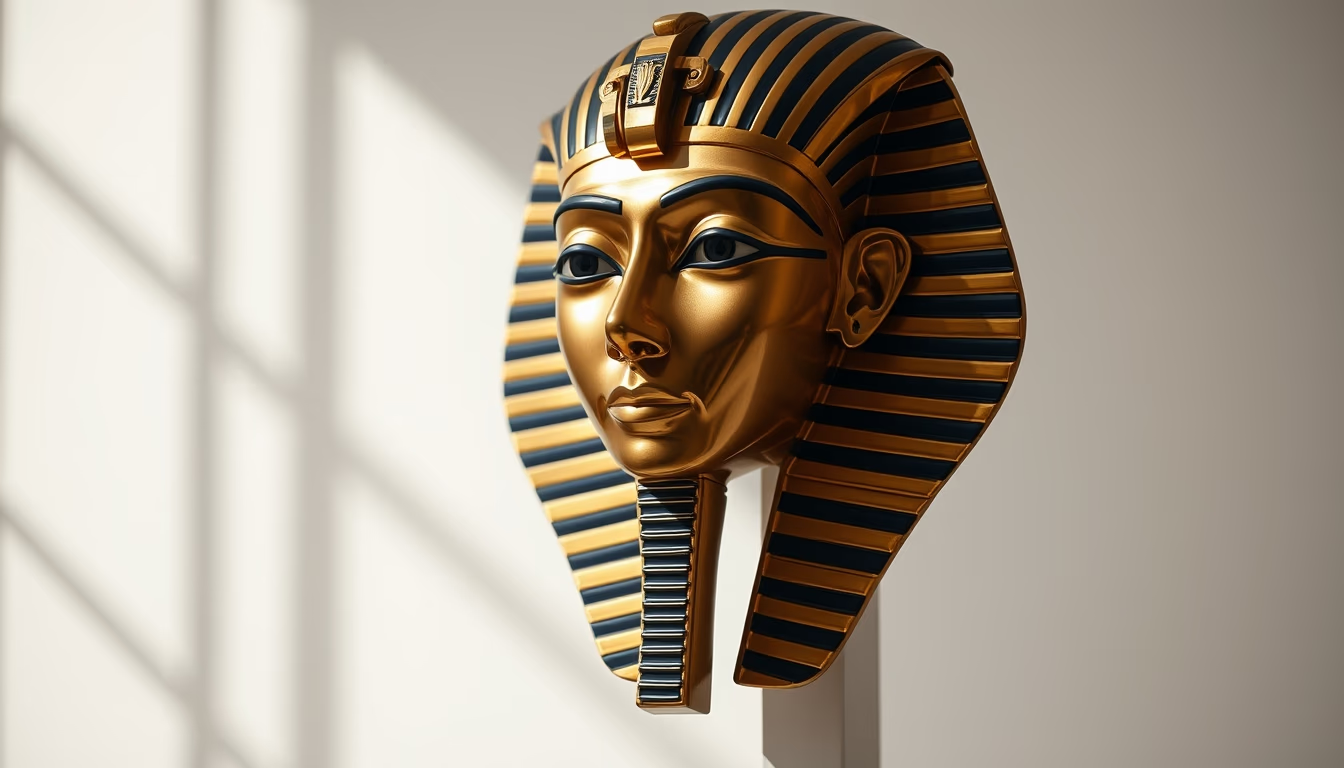
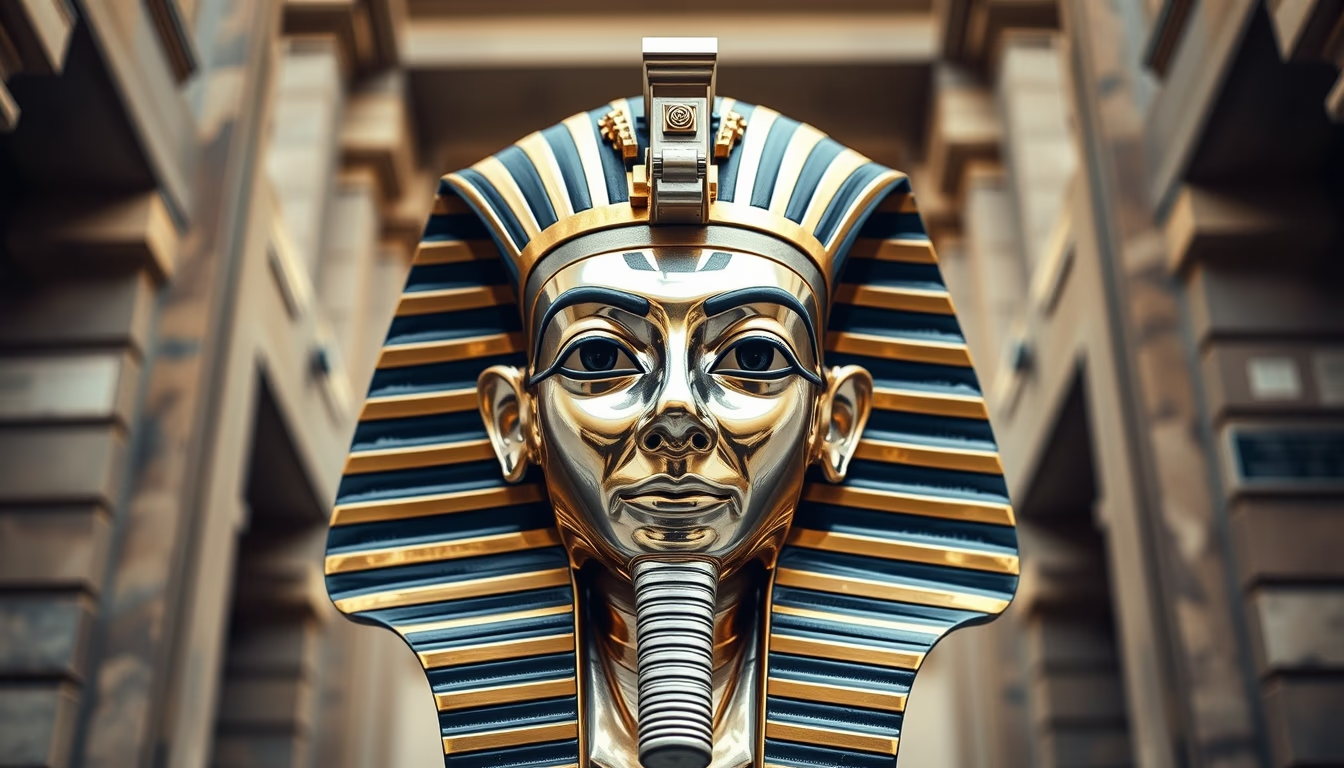
Tutankhamun's death mask, discovered in 1922, is an icon of ancient Egypt and a symbol of the wealth of the Valley of the Kings.
About this subject
Tutankhamun's funerary mask is one of the most recognizable artifacts of ancient Egypt. Made of solid gold and inlaid with lapis lazuli, quartz, and glass, it weighs about 11 kg. It was discovered in 1922 by archaeologist Howard Carter in tomb KV62 in the Valley of the Kings, Luxor. The mask covered the face of the mummified pharaoh, believed to protect his spirit in the afterlife. The eyes are obsidian and quartz, with lapis lazuli details, depicting the idealized features of the young king.
Tutankhamun died at age 19, and his tomb was one of the few found nearly intact. The mask, dating to approximately 1323 BCE, is a supreme example of Egyptian goldsmithing. Gold was associated with the flesh of the gods, and the mask ensured Tutankhamun a divine appearance in the afterlife. The inscription on its back contains a spell from the Book of the Dead, reinforcing its protective function.
Since its discovery, the mask has been displayed at the Egyptian Museum in Cairo, but in 2021 it was moved to the new Grand Egyptian Museum near the Giza Pyramids. In 2015, it suffered accidental damage during repairs when its false beard fell off, sparking controversy over conservation. The piece testifies not only to artisanal skill but also to the historical context of the New Kingdom, a period of ancient Egyptian apex.
The mask has also influenced pop culture, appearing in films, series, and contemporary artworks. Its minimalist design, with symmetrical shapes and contrasting colors, has inspired everything from jewelry to logos. Although a unique artifact, its image is reproduced globally, becoming an immediate symbol of the mystery and majesty of pharaonic Egypt.
Frequently Asked Questions
Where is Tutankhamun's mask currently displayed?
The mask is at the Grand Egyptian Museum (GEM) in Giza, near Cairo, since 2021. Previously, it was at the Egyptian Museum in Cairo.
What materials is the mask made of?
It is made of solid gold, inlaid with lapis lazuli, quartz, obsidian, and colored glass. It weighs about 11 kg.
What is the cultural significance of the mask?
The mask protected the pharaoh's face in the afterlife and ensured his divine identity. It is also an exceptional example of New Kingdom goldsmithing (c. 1323 BCE).
Direct URL
https://pub-c7d6a6ea828543ac903a74a341ccb2e1.r2.dev/imagens/tutankhamun-mask-minimalist-composition-p4.avifHow to credit
Include a visible link back to UtilizAí. Copy one of the snippets below:
<a href="https://xn--utiliza-eza.com/en/midia/imagens/tutankhamun-mask-minimalist-composition-p4">Tutankhamun mask</a> by <a href="https://xn--utiliza-eza.com">UtilizAí</a>, licensed under <a href="https://creativecommons.org/licenses/by/4.0/">CC BY 4.0</a>.
[Tutankhamun mask](https://xn--utiliza-eza.com/en/midia/imagens/tutankhamun-mask-minimalist-composition-p4) by [UtilizAí](https://xn--utiliza-eza.com), CC BY 4.0
License: CC-BY-4.0