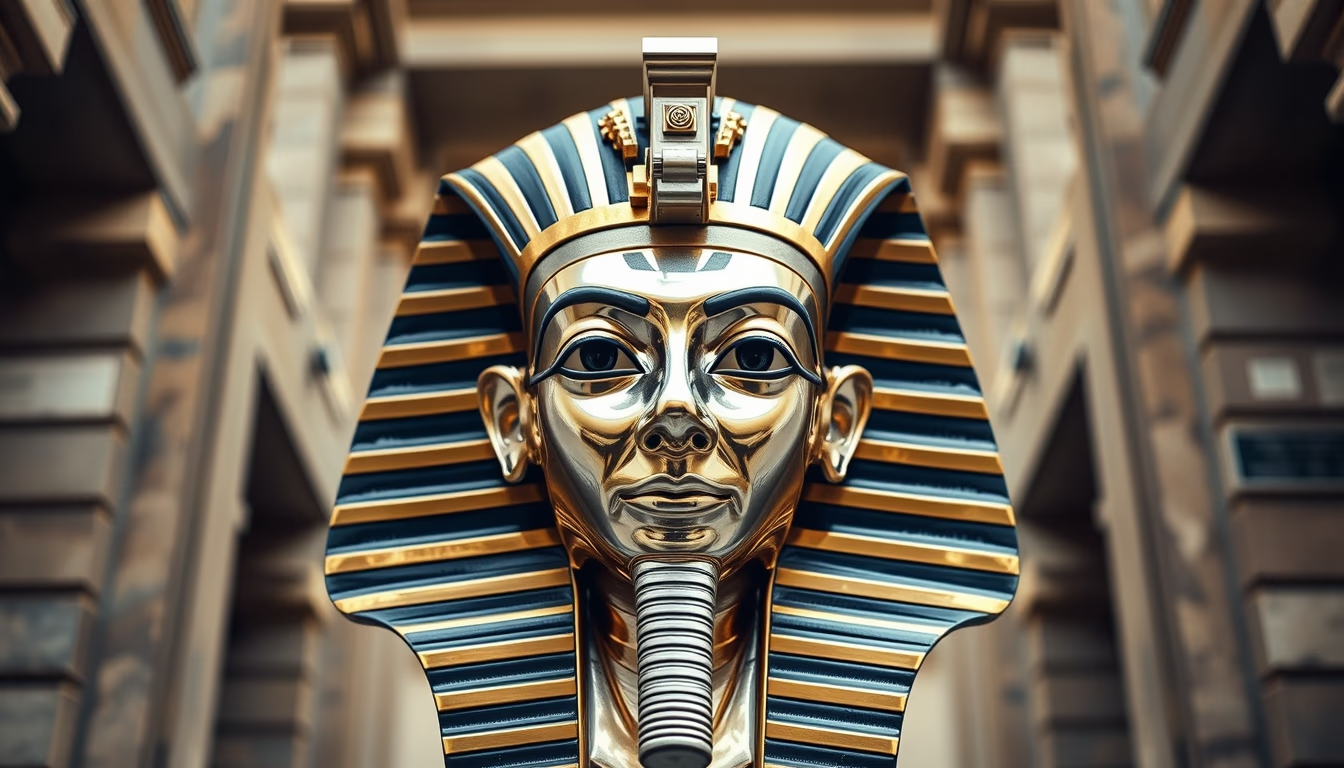
Tutankhamun mask
1344×768 · AVIF · CC BY 4.0
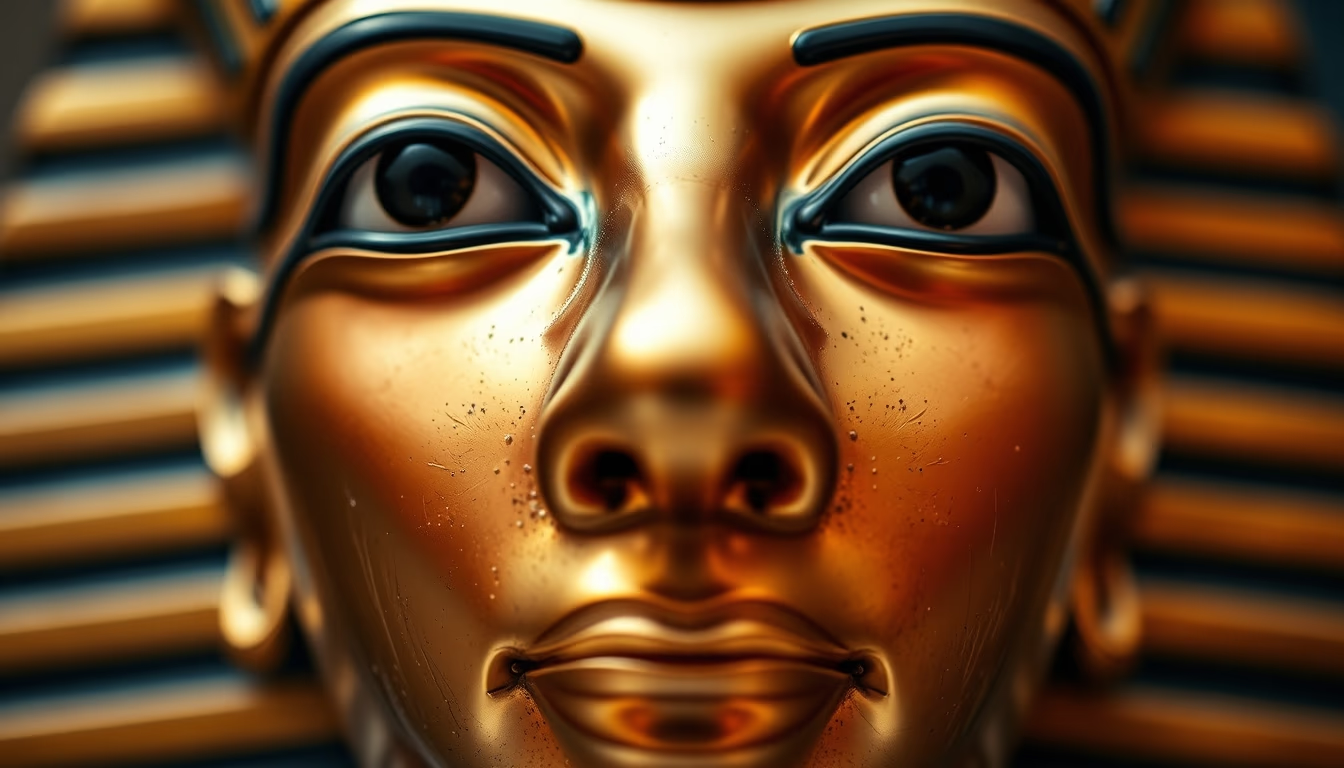
Tutankhamun's funerary mask, crafted from solid gold and precious stones, stands as one of the most iconic artifacts of ancient Egypt.
About this subject
Tutankhamun's mask was discovered in 1922 by British archaeologist Howard Carter in the Valley of the Kings, Egypt. It covered the face of the young pharaoh's mummy, who died around 1323 BCE at about 19 years of age. The mask is made of solid gold inlaid with lapis lazuli, turquoise, carnelian, and colored glass, weighing roughly 24 pounds (11 kg). Its design follows the tradition of royal funerary masks of the New Kingdom, portraying the deceased with the divine attributes of Osiris. The mask features a false braided beard, a symbol of royalty, and the nemes headdress typical of pharaohs. The eyes are crafted from quartz and obsidian, lending a lifelike quality to the serene expression.
Frequently Asked Questions
What is Tutankhamun's mask made of?
The mask is primarily made of solid gold, with inlays of lapis lazuli, turquoise, carnelian, and colored glass.
Where is Tutankhamun's mask displayed?
Currently, the mask is exhibited at the Egyptian Museum in Cairo's Tahrir Square, as one of its main attractions.
Why is Tutankhamun's mask so famous?
It is famous for its artistic beauty, the tomb's intact discovery, and as a symbol of ancient Egypt's wealth and culture.
Direct URL
https://pub-c7d6a6ea828543ac903a74a341ccb2e1.r2.dev/imagens/tutankhamun-mask-macro-closeup-p3.avifHow to credit
Include a visible link back to UtilizAí. Copy one of the snippets below:
<a href="https://xn--utiliza-eza.com/en/midia/imagens/tutankhamun-mask-macro-closeup-p3">Tutankhamun mask</a> by <a href="https://xn--utiliza-eza.com">UtilizAí</a>, licensed under <a href="https://creativecommons.org/licenses/by/4.0/">CC BY 4.0</a>.
[Tutankhamun mask](https://xn--utiliza-eza.com/en/midia/imagens/tutankhamun-mask-macro-closeup-p3) by [UtilizAí](https://xn--utiliza-eza.com), CC BY 4.0
License: CC-BY-4.0