Tutankhamun mask
1344×768 · AVIF · CC BY 4.0
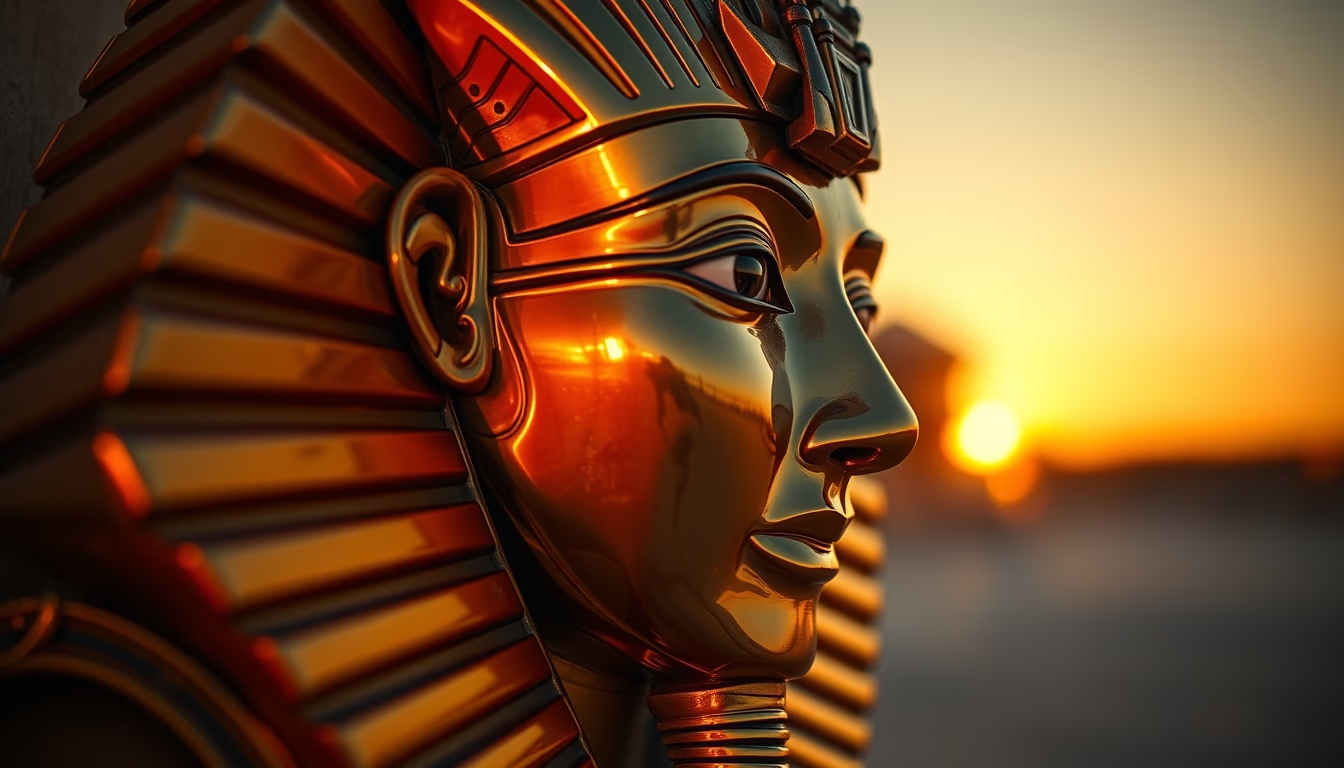
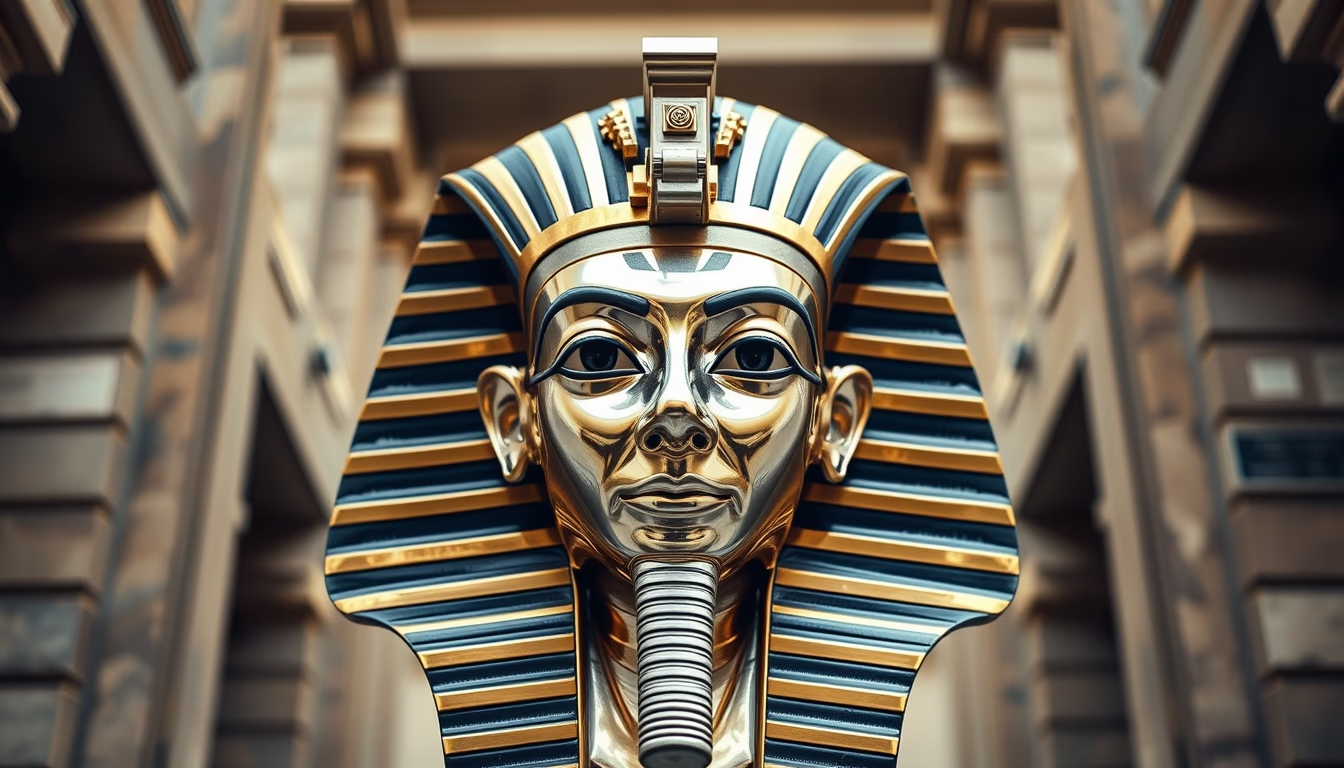
The funerary mask of Tutankhamun is one of the most iconic artifacts of ancient Egypt, made of solid gold and inlaid with lapis lazuli and other precious stones.
About this subject
Discovered in 1922 by British archaeologist Howard Carter in the Valley of the Kings, Tutankhamun's mask was found placed over the mummified remains of the pharaoh inside his sarcophagus. The piece weighs about 11 kilograms and is 54 centimeters tall. It is composed mainly of high-purity gold with inlays of lapis lazuli, turquoise, carnelian, and colored glass, depicting the idealized features of the young king.
The mask portrays Tutankhamun wearing the nemes, the striped royal headdress, and a false beard, symbols of royalty and divinity. On the forehead, the uraeus (cobra) and the vulture represent protection over Upper and Lower Egypt. The eyes are made of quartz and obsidian, giving a serene and vigilant expression. For the ancient Egyptians, the mask ensured the preservation of the pharaoh's face in the afterlife and allowed him to recognize his body in the realm of the dead.
The discovery of Tutankhamun's tomb was a milestone in Egyptology, as it was one of the few royal burials found nearly intact. The mask in particular became a global symbol of ancient Egypt, reproduced in books, films, and logos. In 2014, an incident occurred when the mask's beard was accidentally broken during cleaning at the Egyptian Museum in Cairo and was hastily glued with epoxy resin. The subsequent restoration sparked controversy among experts.
Today, the mask is displayed at the Grand Egyptian Museum in Giza, though for many years it was the main attraction of the Egyptian Museum in Cairo. Its preservation remains a priority, and periodic studies seek to better understand the goldsmithing techniques used by artisans in the 14th century BCE. Tutankhamun's mask stands as a testament to the artistic skill and complex religiosity of Pharaonic civilization.
Frequently Asked Questions
Where is Tutankhamun's mask currently displayed?
The mask is currently on display at the Grand Egyptian Museum (GEM) in Giza, near Cairo. Previously, it was housed in the Egyptian Museum in Cairo.
What materials is Tutankhamun's mask made of?
The mask is made primarily of solid gold, with inlays of semi-precious stones such as lapis lazuli, turquoise, and carnelian, as well as colored glass. The eyes are made of quartz and obsidian.
Why was the mask's beard broken in 2014?
The beard was accidentally broken during a routine cleaning at the Egyptian Museum in Cairo. Staff attempted to reattach it using epoxy resin, causing further damage and sparking controversy over the improper restoration.
Direct URL
https://pub-c7d6a6ea828543ac903a74a341ccb2e1.r2.dev/imagens/tutankhamun-mask-cinematic-wide-shot-p0.avifHow to credit
Include a visible link back to UtilizAí. Copy one of the snippets below:
<a href="https://xn--utiliza-eza.com/en/midia/imagens/tutankhamun-mask-cinematic-wide-shot-p0">Tutankhamun mask</a> by <a href="https://xn--utiliza-eza.com">UtilizAí</a>, licensed under <a href="https://creativecommons.org/licenses/by/4.0/">CC BY 4.0</a>.
[Tutankhamun mask](https://xn--utiliza-eza.com/en/midia/imagens/tutankhamun-mask-cinematic-wide-shot-p0) by [UtilizAí](https://xn--utiliza-eza.com), CC BY 4.0
License: CC-BY-4.0