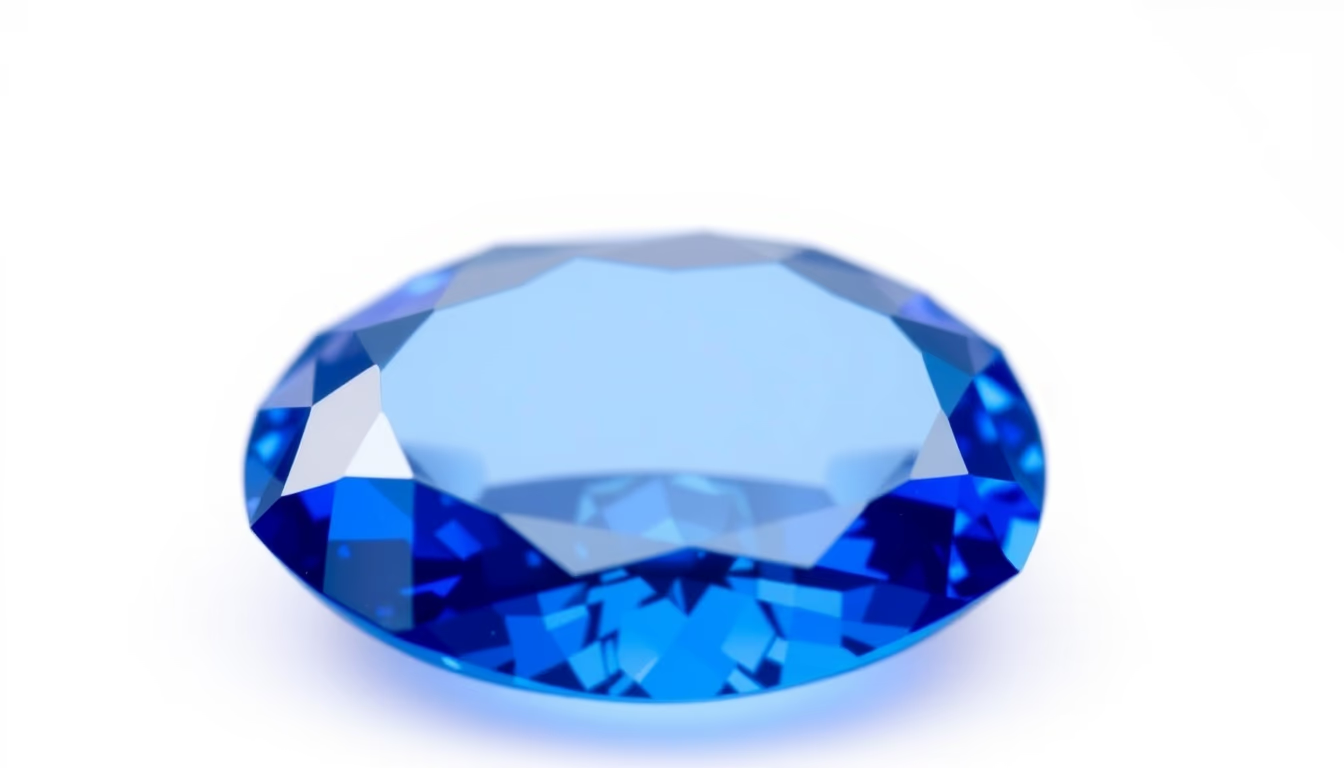
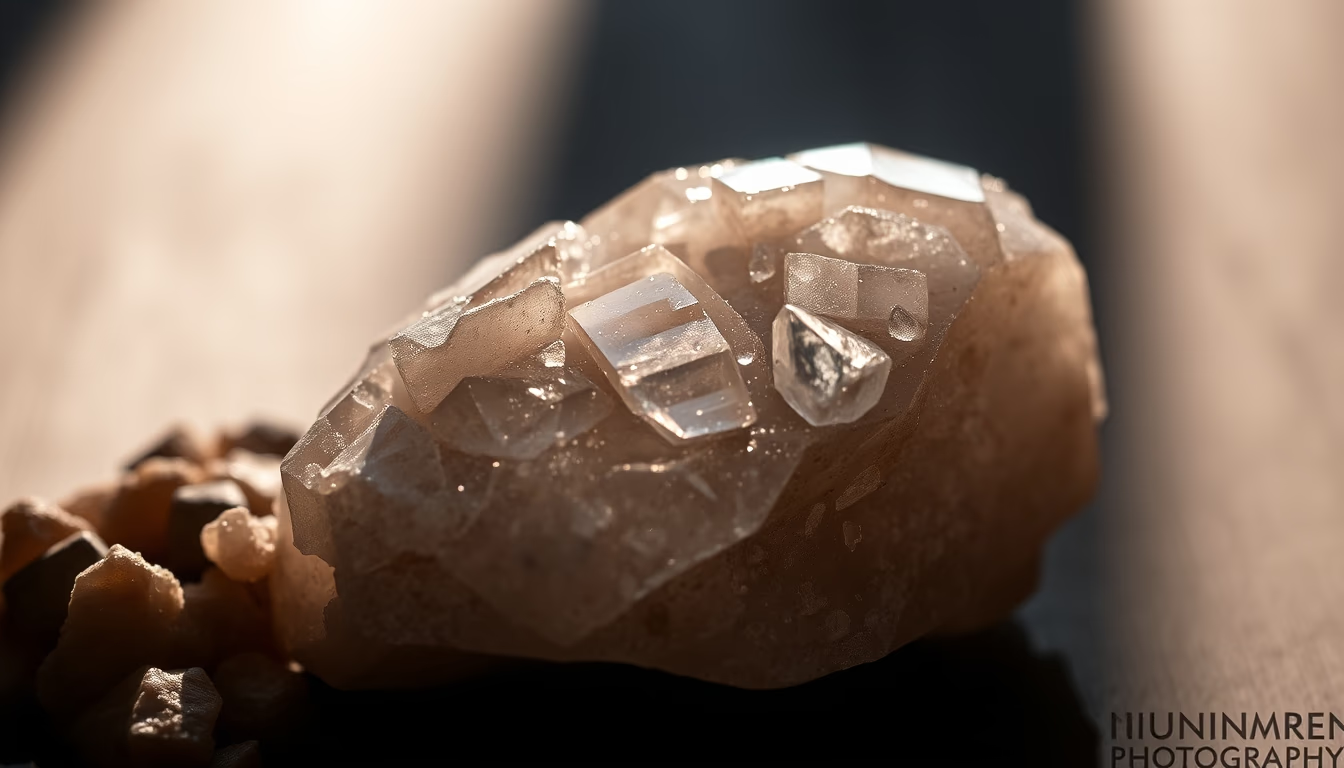
Turquoise polished
1344×768 · AVIF · CC BY 4.0

Polished turquoise: a blue-green gemstone valued since Ancient Egypt, composed of hydrated copper aluminum phosphate, with hardness 5 to 6 on the Mohs scale.
About this subject
Turquoise is a semiprecious mineral with a blue to green color, caused by the presence of copper in its structure. Its chemical formula is CuAl6(PO4)4(OH)8·4H2O, classifying it as a hydrated copper aluminum phosphate. The gem is relatively soft, with a hardness of 5 to 6 on the Mohs scale, requiring special care in jewelry. The most prized color is sky blue, free of dark veining or matrix, although turquoise with matrix (veins of host rock) is also popular.
Turquoise mining dates back over 5,000 years. In Ancient Egypt, it was used in funerary masks and jewelry, such as those found in Tutankhamun's tomb. In Persia (modern-day Iran), the gem was a symbol of protection and status; the country remains one of the world's largest producers. In the United States, mines in Arizona and New Mexico supply high-quality turquoise, notably the "Sleeping Beauty" variety with a uniform blue hue. Other significant deposits are located in China, Mexico, and Chile.
Turquoise is porous and can absorb skin oils, altering its color over time. To prevent this, many stones undergo stabilization with resin or impregnation, a widely accepted practice. Care includes avoiding contact with chemicals, perfumes, and excessive heat. Cleaning should be done with a damp cloth and mild soap.
Interesting fact: the name "turquoise" comes from the French "pierre turquoise" (Turkish stone), because the gems reached Europe via Turkey, originating from Persia. Natural turquoise is becoming increasingly rare; many pieces sold today are reconstituted or imitated by materials such as dyed howlite.
Frequently Asked Questions
How is turquoise formed?
Turquoise forms in arid regions by the action of copper- and phosphate-rich surface waters on aluminous rocks like granite. The process occurs at low temperatures, typically in veins and fractures.
Is natural turquoise rare?
Yes, high-quality natural turquoise is increasingly scarce. Most commercial gems undergo stabilization treatments to enhance color and durability.
How to tell real turquoise from imitation?
Real turquoise is porous and may show color variations. Common imitations include dyed howlite and plastic. A simple test is to heat a needle and touch the stone: if it melts, it's imitation.
Direct URL
https://pub-c7d6a6ea828543ac903a74a341ccb2e1.r2.dev/imagens/turquoise-polished-travel-photography-p3.avifHow to credit
Include a visible link back to UtilizAí. Copy one of the snippets below:
<a href="https://xn--utiliza-eza.com/en/midia/imagens/turquoise-polished-travel-photography-p3">Turquoise polished</a> by <a href="https://xn--utiliza-eza.com">UtilizAí</a>, licensed under <a href="https://creativecommons.org/licenses/by/4.0/">CC BY 4.0</a>.
[Turquoise polished](https://xn--utiliza-eza.com/en/midia/imagens/turquoise-polished-travel-photography-p3) by [UtilizAí](https://xn--utiliza-eza.com), CC BY 4.0
License: CC-BY-4.0