Turquoise polished
1344×768 · AVIF · CC BY 4.0
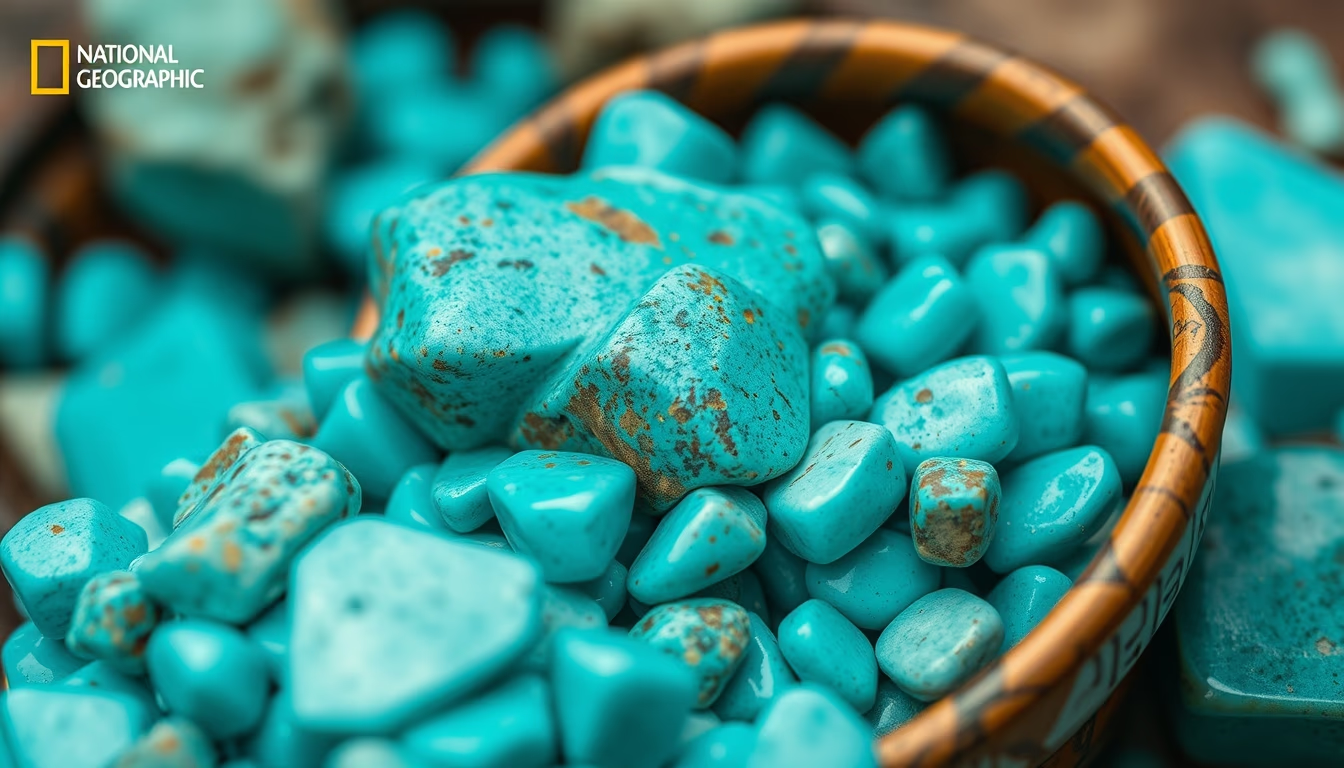
Polished turquoise is an opaque blue-green gemstone formed in copper and aluminum veins, valued by ancient and modern cultures.
About this subject
Turquoise is a hydrated phosphate mineral of copper and aluminum, with chemical formula CuAl6(PO4)4(OH)8·4H2O. Its signature color ranges from sky blue to apple green, depending on iron and copper content. It forms in arid environments, typically in hydrothermal veins associated with copper deposits, such as in the southwestern United States, Iran, Afghanistan, China, and Mexico. Hardness on the Mohs scale is 5 to 6, making it suitable for jewelry but susceptible to scratches and oil absorption.
Historically, turquoise is one of the earliest gemstones mined. Ancient Egyptians extracted it in the Sinai as early as 4000 BC, using it in scarabs, amulets, and funerary masks, including Tutankhamun's. In Persia (modern Iran), it was associated with protection against the evil eye and adorned mosques and palaces. Native peoples of the American Southwest, such as the Navajo and Zuni, used turquoise in ritual jewelry, believing it connected heaven and earth.
Today, turquoise is cut into cabochons, spheres, or irregular shapes for jewelry. Due to porosity, many pieces are treated with stabilizers or resins to improve durability and color. Natural, untreated turquoise is rare and more valuable. Major producers include the Sleeping Beauty mine in Arizona (closed in 2012), the Kingman mine, and deposits in Tibet and Iran. Lab-grown turquoise is also produced for industrial use.
Culturally, turquoise is the December birthstone and a symbol of friendship, wisdom, and protection. In Islam, turquoise blue is considered a sacred color. Persian turquoise jewelry is highly collectible. To identify authentic turquoise, look for uniform color, absence of bubbles (which indicate plastic imitation), and a waxy texture after polishing.
Frequently Asked Questions
How is turquoise formed in nature?
Turquoise forms in hydrothermal veins in arid environments when copper- and aluminum-rich waters react with sedimentary or volcanic rocks, precipitating the mineral in fractures.
What is the cultural significance of turquoise for Native American peoples?
For the Navajo, Zuni, and other Southwestern tribes, turquoise is sacred, used in jewelry and ceremonies as a symbol of protection, fertility, and spiritual connection between heaven and earth.
Is natural turquoise always blue?
No. Color ranges from sky blue to green, influenced by iron and copper content. Pure blue turquoise is more valuable, while green tones indicate higher iron content.
Direct URL
https://pub-c7d6a6ea828543ac903a74a341ccb2e1.r2.dev/imagens/turquoise-polished-national-geographic-style-p4.avifHow to credit
Include a visible link back to UtilizAí. Copy one of the snippets below:
<a href="https://xn--utiliza-eza.com/en/midia/imagens/turquoise-polished-national-geographic-style-p4">Turquoise polished</a> by <a href="https://xn--utiliza-eza.com">UtilizAí</a>, licensed under <a href="https://creativecommons.org/licenses/by/4.0/">CC BY 4.0</a>.
[Turquoise polished](https://xn--utiliza-eza.com/en/midia/imagens/turquoise-polished-national-geographic-style-p4) by [UtilizAí](https://xn--utiliza-eza.com), CC BY 4.0
License: CC-BY-4.0