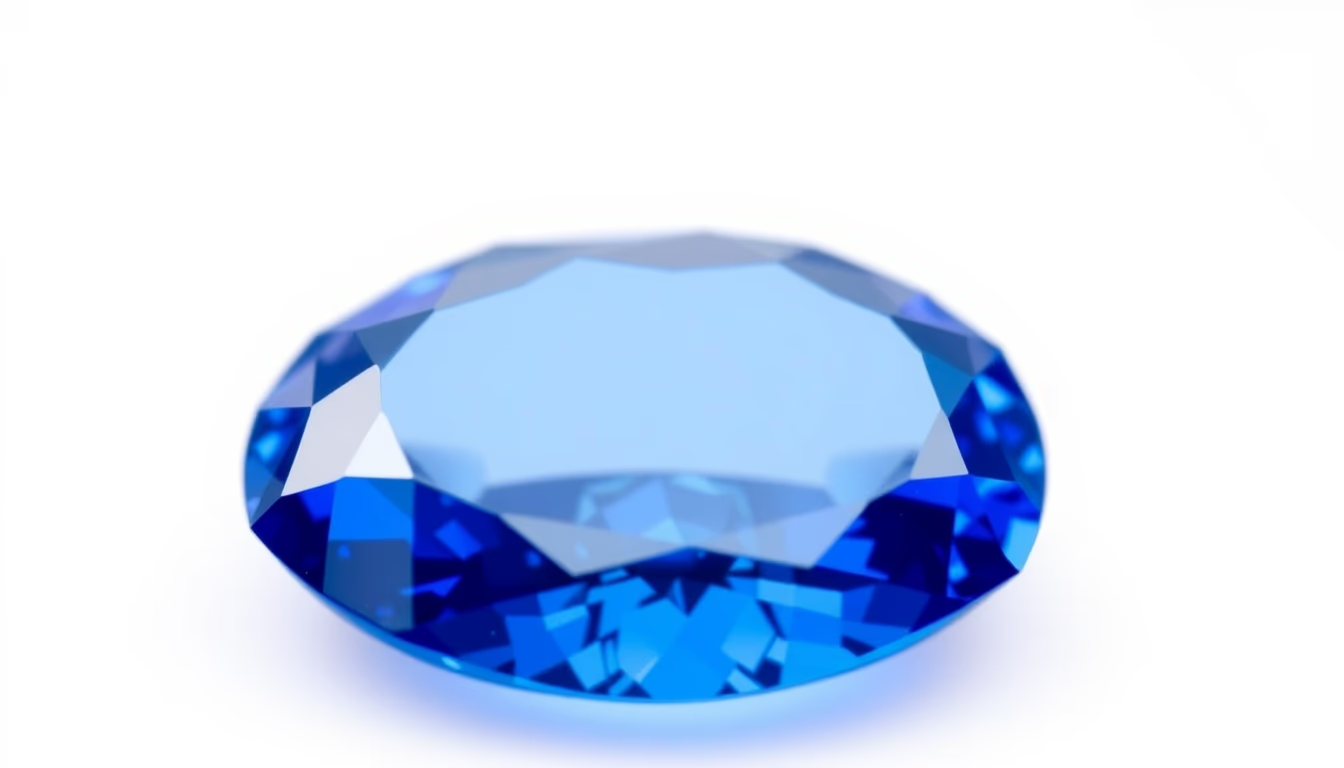
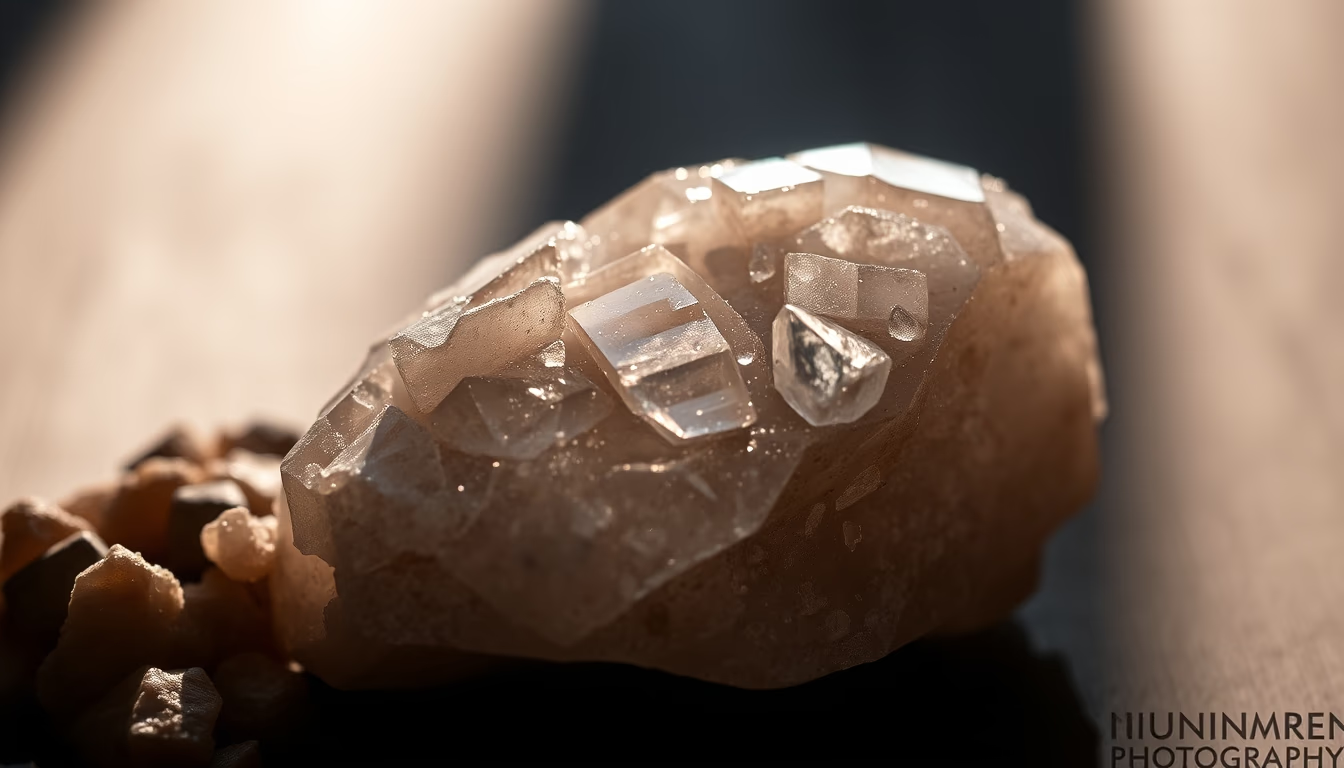
Turquoise polished
1344×768 · AVIF · CC BY 4.0

Polished turquoise is a valuable variety of copper and aluminum phosphate, prized for its blue-green color and use in jewelry and art.
About this subject
Turquoise is a hydrated copper and aluminum phosphate mineral, with the chemical formula CuAl6(PO4)4(OH)8·4H2O. Its characteristic color ranges from sky blue to apple green, depending on the copper-to-iron ratio. Significant deposits are found in Iran (ancient Persia), the southwestern United States (Arizona, New Mexico), Mexico, China, and Chile. The mineral forms in hydrothermal veins in arid regions, often associated with alkaline volcanic rocks.
Historically, turquoise is one of the earliest gemstones to be mined. In ancient Egypt, it was used in funerary masks and jewelry, such as in the famous sarcophagus of Tutankhamun. Persians called it 'piruz', meaning victory, and believed it protected against the evil eye. In pre-Columbian America, the Aztecs and Pueblo Native Americans used it in mosaics and ceremonial objects. Today, turquoise is popular in jewelry, especially in Southwestern American silverwork and tribal designs.
Turquoise is porous and sensitive to chemicals, and can discolor or be damaged by perfumes, oils, and sweat. Therefore, it is often stabilized with resin to increase durability. Synthetic imitations and treatments such as dyeing and reconstitution of fragments also exist. Gemology classifies turquoise by its color, hardness (5-6 on Mohs scale), and lack of matrix (host rock veins). Pieces with pure blue color and no matrix are the most valuable.
Beyond ornamental use, turquoise holds spiritual and metaphysical significance in many cultures. In Hinduism, it is associated with the throat chakra and communication. In Tibetan tradition, it is considered a sacred stone that promotes wisdom and protection. Scientifically, turquoise is studied for its heavy metal adsorption properties, but its primary value remains in the field of gemology and art.
Frequently Asked Questions
How do I care for polished turquoise jewelry?
Avoid exposing turquoise to chemicals, perfumes, and sweat. Clean with a soft dry cloth. Do not use ultrasonic cleaners or steam. Store separately from other gems to prevent scratches.
What is the difference between natural, stabilized, and reconstituted turquoise?
Natural turquoise is rare and porous. Stabilized turquoise is impregnated with resin to increase durability. Reconstituted turquoise is made from crushed fragments pressed with resin, and is less valuable.
Where are the best turquoises in the world found?
The finest quality turquoise comes from Iran (Khorasan province), known for its pure blue color. Other important sources include Arizona (USA), China, and Mexico.
Direct URL
https://pub-c7d6a6ea828543ac903a74a341ccb2e1.r2.dev/imagens/turquoise-polished-architectural-photography-p6.avifHow to credit
Include a visible link back to UtilizAí. Copy one of the snippets below:
<a href="https://xn--utiliza-eza.com/en/midia/imagens/turquoise-polished-architectural-photography-p6">Turquoise polished</a> by <a href="https://xn--utiliza-eza.com">UtilizAí</a>, licensed under <a href="https://creativecommons.org/licenses/by/4.0/">CC BY 4.0</a>.
[Turquoise polished](https://xn--utiliza-eza.com/en/midia/imagens/turquoise-polished-architectural-photography-p6) by [UtilizAí](https://xn--utiliza-eza.com), CC BY 4.0
License: CC-BY-4.0