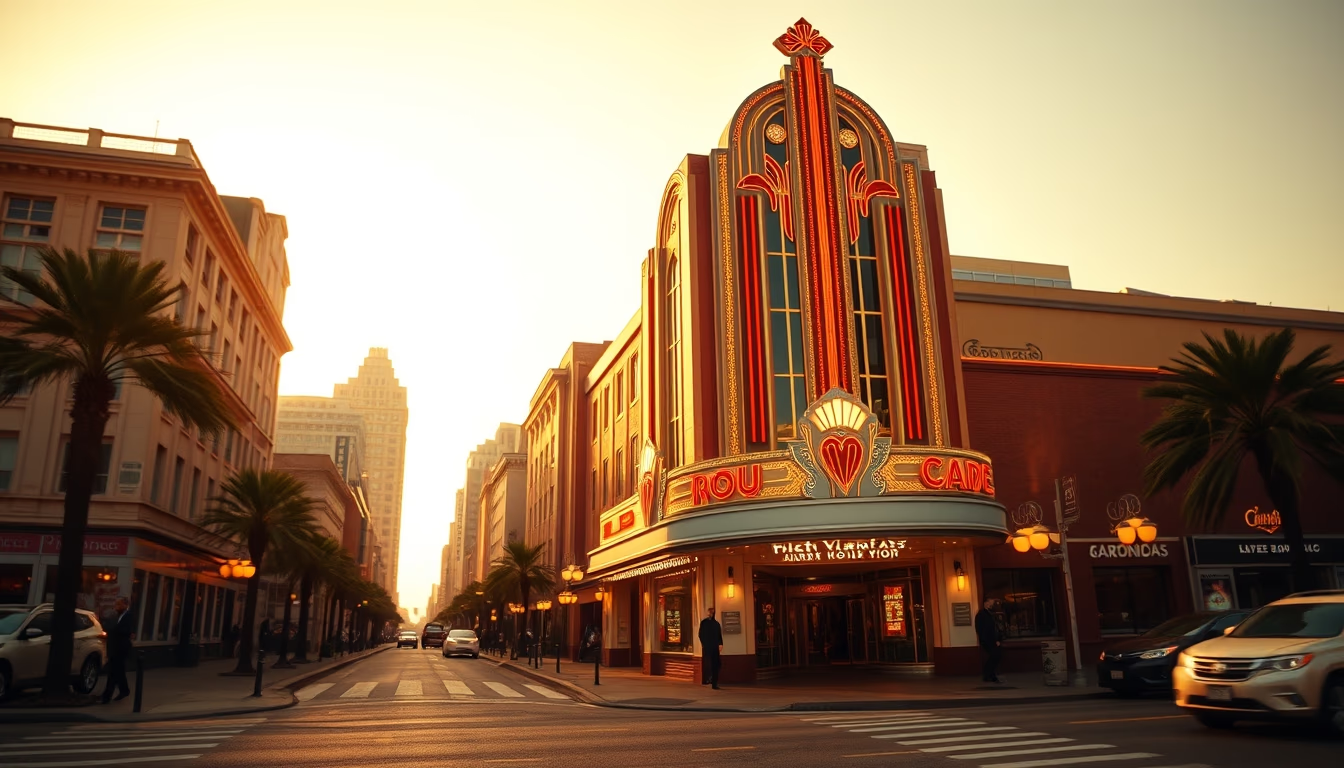
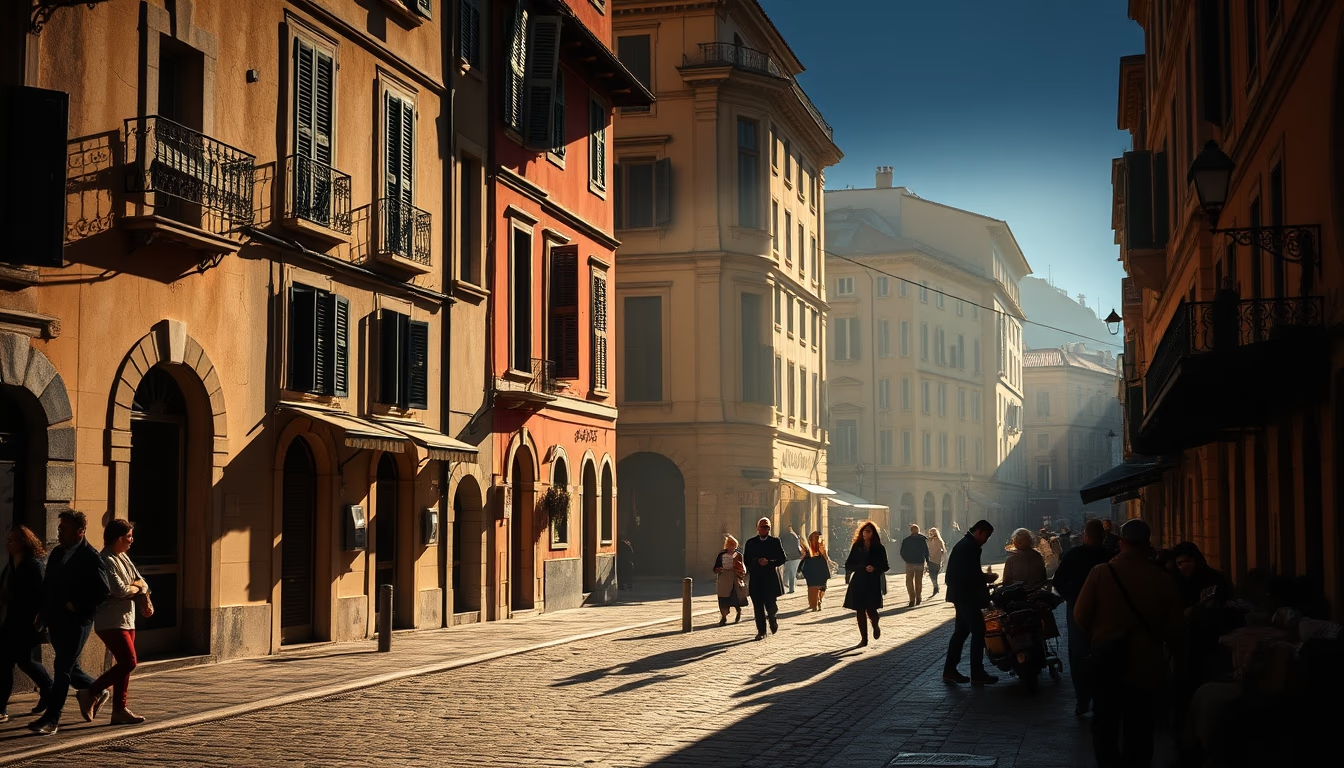
Travel postcards europe
1344×768 · AVIF · CC BY 4.0
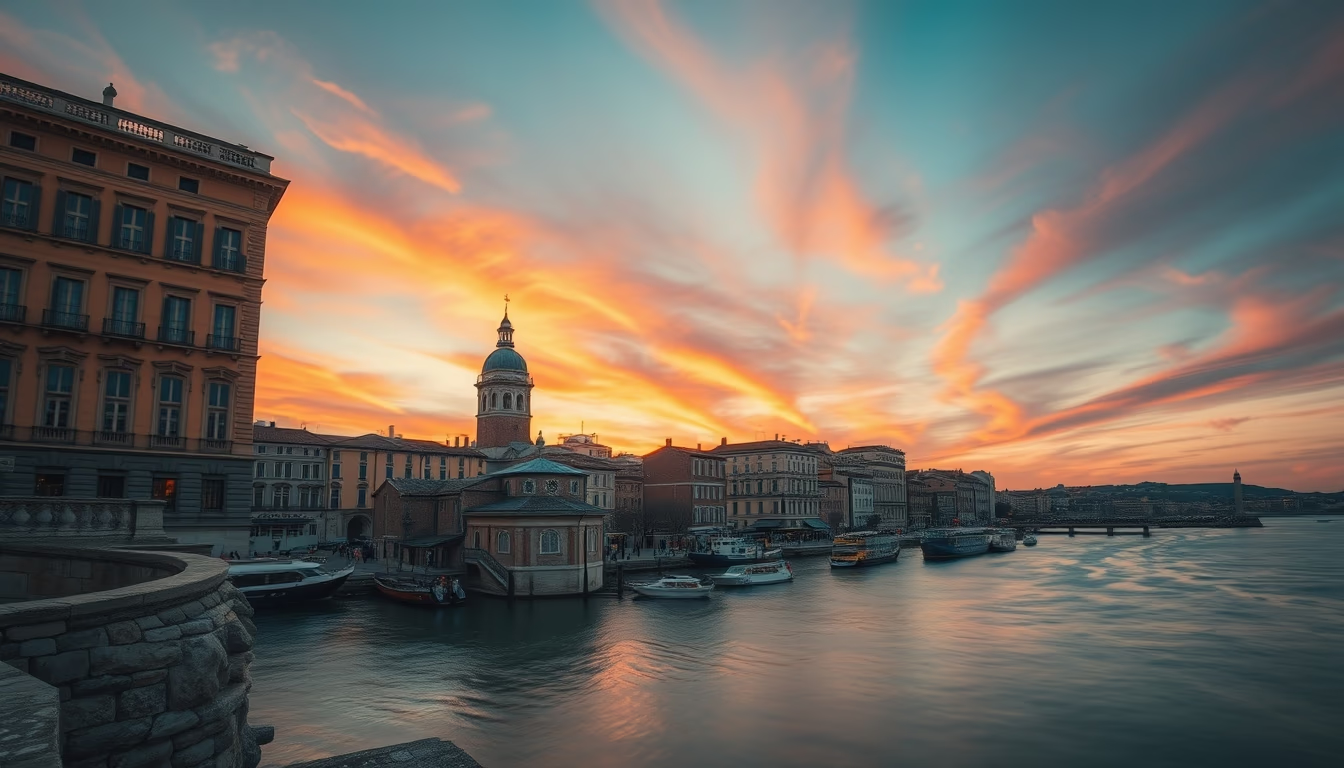
Traditional travel postcard collections across Europe reveal landscapes, monuments, and customs of different countries. Discover curiosities about this item so coveted by tourists.
About this subject
Travel postcards across Europe originated in the 19th century, when the development of postal services and mass tourism allowed travelers to share images of exotic and famous places. The first printed image on a postcard dates back to 1870 in Austria, and the habit quickly spread throughout the continent. During the Belle Époque, special editions of cities like Paris, London, and Rome became coveted objects, depicting everything from the Eiffel Tower to the Colosseum.
These small paper rectangles not only served as souvenirs for tourists but also as historical records of architectural changes, fashion, and events. In post-war Europe, postcards enjoyed their golden age, with millions of prints. Collectors organize fairs and clubs, such as the International Postcard Collectors Society, founded in 1946. Some rare examples, like those showing the Berlin Wall before its fall, fetch high prices at auctions.
Interesting facts mark European postal history: the world's oldest postcard was sent from France to England in 1840, while the largest private collection belongs to a German with over 300,000 items. Countries like Switzerland invest in long-exposure alpine images, capturing lakes and mountains with dramatic light effects. Portugal and Spain highlight beaches and historical monuments, often using photographic techniques that emphasize the movement of waves or the glow of the setting sun.
Although the digital age has reduced physical sending, European postcards remain decorative items and souvenirs. They represent a link between the traveler and the destination, freezing a moment that can be shared. Long-exposure photography, common in coastal postcards, transforms the sea into a silky veil, inviting the viewer to imagine the breeze and sound of waves, a sensory experience that endures even in the virtual era.
Frequently Asked Questions
What is the origin of European postcards?
The first postcards appeared in Europe in the mid-19th century, with the first printed in 1870 in Austria. They became popular with the growth of tourism and postal systems, allowing travelers to send images of cities and landscapes.
Which European countries are famous for their postcards?
Countries like France (Eiffel Tower, lavender fields), Italy (Colosseum, Venice), Switzerland (Alps, lakes), United Kingdom (Big Ben, Stonehenge), and Spain (beaches, Alhambra) are known for iconic postcards. Switzerland is particularly known for using long-exposure photography in alpine landscapes.
How did postcards influence tourism in Europe?
Postcards acted as tourist propaganda, sparking desire to visit places shown. Many European destinations saw increased visitors after the circulation of postcards with picturesque images. They also helped create iconic images associated with each country.
Direct URL
https://pub-c7d6a6ea828543ac903a74a341ccb2e1.r2.dev/imagens/travel-postcards-europe-long-exposure-fresh14.avifHow to credit
Include a visible link back to UtilizAí. Copy one of the snippets below:
<a href="https://xn--utiliza-eza.com/en/midia/imagens/travel-postcards-europe-long-exposure-fresh14">Travel postcards europe</a> by <a href="https://xn--utiliza-eza.com">UtilizAí</a>, licensed under <a href="https://creativecommons.org/licenses/by/4.0/">CC BY 4.0</a>.
[Travel postcards europe](https://xn--utiliza-eza.com/en/midia/imagens/travel-postcards-europe-long-exposure-fresh14) by [UtilizAí](https://xn--utiliza-eza.com), CC BY 4.0
License: CC-BY-4.0