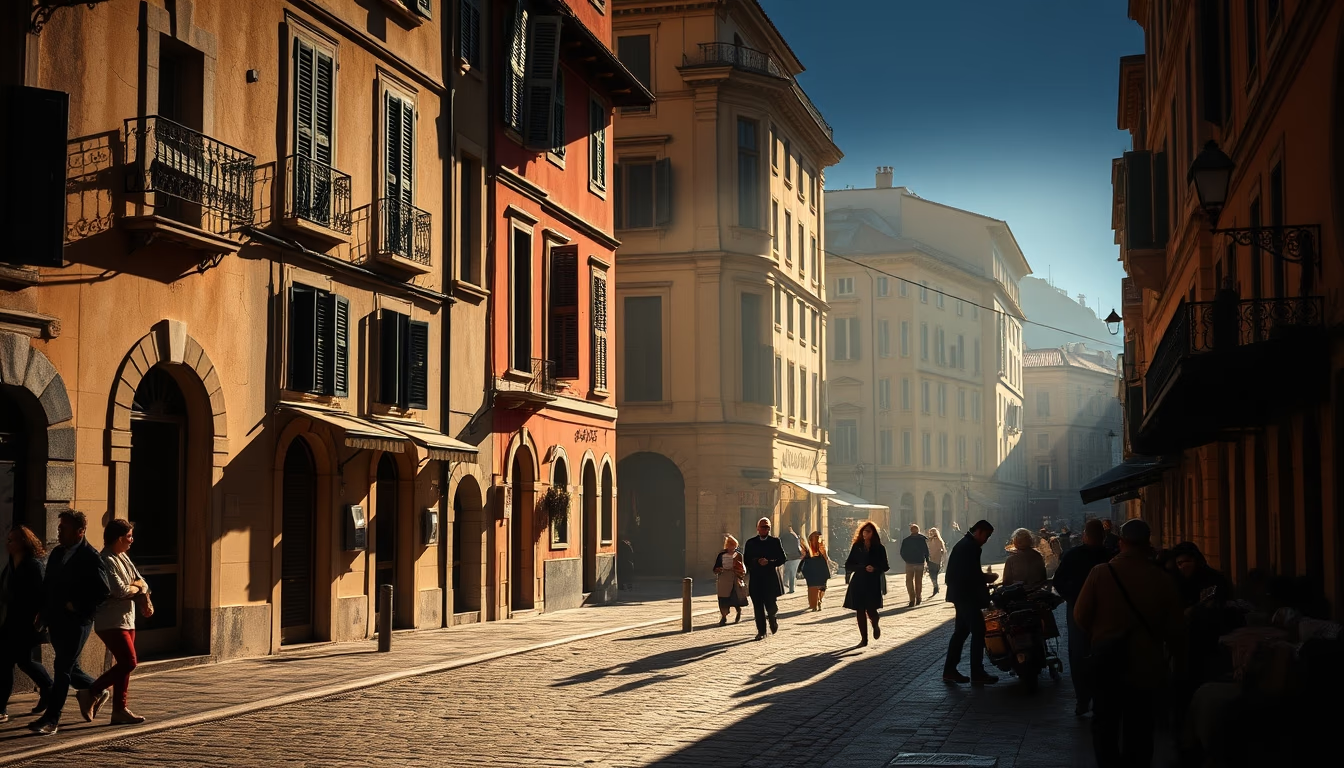
Travel postcards europe
1344×768 · AVIF · CC BY 4.0
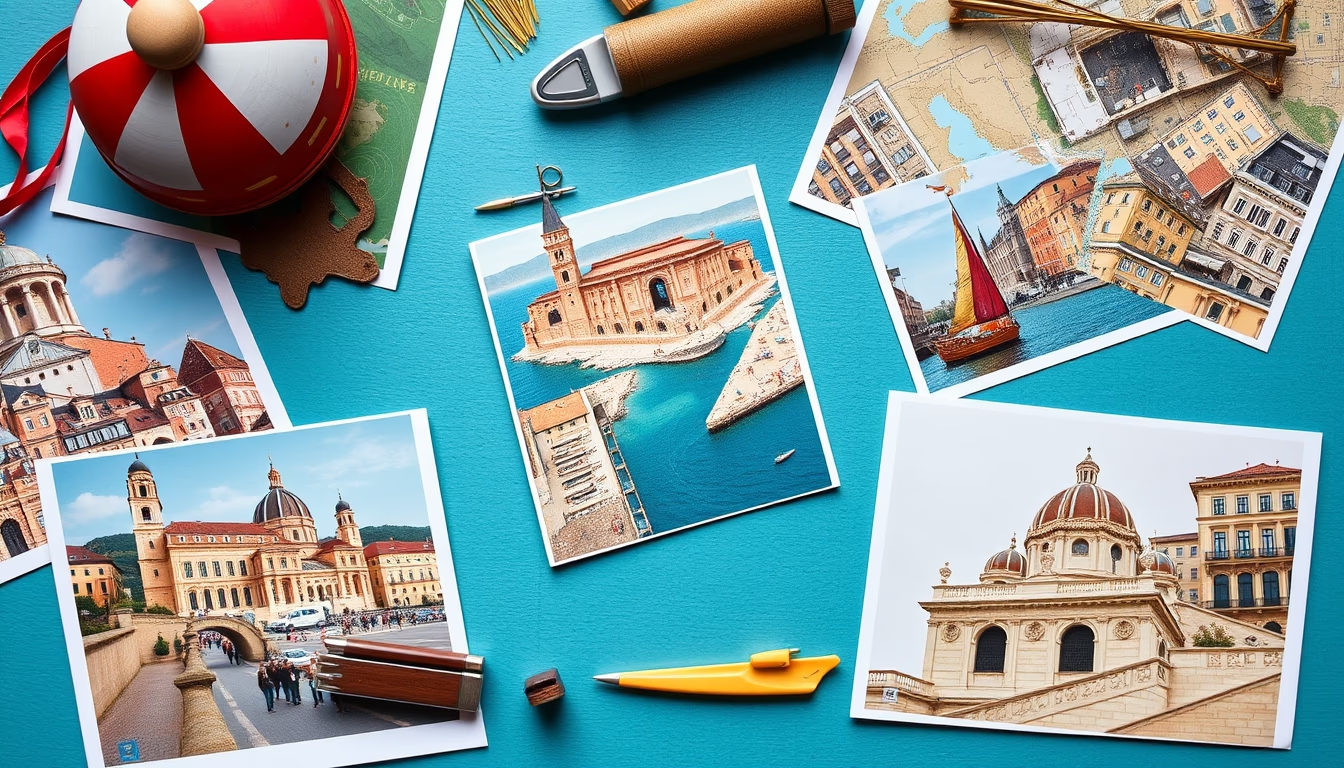
European travel postcards in isometric flat lay style: a unique perspective on collecting and visual culture of the Old Continent.
About this subject
Travel postcards are cultural objects that document the evolution of tourism and visual communication since the late 19th century. In Europe, the use of postcards exploded with the popularization of train and ship travel, becoming an accessible way to share landscapes and monuments. Switzerland, for example, is considered the birthplace of the modern illustrated postcard, with lithographed cards issued as early as the 1870s. Today, it is estimated that millions of European postcards are in circulation, many prized by collectors for their rarity, condition, or artistry.
The isometric flat lay style, common in contemporary illustrations, offers a stylized representation of these postcards, highlighting the diversity of destinations and graphic composition. This visual format is often used in tourism promotional materials, social media, and travel websites, as it allows a panoramic view of multiple cards without losing legibility. The flat arrangement with isometric perspective creates a sense of organization and modernity, contrasting with the nostalgic character of traditional postcards.
In European culture, sending travel postcards is still a common practice, although it has declined with the rise of digital media. Countries like France, Italy, and Spain continue to print millions of postcards each year, with images ranging from classic landmarks to contemporary art. The act of choosing, writing, and sending a postcard is seen as a personal and traditional gesture, valued by tourists and locals alike.
For collectors, European postcards represent a visual archive of history, architecture, and social change. There are fairs and clubs dedicated to the hobby, such as the Postcard Collectors' Club of Porto in Portugal and the Italian Association of Postcard Collectors. Digitization of collections, such as that of the National Library of France, has also allowed public access to thousands of historical images, perpetuating interest in this format.
Frequently Asked Questions
What is the origin of travel postcards in Europe?
The first illustrated postcards emerged in Europe in the 1870s, with Switzerland pioneering lithographed cards. They became popular with the growth of railway and maritime tourism.
Why are European postcards valued by collectors?
European postcards are valued for their historical, artistic, and geographical diversity. Rare items, with canceled stamps or by famous artists, can fetch high prices at auctions.
How is the isometric flat lay style applied to travel postcards?
The isometric flat lay style arranges postcards in a flat composition with isometric perspective, allowing multiple cards to be viewed harmoniously and modernly, often used in graphic design and social media.
Direct URL
https://pub-c7d6a6ea828543ac903a74a341ccb2e1.r2.dev/imagens/travel-postcards-europe-isometric-flat-lay-fresh15.avifHow to credit
Include a visible link back to UtilizAí. Copy one of the snippets below:
<a href="https://xn--utiliza-eza.com/en/midia/imagens/travel-postcards-europe-isometric-flat-lay-fresh15">Travel postcards europe</a> by <a href="https://xn--utiliza-eza.com">UtilizAí</a>, licensed under <a href="https://creativecommons.org/licenses/by/4.0/">CC BY 4.0</a>.
[Travel postcards europe](https://xn--utiliza-eza.com/en/midia/imagens/travel-postcards-europe-isometric-flat-lay-fresh15) by [UtilizAí](https://xn--utiliza-eza.com), CC BY 4.0
License: CC-BY-4.0