Transistor surface mount
1344×768 · AVIF · CC BY 4.0
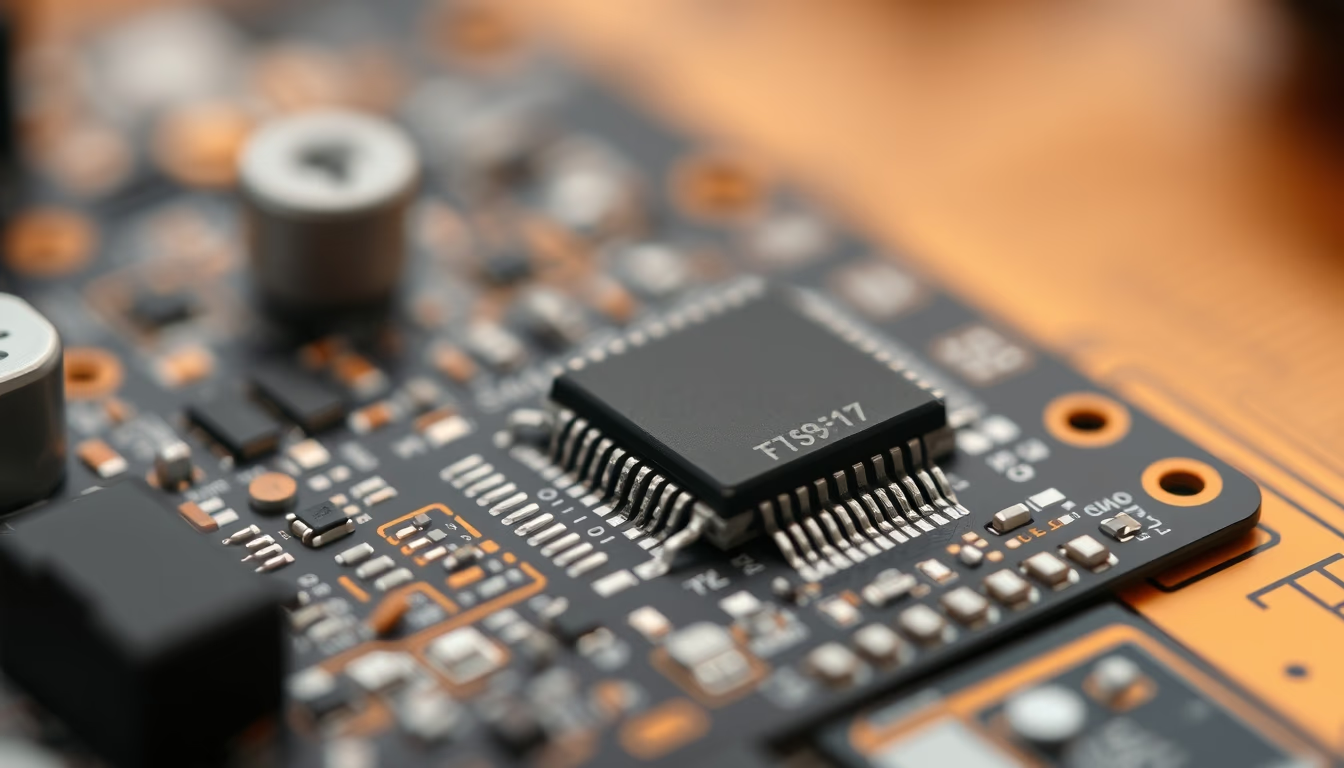
Surface-mount transistors (SMT) are essential components in modern electronic circuits, known for their compact size and efficiency.
About this subject
Surface-mount transistors (SMT) revolutionized the electronics industry starting in the 1980s. Unlike through-hole transistors, they are soldered directly onto the surface of a printed circuit board (PCB), eliminating the need for holes and enabling denser, more compact boards. This design is essential for devices such as smartphones, laptops, and wearables, where internal space is highly limited.
There are two main types of SMT transistors: bipolar junction transistors (BJTs) and field-effect transistors (MOSFETs). MOSFETs are particularly popular for their high energy efficiency and low standby power consumption, making them ideal for switch-mode power supplies, voltage regulators, and power circuits. BJTs are still used in audio amplifiers and low-frequency applications. The choice between them depends on specific requirements for current, voltage, and switching speed.
Surface-mount assembly brought significant productivity gains through automation. Pick-and-place machines position components with micrometer precision, and the reflow soldering process fixes them all simultaneously. This reduces labor costs and increases reliability since fewer manual solder joints are needed. Moreover, the tiny dimensions (some models measure only 1.0 x 0.6 mm) allow for hybrid integrated circuits and multifunctional modules.
A technical challenge of SMT transistors is thermal dissipation. Due to their small size, they heat up quickly and require PCBs with adequate copper planes or additional heatsinks. Common packages include SOT-23, SOT-223, TO-252 (DPAK), and the tiny SC-70 and SC-89. Each has specific maximum power and thermal resistance ratings. The current trend is further miniaturization, such as chip-scale package (CSP) transistors, which occupy practically the same area as the internal silicon die.
Frequently Asked Questions
What is a surface-mount transistor?
It is a type of transistor designed to be soldered directly onto the surface of a printed circuit board (PCB), without the need for holes. They are smaller than through-hole transistors and allow automated assembly.
What are the advantages of SMT transistors over traditional ones?
The main advantages are reduced size, higher component density on the board, lower parasitic inductance, and full automation of the assembly process, which reduces costs and increases reliability.
How to identify an SMT transistor?
They usually come in small packages like SOT-23 (three leads) or SOT-223 (four leads). The marking on the surface is an alphanumeric code that must be looked up in datasheets to obtain exact specifications.
Direct URL
https://pub-c7d6a6ea828543ac903a74a341ccb2e1.r2.dev/imagens/transistor-surface-mount-tilt-shift-miniature-p12.avifHow to credit
Include a visible link back to UtilizAí. Copy one of the snippets below:
<a href="https://xn--utiliza-eza.com/en/midia/imagens/transistor-surface-mount-tilt-shift-miniature-p12">Transistor surface mount</a> by <a href="https://xn--utiliza-eza.com">UtilizAí</a>, licensed under <a href="https://creativecommons.org/licenses/by/4.0/">CC BY 4.0</a>.
[Transistor surface mount](https://xn--utiliza-eza.com/en/midia/imagens/transistor-surface-mount-tilt-shift-miniature-p12) by [UtilizAí](https://xn--utiliza-eza.com), CC BY 4.0
License: CC-BY-4.0