Transistor surface mount
1344×768 · AVIF · CC BY 4.0
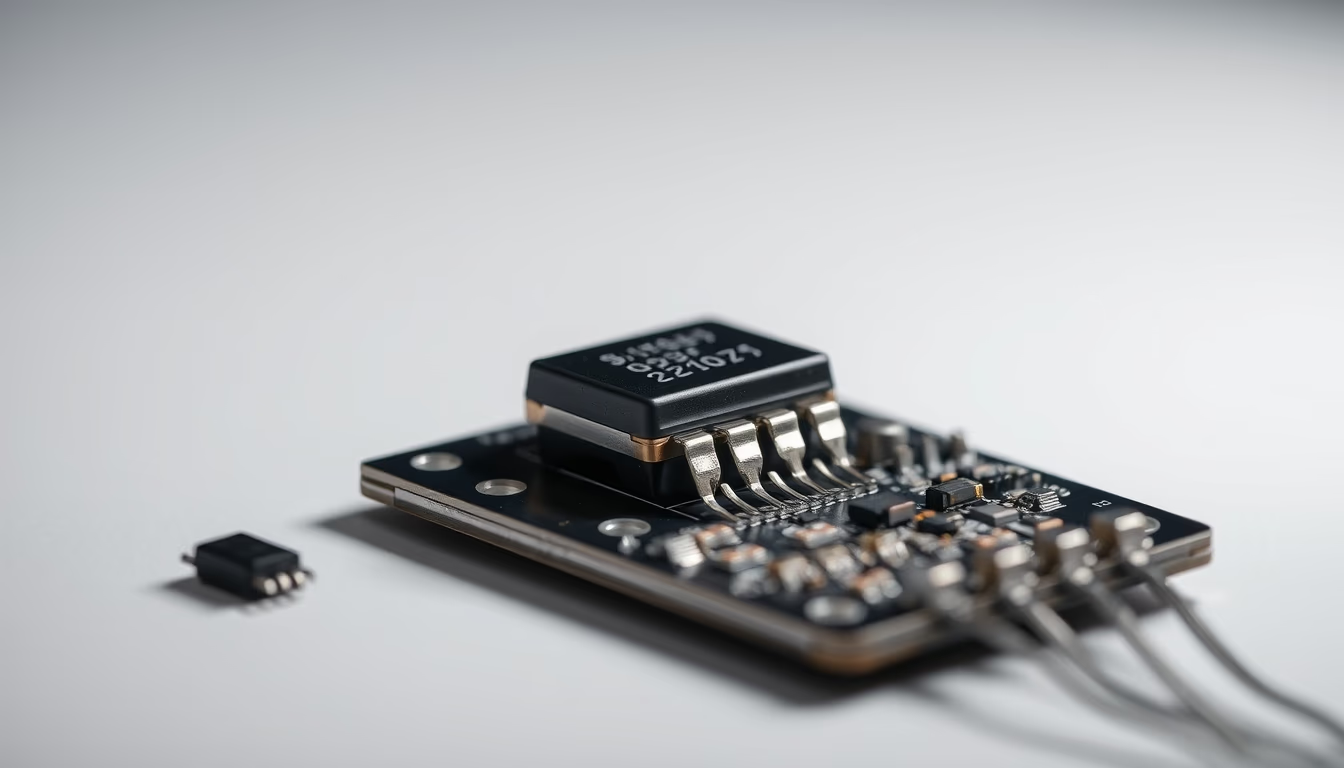
The SMD (Surface Mount Device) transistor is a crucial electronic component for circuit miniaturization, widely used in modern devices such as smartphones and computers.
About this subject
SMD (Surface Mount Device) transistors revolutionized electronics by enabling automated assembly of components onto printed circuit boards (PCBs). Unlike traditional through-hole transistors with long leads, SMDs are soldered directly onto the board surface, taking up less space and allowing denser circuits. This is essential for portable devices like smartphones, tablets, and laptops, where every millimeter counts.
These components are manufactured in standardized packages such as SOT-23, SOT-223, TO-252, and DPAK, each with specific dimensions and thermal dissipation capabilities. The most common types are bipolar junction transistors (BJTs) or MOSFETs (metal-oxide-semiconductor field-effect transistors). They are used in signal amplification, current switching, and voltage regulation. Due to their small size, they require pick-and-place machines and reflow ovens for soldering, which are high-volume automated processes.
A technical curiosity: the power dissipated by an SMD transistor is limited by the contact area with the PCB (thermal joint). Therefore, higher-power components often have a metal tab for better heat transfer. Additionally, SMD transistor labeling can be confusing: many manufacturers use two- or three-character alphanumeric codes, requiring datasheet searches to identify the exact model. Reliability is high, but proper soldering and PCB design are critical to avoid failures due to thermal stress or vibration.
Frequently Asked Questions
What is the difference between an SMD transistor and a common transistor?
An SMD (surface mount device) transistor has no long leads and is soldered directly onto the board, while a common through-hole transistor has pins that go through holes in the PCB. SMDs allow higher density and automated assembly.
How do you identify an SMD transistor?
Every SMD component has an alphanumeric code printed on its body, e.g., '1A' or 'K12'. To identify the exact model, consult a cross-reference table or the manufacturer's datasheet.
What are the advantages of SMD transistors?
Advantages include: reduced size, automated assembly, lower parasitic inductance, and the ability to create denser circuits, which is essential for portable and highly integrated devices.
Direct URL
https://pub-c7d6a6ea828543ac903a74a341ccb2e1.r2.dev/imagens/transistor-surface-mount-studio-still-life-p8.avifHow to credit
Include a visible link back to UtilizAí. Copy one of the snippets below:
<a href="https://xn--utiliza-eza.com/en/midia/imagens/transistor-surface-mount-studio-still-life-p8">Transistor surface mount</a> by <a href="https://xn--utiliza-eza.com">UtilizAí</a>, licensed under <a href="https://creativecommons.org/licenses/by/4.0/">CC BY 4.0</a>.
[Transistor surface mount](https://xn--utiliza-eza.com/en/midia/imagens/transistor-surface-mount-studio-still-life-p8) by [UtilizAí](https://xn--utiliza-eza.com), CC BY 4.0
License: CC-BY-4.0