Transistor surface mount
1344×768 · AVIF · CC BY 4.0
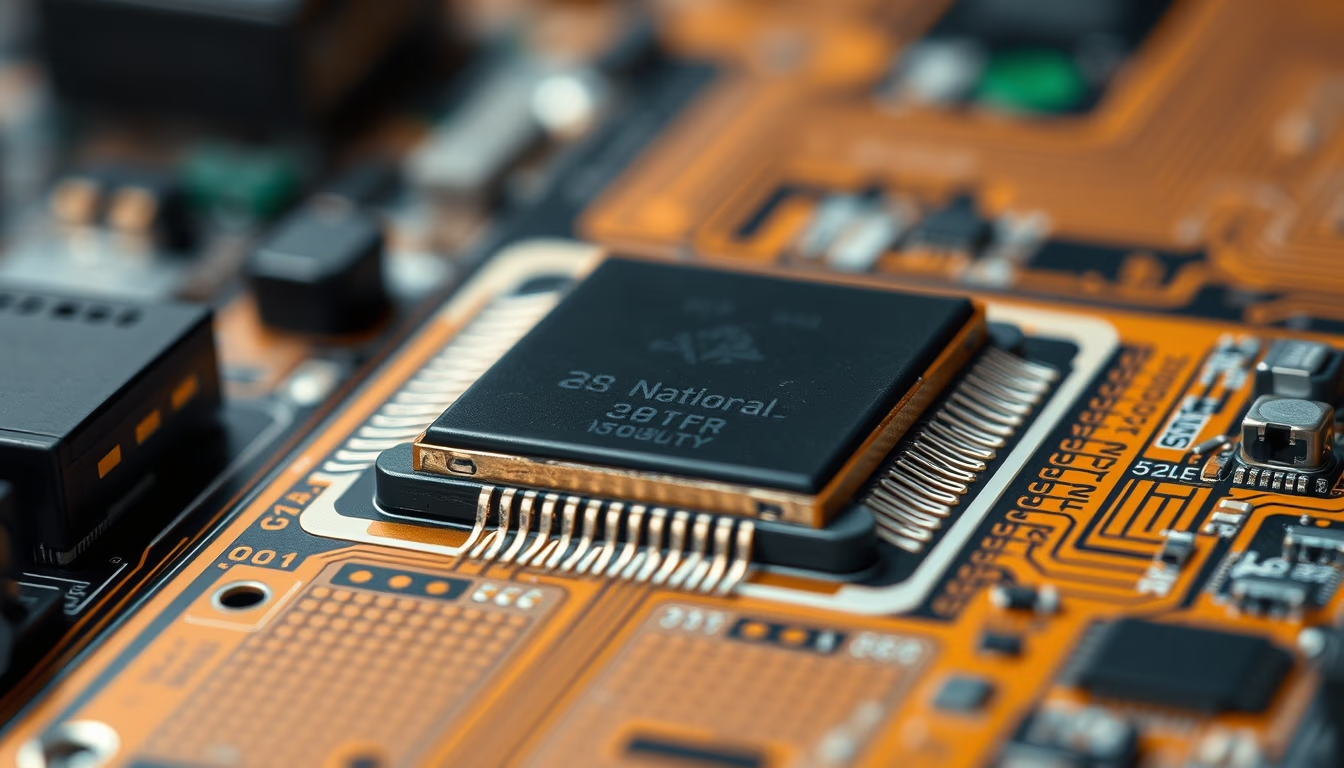
Surface-mount transistor (SMD), a fundamental electronic component miniaturized for direct mounting on printed circuit boards.
About this subject
Surface-mount transistors (SMD) have revolutionized modern electronics by enabling smaller and more efficient components. Unlike traditional transistors with long leads, SMDs are soldered directly onto the surface of a printed circuit board (PCB) without through-holes. This allows for more compact circuits, higher component density, and better high-frequency performance.
SMD transistors come in standardized packages such as SOT-23, SOT-223, TO-252 (DPAK), and SOT-89. Each package has specific dimensions and thermal dissipation limits. For example, the SOT-23, measuring about 3x1.3 mm, is commonly used for low-power signals. The DPAK is larger and supports higher currents, employed in voltage regulators and power drivers.
Surface-mount technology offers benefits like reduced production costs, automated assembly (pick-and-place), and improved electrical performance due to lower parasitic inductance of the leads. However, soldering requires precise temperature control and thermal profiles to avoid damaging the component. SMD transistors are widely used in mobile devices, computers, switch-mode power supplies, automotive systems, and industrial equipment.
Choosing the right SMD transistor depends on parameters such as maximum current, collector-emitter voltage, gain (hFE), and transition frequency. Components like the BC817 (NPN) and BC807 (PNP) are typical examples for general-purpose applications. Polarity (NPN or PNP) and power dissipation are critical in design. Despite miniaturization, these transistors boast high reliability with extremely low failure rates under normal operating conditions.
Frequently Asked Questions
What does SMD stand for in electronic components?
SMD stands for Surface-Mount Device, a technology where components like transistors are soldered directly onto the surface of a printed circuit board, without leads that go through holes.
What are the main advantages of SMD transistors over THT transistors?
SMD transistors are smaller, enabling higher component density, automated assembly, and better high-frequency performance due to lower parasitic inductance. They also reduce production costs and overall device size.
How to identify the polarity of an SMD transistor?
Polarity (NPN or PNP) is indicated by the code printed on the component body. For example, BC817 is NPN and BC807 is PNP. The pinout (base, collector, emitter) varies by package and must be checked in the datasheet.
Direct URL
https://pub-c7d6a6ea828543ac903a74a341ccb2e1.r2.dev/imagens/transistor-surface-mount-national-geographic-style-p3.avifHow to credit
Include a visible link back to UtilizAí. Copy one of the snippets below:
<a href="https://xn--utiliza-eza.com/en/midia/imagens/transistor-surface-mount-national-geographic-style-p3">Transistor surface mount</a> by <a href="https://xn--utiliza-eza.com">UtilizAí</a>, licensed under <a href="https://creativecommons.org/licenses/by/4.0/">CC BY 4.0</a>.
[Transistor surface mount](https://xn--utiliza-eza.com/en/midia/imagens/transistor-surface-mount-national-geographic-style-p3) by [UtilizAí](https://xn--utiliza-eza.com), CC BY 4.0
License: CC-BY-4.0