Transistor surface mount
1344×768 · AVIF · CC BY 4.0
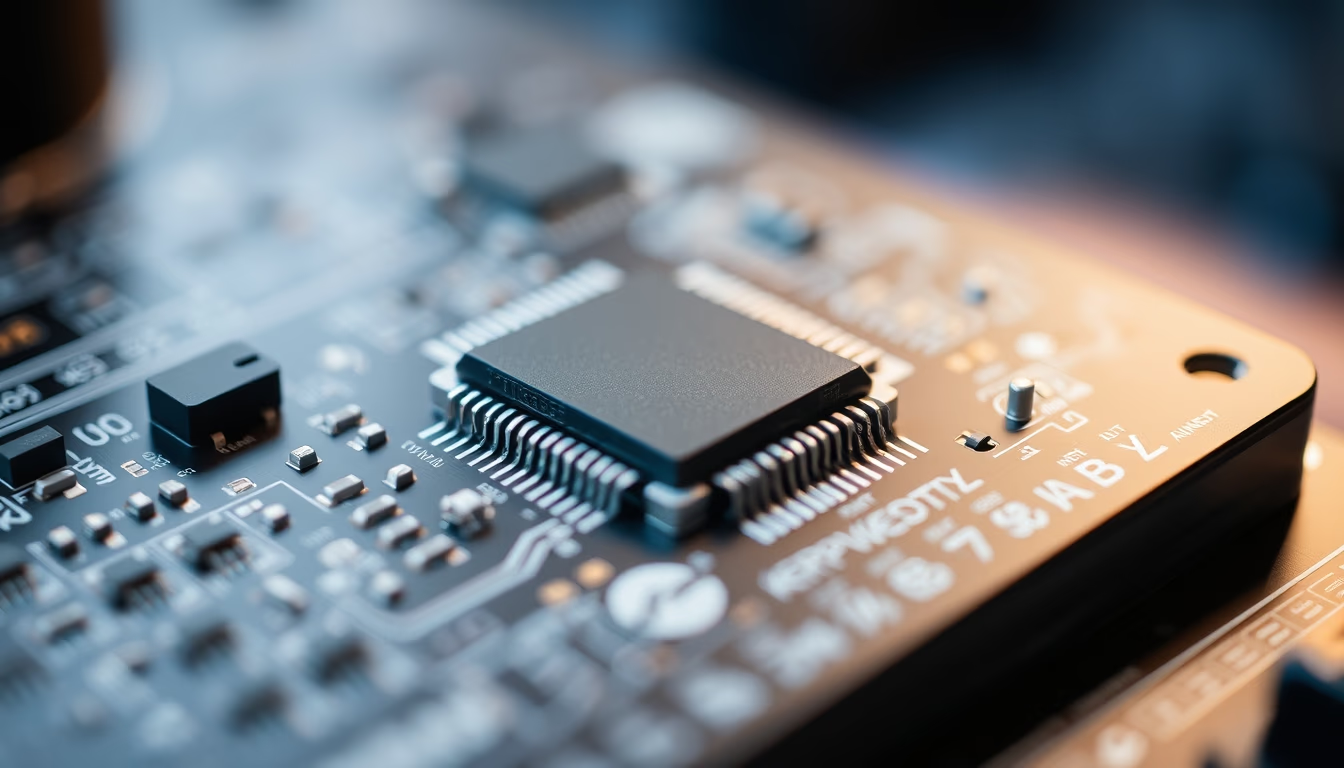
Surface-mount transistors (SMD) are essential components in modern electronic circuits, replacing traditional through-hole transistors.
About this subject
Surface-mount transistors, or SMD (Surface-Mount Device) transistors, are miniaturized semiconductor components that have largely replaced through-hole transistors in modern electronics. They are designed to be soldered directly onto the surface of a printed circuit board (PCB), eliminating the need for drilled holes and long leads. This technology emerged in the 1960s but gained widespread adoption in the 1980s with the rise of portable devices and the demand for more compact circuits.
SMD transistors are manufactured in standardized packages such as SOT-23, SOT-223, and SOT-89, each suited for different power levels and thermal dissipation. For instance, the SOT-23 is one of the most common, measuring about 3 mm by 1.5 mm, and is used in low-power applications like signal amplification and switching. The SOT-223 can dissipate up to 2 W, making it suitable for voltage regulators and load drivers.
The surface-mount technology offers significant advantages: reduced weight, higher component density, lower parasitic inductance (due to shorter leads), and automated assembly. This enabled the creation of devices like smartphones, tablets, and wearables. However, soldering these components requires precision, as excessive heat or improper flux can damage them. Techniques like reflow soldering are industry standard.
Interestingly, the first commercial SMD transistor was the SOT-23, introduced by Philips in the 1970s. Today, thousands of variants exist, including bipolar junction transistors (BJTs), field-effect transistors (FETs) like power MOSFETs, and junction transistors. Component selection depends on parameters such as maximum current, breakdown voltage, operating frequency, and RDS(on) for MOSFETs. Their reliability is high, with failure rates below 10 FIT (failures per billion hours) under normal conditions.
Frequently Asked Questions
What is the difference between an SMD transistor and a through-hole transistor?
The main difference is the mounting method: SMD is soldered onto the board surface without holes, while through-hole transistors have long leads that go through the board and are soldered on the other side. SMD is smaller, lighter, and allows higher component density, but is harder to solder manually.
How can I identify the pinout of an SMD transistor?
The pinout depends on the package. For example, in SOT-23, typical pinout is: pin 1 (emitter for BJT, drain for MOSFET), pin 2 (base/gate), pin 3 (collector/source). Always consult the manufacturer's datasheet for the specific code, as variations exist.
Can I replace a through-hole transistor with an SMD one?
Yes, provided the electrical specifications (current, voltage, power, gain) are equivalent or better. You will need to adapt the PCB for surface mounting or use adapters. Thermal dissipation must also be considered, as SMD generally dissipates less heat.
Direct URL
https://pub-c7d6a6ea828543ac903a74a341ccb2e1.r2.dev/imagens/transistor-surface-mount-magazine-editorial-p0.avifHow to credit
Include a visible link back to UtilizAí. Copy one of the snippets below:
<a href="https://xn--utiliza-eza.com/en/midia/imagens/transistor-surface-mount-magazine-editorial-p0">Transistor surface mount</a> by <a href="https://xn--utiliza-eza.com">UtilizAí</a>, licensed under <a href="https://creativecommons.org/licenses/by/4.0/">CC BY 4.0</a>.
[Transistor surface mount](https://xn--utiliza-eza.com/en/midia/imagens/transistor-surface-mount-magazine-editorial-p0) by [UtilizAí](https://xn--utiliza-eza.com), CC BY 4.0
License: CC-BY-4.0